

Rhinoplasty Dubai for Choosing Between Open and Closed Surgery
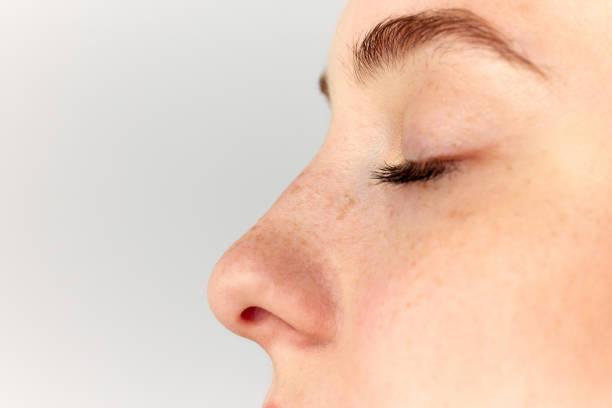
Rhinoplasty Dubai can involve either an open or closed surgical approach, depending on the patient's nasal anatomy, the complexity of the correction, and the structures that need to be modified. The two approaches differ mainly in how the surgeon accesses the nasal framework.
Choosing between them should not be based solely on scar concerns or the assumption that one technique is universally better. The appropriate approach is the one that provides suitable access for the planned correction while preserving nasal structure and function.
Understanding the Two Rhinoplasty Approaches
Closed rhinoplasty
Closed rhinoplasty uses incisions placed inside the nostrils. The surgeon works through these internal openings to reshape selected nasal structures.
Because there is no external incision across the columella, there is no external columellar scar associated with the approach.
Open rhinoplasty
Open rhinoplasty uses internal incisions together with a small incision across the columella. The skin between the nostrils can then be lifted to provide broader direct visualization of the nasal framework.
This additional exposure can be useful when more extensive structural work is required.
The Difference Is Mainly About Access
Surgical exposure
The most important distinction between open and closed rhinoplasty is how the surgeon reaches the nasal framework.
Closed surgery provides internal access through the nostrils, while open surgery provides wider direct visualization after lifting the nasal skin.
Neither approach automatically determines the quality of the final result.
Technique follows anatomy
The patient's bone structure, cartilage, septum, skin, previous surgery, and desired changes all influence approach selection.
A surgeon should first establish what needs to be corrected and then determine which access route provides appropriate control.
When a Closed Approach May Be Considered
Focused structural correction
A closed approach may be appropriate when the planned changes can be performed effectively through internal access.
This can include selected cases involving dorsal refinement, limited contour changes, or specific tip adjustments.
Patients without complex revision requirements
Previous rhinoplasty can alter cartilage, scar tissue, and structural support. In revision cases, broader exposure may sometimes be required depending on the correction.
This does not mean previous surgery automatically excludes a closed approach, but it makes detailed anatomical assessment particularly important.
When an Open Approach May Be Considered
Greater structural complexity
Open rhinoplasty can provide broader visualization when significant structural modification is required.
It may be considered in situations involving substantial asymmetry, complex deformity, extensive reconstruction, or certain revision procedures.
Detailed tip work
Some complex tip corrections may benefit from direct visualization of the underlying cartilage framework.
The need for this level of access depends on the patient's anatomy and the exact surgical objectives.
How the Nasal Tip Influences Approach Selection
Tip projection and rotation
The nasal tip is supported by several cartilage structures that determine projection, rotation, width, and symmetry.
Minor refinement may sometimes be possible through a closed approach, while more complex structural changes may require broader exposure.
Tip support
The surgeon must maintain sufficient structural support regardless of the approach.
Removing or weakening too much cartilage can affect long-term tip position and nasal stability, so the surgical plan should focus on controlled modification.
How the Nasal Bridge Influences the Decision
Dorsal contour
The nasal dorsum contains both bone and cartilage. A dorsal hump, irregularity, or width concern may require controlled reshaping of these structures.
In selected cases, these corrections can be performed through internal access.
Nasal bones
When the nasal bones contribute significantly to the patient's concern, the surgical plan must account for their width, alignment, and relationship with the upper nasal framework.
The extent of bony modification helps determine the level of access required.
Open and Closed Rhinoplasty for Functional Concerns
Appearance and breathing can overlap
Rhinoplasty planning should consider nasal function as well as external appearance. Septal deviation, internal structural narrowing, or other anatomical factors can influence airflow.
A patient should mention persistent congestion, one-sided breathing, previous trauma, or other nasal symptoms during consultation.
Functional requirements can affect approach
If functional correction requires extensive structural work, the surgeon may recommend an approach that provides sufficient access.
The choice should therefore be based on the complete treatment plan rather than cosmetic preference alone.
Common Misconceptions About Open and Closed Surgery
“Closed rhinoplasty always means a smaller operation”
Not necessarily. The complexity of the surgical correction cannot be determined only by where the incisions are placed.
A closed procedure can still involve significant structural modification.
“Open rhinoplasty always leaves a noticeable scar”
The external columellar incision is designed to heal discreetly, but scar formation varies between individuals. The appearance of any scar depends on healing and tissue characteristics.
“Closed rhinoplasty is always better because there is no external incision”
The absence of an external incision can be an advantage for suitable patients, but the approach must still provide adequate access for the required correction.
“Open rhinoplasty produces more natural results”
Natural appearance depends on appropriate surgical planning, structural preservation, technique, and healing rather than the access route alone.
How the Decision Is Made
A personalized assessment may follow several steps:
- Identify the patient's primary aesthetic or functional concerns.
- Examine nasal bones, cartilage, septum, and tip support.
- Assess skin thickness and soft-tissue characteristics.
- Evaluate the nose from frontal, profile, oblique, and base views.
- Review previous trauma or nasal surgery.
- Determine the structures requiring correction.
- Compare the access requirements of open and closed techniques.
- Discuss realistic outcomes, limitations, risks, and recovery.
Understanding Closed Rhinoplasty in Dubai
Patients specifically interested in the closed approach can review Tajmeels Clinic's information about closed rhinoplasty in Dubai to understand the technique and its potential applications.
However, educational information cannot determine which approach is suitable for an individual patient. That decision requires assessment of the actual nasal framework.
Recovery After Open or Closed Rhinoplasty
Both approaches involve healing and postoperative swelling. The extent of recovery depends more on the structures modified and the complexity of the procedure than on the incision location alone.
Patients should protect the nose from pressure and accidental impact, follow instructions regarding exercise and sleeping position, and attend scheduled follow-up appointments.
For patients recovering in Dubai, outdoor activity and strong sun exposure should also be managed carefully during the early healing period.
Why Individualized Planning Matters
The same visible concern can arise from different anatomical causes. A prominent bridge, uneven tip, or crooked nose may require different structural corrections in different patients.
That is why choosing an approach should come after understanding the anatomy rather than before it.
Rhinoplasty Dubai With Anatomy-Based Approach Selection
Open and closed rhinoplasty are two different methods of accessing the nasal framework, not competing procedures where one is universally appropriate. The correct choice depends on the patient's anatomy, surgical goals, functional requirements, and level of structural complexity.
Tajmeels Clinic in Dubai uses individualized assessment to determine which approach is appropriate for each patient's rhinoplasty plan.
Discuss Your Options With Tajmeels Clinic
If you are unsure whether open or closed rhinoplasty is appropriate for your nose, a detailed consultation can clarify how your anatomy influences the surgical approach.
Tajmeels Clinic in Dubai provides personalized rhinoplasty assessments focused on facial proportions, nasal structure, function, and realistic treatment goals. Arrange a consultation to discuss which surgical approach may suit your individual anatomy.

 English
 Arabic
 French
 Spanish
 Portuguese
 Deutsch
 Turkish
 Dutch
Dutch
 Italiano
 Russian
 Romaian
 Portuguese (Brazil)