

Planter Bags: A Practical Solution for Flexible Container Gardening
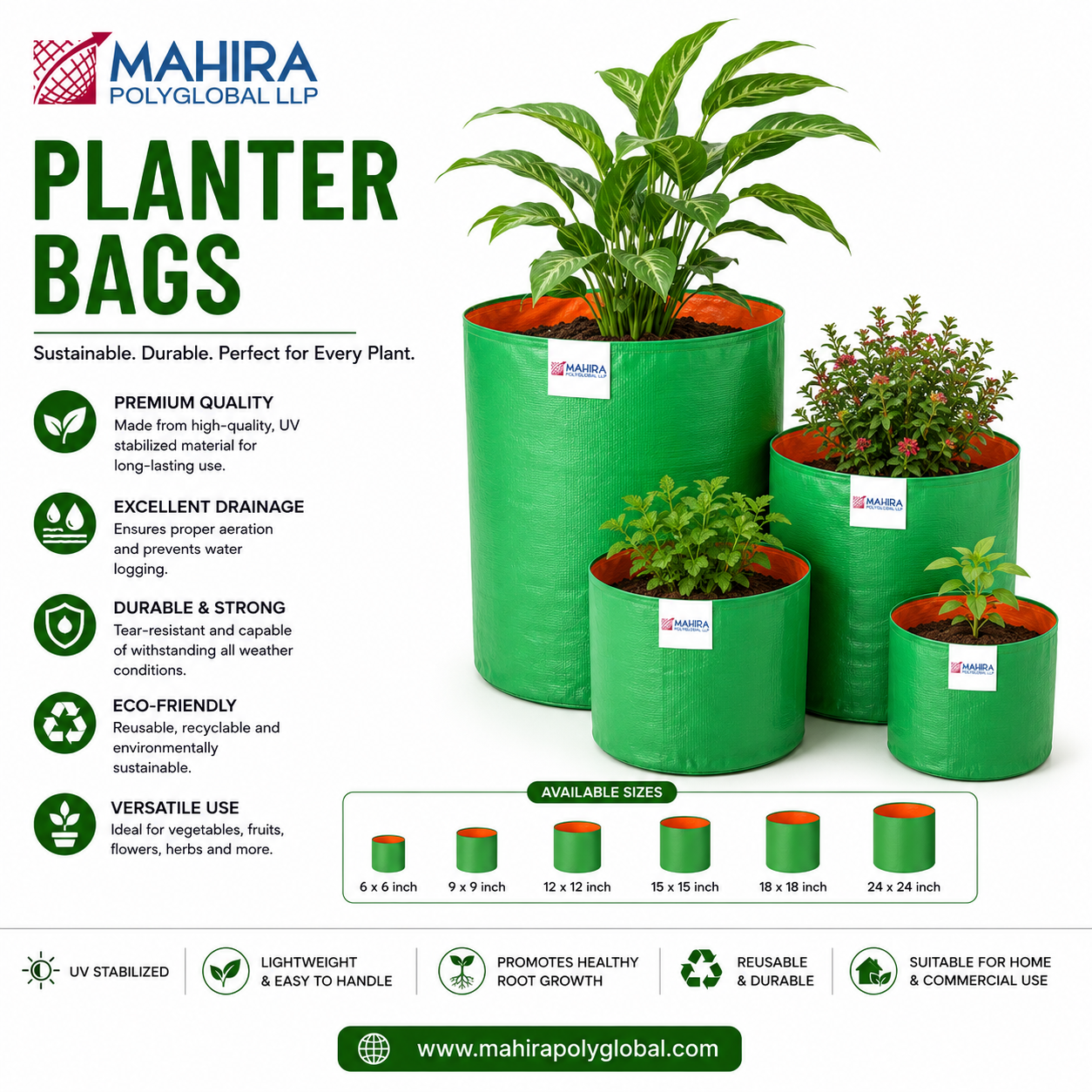
These bag-like containers are made of pliant material and can be filled with soil in order to cultivate vegetables, flowers, herbs, bushes and small fruit plants. They are used in balconies, terraces, rooftops and in nurseries, greenhouses, backyards and commercial gardens where traditional ground planting may not be feasible. They are also lightweight (in contrast to clay or hard plastic pots), easy to move and take up less space when not in use. There are several types of geotextiles that you can use in the process, including non-woven fabric, woven polypropylene, HDPE & coir. Mahira Polyglobal LLP provides you with planter bags used in Gardening, Nursery, Plantation and Agriculture and the specifications mentions that it is easy to handle as well as long lasting. It is easy to see why flexible containers are appealing. They want homegrown vegetables and visually appealing plants but one cannot have a sizable garden. However, a planter bag hardly provides an easy access to ideal gardening. The container helps (no doubt), but plant selection, sunlight, watering, soil and maintenance are still big factors.
Flexible Gardening for Small Spaces
The biggest advantage of planter bags is that they can fit in places that you would otherwise need fixed beds or heavy pots for. A gardener can put them all the way along a balcony wall, on a terrace, side by side beyond the path leading to their greenhouse, or even shift them about as sunlight changes. They are also ideal for rented houses as use of these does not involve any permanent construction or digging. This way, a gardener can grow tomatoes in one bag, herbs in another and flowers in a third without disturbing the whole area. All of these makes crop rotation and seasonal changes easy. But without attention to detail in their placement, flexible containers may present new challenges. Filled bags can be heavy, and a wet bag can weigh far too much. Balconies and rooftops must be verified for the load, and protection of floors to humid environment. Yes, planter bags save space with caveats, though.
Non-Woven Fabric for Better Roots
Non-woven fabric is a common material of Fabric for grow bags as the porous structure may enable air and water to pass through the sides. This may lessen the extent of waterlogging and promote better root growth. As such, some gardening guides define non-woven grow bags as permeable bags that facilitate air pruning to help avert root circling and enhance drainage [1055]. They may get more air and come to know that they dont have to continue growing into a tight circle when roots hit the breathable sides. It's often referred to as air-pruning. This can create a thicker and more fibrous root system but is variable based on the plant, growing medium, watering routine, and climate. Grow Bag Material — The fabric must be durable enough to hold wet soil without losing form. All fabric bags do not have same thickness or performance. The service life may be short for something that is a thin material, but it can drain well. The thicker fabric might be more durable but also more expensive. It all really depends on the crop you are using and how many seasons it will grow in.
Choosing the Right Material
Grow bags are made of multiple materials, and each one has a variety of benefits. Breathable, lightweight non-woven fabric Woven polypropylene is also extremely sturdy and durable, and weather-resistant for outdoor storage. HDPE bags offer flexibility, moisture resistance, and decent structural support. There are coir-based bags, but they tend to act differently (for better or worse) in wet conditions, and might attract gardeners who don't care about the materials as much. Buyers should inquire from Non woven bags manufacturers on GSM, stitching, handles, drainage, UV resistance dimensions and expected service life. Product descriptions may include terms like breathable, reusable, long-lasting or environmentally friendly – but these statements must have measurable specifications. The construction of the bag made for herbs does not have to serve as one constructed for a large shrub. You should also keep in mind that improved drainage translates to a shorter drying period. The very property that helps to prevent waterlogging may also mean a need for increased watering frequency.
Growing Vegetables, Herbs, and Flowers
As long as the size of a planter bag is a match for the root system, it can support a large class of plants. For herbs coriander, basil, thyme, mints and parsley small bags are good. Tomatoes, chillies, peppers, leafy greens (lettuce, kale etc), beans, eggplants and compact flowers can all go into Medium bags. For instance, larger bags can also accommodate cucumbers, strawberries, dwarf fruit plants, ornamental shrubs and some small trees. When buying, consider the mature size of the plant. Tomato seedlings look perfectly healthy dissolving in a small bag, ensuring it will soon need more room for its roots and foliage. It must be free and loaded with nutrients, and most importantly well drained. In non-woven containers, garden soil alone may compact. A combination of potting mix and compost, cocopeat, and appropriate aeration material can enhance performance. Stakes or trellises: use them as soon as possible with tall plants. It's more difficult to support the plant itself if you wait until it gets large. A bit of preparation saves you a lot of hassle.
Drainage, Watering, and Plant Care
Plant bags are a top pick it up for gardeners because of this–drainage. Excess water can then pass through the fabric or drainage holes and help eliminate the risk of roots being left sitting in stagnant water. But drainage helps only when the potting mix and your watering habits are right too. A bag on a floor that's partially blocked may not drain. Overwatering a bag can still lead to saturation. In sun or hot wind, a breathable container may dry more quickly than a pot that is rigid. Gardeners need to check moisture with the finger test or a moisture meter before watering again, deep and even watered when they did. In larger gardens, drip irrigation makes it possible to keep the soil constantly wet. Mulch on soil surface is good to cut evaporation but not if blockage of air movement or fungal issues. Pumping from the ground means your watering will be reduced. Not always. The implication is that watering must be vigilant and attentive. A fixed schedule tells you much less than the plants do.
Selecting a Dependable Planter bag
A good supplier will provide all the details of material, dimensions, GSM, handles, seams, drainage color and area to be printed on UV protection and many others including customisation. Mahira Polyglobal LLP is the Manufacturer and Supplier of Planter bags in Garden, Nursery, Plantation & Agriculture uses. Make sure the buyers request for samples before placing an bulk order, test out the bag along with the real process mix. Test the seams when the bag is lifted, check if its base drains evenly, and see if the material has rigidness once under exposure to sunlight and moisture. Consistency of repeat-orders matters very much for the nurseries and commercial growers. That second order must be similarly sized and strong as the first. Additionally, find out if the bags are for one season only or for multi-year use. A supplier that is able to answer technical queries and goes beyond pricing alone is generally easier to collaborate with. Cheap is attractive. Reliable is better.
Conclusion
Since they can be reused (if that material is durable, and used somewhat carefully). Action 4: Steer Clear of Dragging the Full Bag on Rugged Concrete (or anywhere else) Since the Bottom Could Rip Make sure to lift from the bottom, use sturdy handles, clean off old roots, remove those pesky salt deposits, and dry it well before putting it away! Between growing seasons you should also check your drainage points and seams. If not UV stabilised keep empty bags away from strong sunlight. Non-biodegradable plastic/synthetic fabric products must be disposed of properly, and reusable bags minimize the need for repurchasing items. To sum up, planter bags offer practical storage planting solution for flexible container gardening. They give individuals the chance to cultivate plants in reduced place, boost control above dirts, improve drainpipes, and also make growing season growing less complicated. Woven and HDPE bags can be additionally resistant to alterations in physical structure. Select size and material for plant, climatic regions, surface and intended use. Sure, the bag matters—but well-drained soil, bright light (but not too much), fertilizer and regular attention are what converts a container into a productive garden.
Frequently Asked Questions
Q1. What Is Pot Bag Used For?
Planter bags used for planting vegetables, herbs, flowers, shrubs and small bushes in places such as balcony, terrace, rooftop nursery, greenhouse garden, backyard etc.
Q2. Non woven fabric breathable grow bag
Yes. Nonwoven fabric can allow for fresh airflow and drainage, so perhaps this could help keep roots thriving. The quality depends on GSM, stitching, material strength and UV resistance.
Q3. How do I choose the right size of to plant bag?
So size based on the mature root system of the plant, not just that of the seedling. Bigger plants and shrubs require deep, wide bags.
Q4. Can planter bags be reused?
Most durable planter bags can be reused if your clean and dry them up, store carefully and avoid sharp surfaces as well as unnecessary drag.
Q5. Who is the largest Suppliers of Planter bag?
No one has independently verified a ranking to prove that this one is the largest bag supplier on Earth. Mahira Polyglobal LLP is also a Manufacturer and Supplier of Planter Bags (Gardening) for Nursery, Plantation & Agriculture. Buyers need to account for material quality, fabric type, size range, drainage design, UV protection, options for customisation, pricing aspect of the product offering and production capacity as well as reliability in delivery before finalising a supplier. mahirapolyglobal

 English
 Arabic
 French
 Spanish
 Portuguese
 Deutsch
 Dutch
Dutch
 Italiano
 Russian
 Romaian
 Portuguese (Brazil)
 Greek
Greek