

Occupational Therapy in North York: Supporting Children’s Everyday Skills
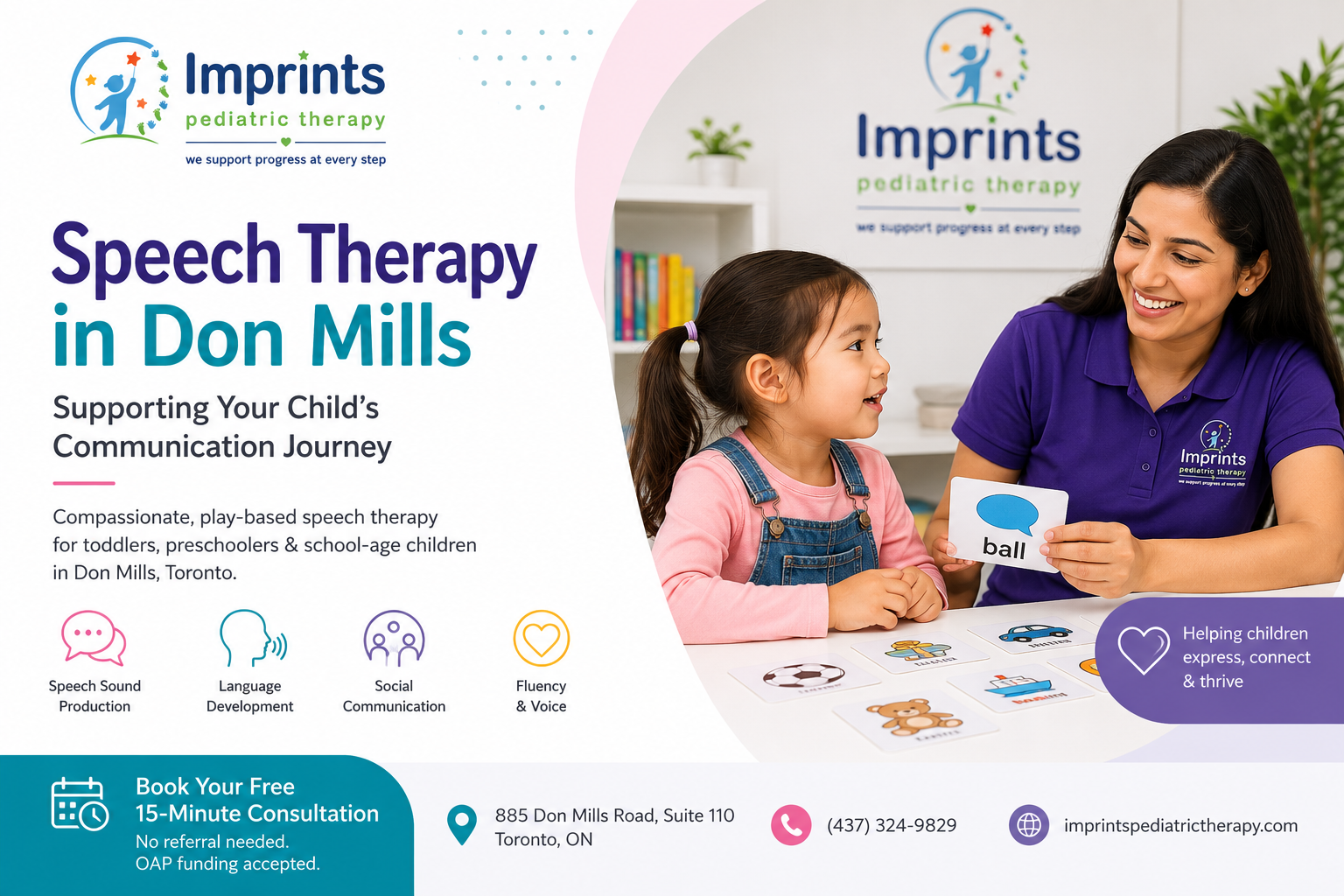
Children develop at their own pace, but some may need additional support to participate comfortably and confidently in everyday activities. Occupational therapy in North York can help children build practical skills for home, school, play, and social activities. Pediatric occupational therapists work with children to understand their individual needs and create activities that support development in meaningful ways.
At Imprints Pediatric Therapy, occupational therapy focuses on helping children participate more independently in the activities that are important to them. Whether a child has difficulty with fine motor skills, sensory processing, coordination, self-care, or classroom tasks, individualized therapy can provide structured support.
What Is Occupational Therapy for Kids in North York?
Occupational therapy for kids in North York is designed to help children develop the skills they need to participate in everyday occupations. For children, these occupations can include getting dressed, using utensils, writing, playing with others, completing schoolwork, managing personal routines, and participating in family activities.
A pediatric occupational therapist evaluates how a child performs different activities and identifies areas that may be creating challenges. Therapy sessions can then use age-appropriate exercises, games, and activities to help develop specific skills.
The goal is not simply to practice a skill in isolation. Instead, occupational therapy aims to help children use their abilities in real-life situations and become more comfortable taking part in daily routines.
How Pediatric Occupational Therapy Can Help
Children may experience difficulties with several areas of development. Pediatric occupational therapy in North York can address a variety of functional skills based on each child’s needs.
Fine Motor Skills
Fine motor abilities are important for tasks that require controlled hand and finger movements. Children use these skills when holding pencils, cutting with scissors, buttoning clothing, opening containers, drawing, building with blocks, and manipulating small objects.
Occupational therapy activities can help children develop hand strength, coordination, dexterity, and control to support these everyday tasks.
Handwriting and School Skills
Writing and classroom activities can be challenging when children have difficulty with pencil control, posture, visual-motor coordination, or maintaining attention during tasks. A pediatric occupational therapist can work on the underlying skills needed for classroom participation.
Therapy may incorporate handwriting activities, visual-motor exercises, positioning strategies, and other age-appropriate tasks to support school participation.
Sensory Processing
Some children respond differently to sounds, textures, movement, lights, or other sensory experiences. These differences can make everyday environments difficult to manage.
Pediatric occupational therapy can help identify sensory challenges and develop strategies that support a child's ability to participate in daily activities. Therapy activities may be adapted according to the child's responses and functional needs.
Self-Care and Daily Routines
Children gradually develop independence with activities such as dressing, brushing their teeth, eating, washing their hands, and organizing personal belongings.
When these routines are difficult, occupational therapy can break activities into manageable steps and provide opportunities for children to practice them. Supporting independence in daily routines can also help children feel more confident in their abilities.
Pediatric Therapy in North York for Individual Needs
Every child has different strengths, challenges, interests, and developmental needs. For this reason, pediatric therapy in North York should be based on an individualized understanding of the child rather than a one-size-fits-all approach.
An occupational therapist may begin by discussing the child's development, routines, school experiences, and areas of concern with parents or caregivers. An assessment can help identify skills that are affecting participation in everyday activities.
Based on the findings, the therapist can develop goals that are relevant to the child and family. These goals may relate to handwriting, dressing, feeding-related skills, play, sensory regulation, coordination, or other daily activities.
Supporting Children at Home and School
Occupational therapy can be particularly useful when strategies are incorporated into a child's regular routines. Parents and caregivers may receive practical suggestions for supporting skill development outside therapy sessions.
For example, a child working on fine motor development may practice through drawing, building, crafts, or age-appropriate household activities. A child working on self-care may practice one part of a daily routine at a time.
Collaboration can also help connect therapy goals with classroom activities. When appropriate, occupational therapy strategies can support participation in tasks such as writing, using classroom materials, following routines, and managing sensory demands.
Why Early Support Can Be Helpful
When a child consistently struggles with everyday activities, additional support can provide an opportunity to understand what may be contributing to the difficulty. Early attention to functional challenges can help families explore appropriate strategies and create realistic goals.
Occupational therapy does not mean that every child needs to perform activities in the same way. Instead, therapy can focus on helping children develop skills and strategies that allow them to participate more independently and comfortably.
Choosing Pediatric Occupational Therapy in North York
When looking for pediatric occupational therapy in North York, families may want to consider whether the therapy approach is individualized, whether the therapist understands the child's daily routines, and whether goals are meaningful to the child and family.
At Imprints Pediatric Therapy, services are focused on supporting children's participation and development through individualized pediatric therapy. Occupational therapy can be tailored to the child's current abilities, areas of difficulty, and functional goals.
If your child is having difficulty with fine motor skills, sensory processing, handwriting, coordination, self-care, or other everyday activities, learning more about occupational therapy for kids in North York can be a useful starting point. A pediatric occupational therapy assessment can help identify areas where additional support may be appropriate and guide the next steps for your child's development.

 Arabic
 French
 Spanish
 Portuguese
 Deutsch
 Turkish
 Dutch
Dutch
 Italiano
 Russian
 Romaian
 Portuguese (Brazil)
 Greek
Greek
