

How to Become a Professional Drone Pilot After 12th
The drone industry in India is growing quickly and creating new opportunities for students who want to build a career in aviation, technology, surveying, photography, agriculture, mapping, inspection, and many other fields. For students who have completed Class 12, becoming a professional drone pilot can be an interesting career path that combines practical skills with modern technology.
However, becoming a professional drone pilot is more than simply learning how to operate a drone. A good pilot needs proper training, an understanding of flight safety, knowledge of drone rules, practical flying experience, and the ability to handle different situations confidently.
For students planning their future after Class 12, Tras Aviation provides a structured approach to understanding drone training and the skills needed in this growing field. With the right preparation and training, students can develop the foundation required to move towards professional drone operations.
1. Understand What a Professional Drone Pilot Does
Before choosing a course, students should understand what a professional drone pilot actually does. A professional pilot may operate drones for aerial photography, land surveying, mapping, agriculture, construction, infrastructure inspection, research, filmmaking, and other commercial activities.
The work can vary depending on the type of drone and industry. Some pilots may spend more time flying aircraft in outdoor environments, while others may work with survey teams, photographers, engineers, or technical professionals.
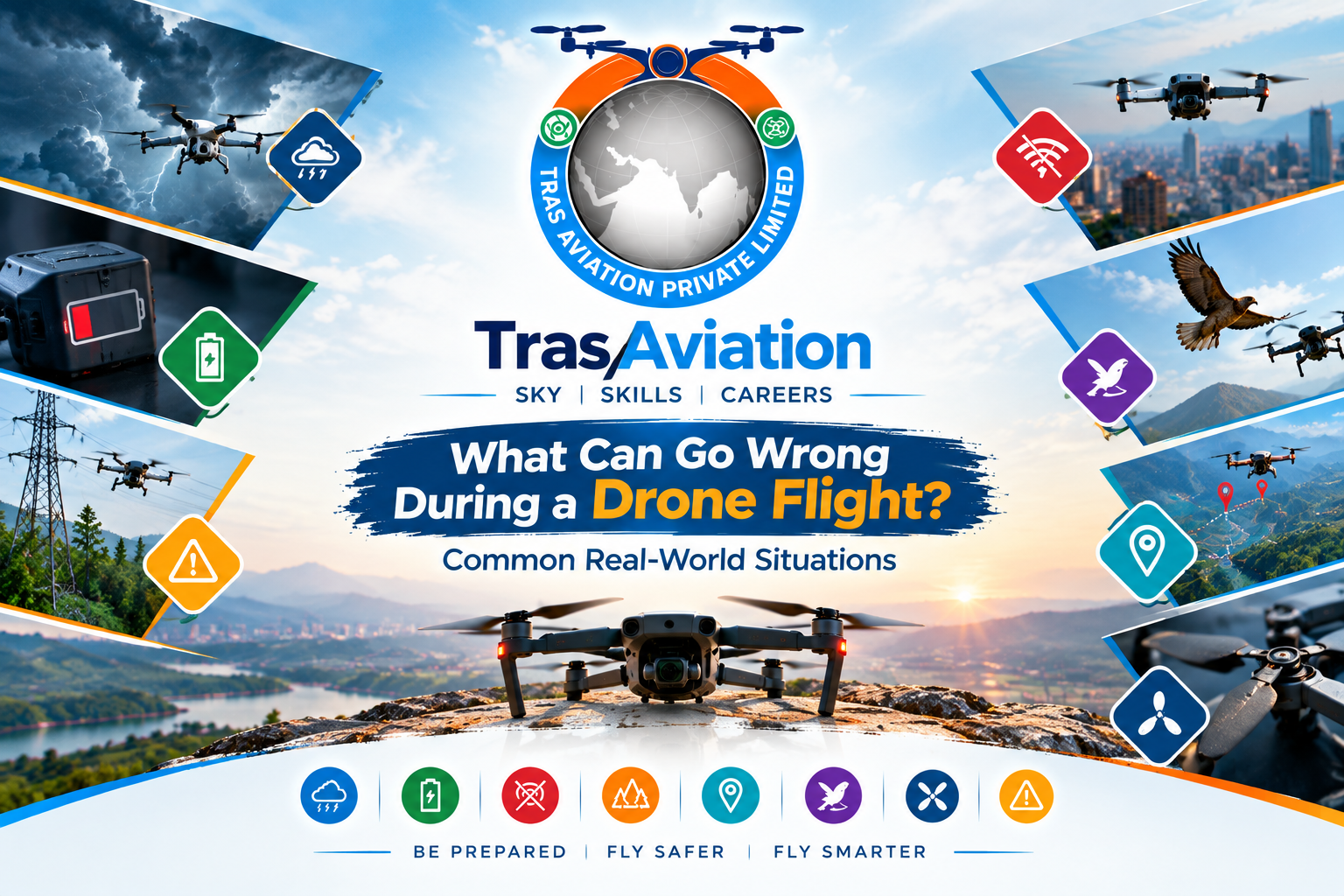
A professional drone pilot must also understand the environment around the aircraft. Weather, obstacles, people, buildings, power lines, trees, and other aircraft can affect a flight. This is why responsible flying requires attention, planning, and good decision-making.
Students should therefore think of drone piloting as a professional skill rather than simply a hobby. Tras Aviation focuses on helping learners understand both the practical and professional sides of drone operations.
2. Learn About Drone Rules and Safety
Safety should be one of the first things students learn after deciding to enter the drone industry. A drone pilot needs to understand the rules that apply to drone operations in India and follow the requirements applicable to the type of operation being conducted.
Students should become familiar with concepts such as permitted flying areas, operational restrictions, registration requirements where applicable, safety procedures, and responsible drone use. They should also understand why pre-flight checks are important.
Before every flight, a pilot should check the drone, propellers, battery condition, controller, GPS or positioning systems, and surrounding area. Weather conditions should also be considered before take-off.
Training can make these checks a normal part of the flying routine. At Tras Aviation, learners can build an understanding of why preparation and safety are important before moving into more advanced flying activities.
3. Choose the Right Drone Training
After understanding the basics, the next step is selecting suitable professional training. Students should not choose a course only because it promises a certificate. They should look at the practical training included in the program and understand whether it matches their career goals.
Training should help learners become comfortable with drone controls, take-off and landing, basic flight movements, flight planning, safety procedures, emergency situations, and responsible operation.
Students interested in professional flying can explore Small Class Drone Pilot Training in Delhi NCR as one possible training pathway. The appropriate class and training route can depend on the student's goals, eligibility, and the type of drone operations they want to pursue.
A good training environment also gives learners the opportunity to ask questions, make mistakes safely under supervision, and gradually improve their confidence. Practical exposure is especially important because understanding drone controls theoretically is different from managing an aircraft during an actual flight.
4. Develop Strong Practical Flying Skills
Practical experience is one of the most important parts of becoming a professional drone pilot. A student may understand the controls quickly, but professional flying requires much more than knowing which stick moves the drone in a particular direction.
Learners need to practise controlled take-offs and landings, straight-line movements, turns, altitude management, hovering, positioning, and smooth flight operations. They should also learn how to maintain awareness of the aircraft and its surroundings.
With regular practice, students can become more comfortable with different flight situations. They can learn how to respond calmly when the drone moves unexpectedly, when weather conditions change, or when an obstacle appears in the flight path.
Tras Aviation can be part of this learning journey by helping students understand the importance of combining classroom knowledge with practical exposure. The goal should be to develop safe and responsible flying habits rather than simply completing a certain number of training hours.
5. Learn Flight Planning and Decision-Making
Professional drone pilots need to think before they fly. Flight planning helps reduce unnecessary risks and makes operations more organized.
Before a flight, a pilot should understand the purpose of the mission, identify the operating area, check environmental conditions, inspect the aircraft, and consider possible obstacles. The pilot should also know what to do if something does not go according to plan.
Decision-making becomes especially important when working on professional assignments. A pilot may need to decide whether conditions are suitable for flying, whether the planned route is safe, or whether a flight should be postponed.
Students should develop the habit of asking practical questions before every operation. What is the objective? Where will the drone fly? What could go wrong? What safety measures are required? What is the backup plan?
These habits can make a major difference as learners move from basic practice to professional assignments.
6. Understand the Technology Behind Drones
Modern drones are more than flying machines. They combine different technologies, including motors, batteries, electronic components, sensors, flight controllers, communication systems, cameras, and positioning technologies.
A professional pilot does not necessarily need to become an electronics engineer, but having a basic understanding of how the aircraft works can be extremely useful.
For example, knowing how battery performance affects flight time can help a pilot plan operations more effectively. Understanding basic components can also help identify common problems before or during a flight.
This technical awareness becomes even more valuable when working with teams that handle drone maintenance, repairs, data collection, or equipment preparation. Tras Aviation encourages learners to see drones as complete systems rather than simply cameras that fly.
7. Build Technical Knowledge Alongside Flying Skills
Students who enjoy the technical side of drones can explore areas beyond piloting. Drone assembly, maintenance, troubleshooting, and repair are becoming useful skills within the wider drone ecosystem.
A pilot who understands basic maintenance may be better prepared to identify issues with equipment and communicate effectively with technical teams. However, technical work should be performed according to proper procedures and with appropriate training.
Students who want to develop this side of their knowledge can also explore a drone technician course. Learning about drone components and maintenance can provide an additional skill set and help students understand what happens beyond the flight itself.
This can be particularly useful for learners who enjoy working with electronics, mechanical components, tools, and technology. Tras Aviation provides exposure to the broader possibilities within the drone field, allowing students to think about careers beyond a single job role.
8. Explore Different Career Opportunities
After completing suitable training and gaining practical experience, students can explore different areas of the drone industry. The right career direction will depend on individual interests and skills.
Some professionals work in aerial photography and videography. Others work in land surveying, mapping, agriculture, construction, infrastructure inspection, real estate, environmental projects, or industrial applications.
Drone pilots may also work as part of larger teams. For example, a surveying project may involve a drone pilot, surveyor, data-processing specialist, and project manager. In such situations, communication and teamwork become just as important as flying skills.
Students should therefore avoid thinking of drone piloting as one fixed career. The technology is being used across many industries, and learning additional skills can open up different professional possibilities.
9. Continue Learning After Training
Completing a training program should not be considered the end of learning. Drone technology continues to develop, and professional pilots need to keep improving their knowledge and practical abilities.
Students can continue practising their flying skills, learning about new drone technologies, understanding industry applications, and improving their communication and planning abilities.
It is also useful to maintain a record of practical experience and projects where appropriate. A clear portfolio can help demonstrate what a learner has actually worked on when exploring future opportunities.
Tras Aviation can serve as a starting point for students who want to understand the training and career possibilities available in the drone sector. The more consistently learners practise and develop their skills, the better prepared they can be for professional environments.
10. Choose Training Based on Your Career Goal
Every student may have a different reason for entering the drone industry. One learner may be interested in photography, another in surveying, while someone else may prefer technical maintenance or drone operations.
Because of this, students should compare training options according to their individual goals. Look at the practical training, course structure, eligibility requirements, equipment exposure, safety instruction, and opportunities for hands-on learning.
Students searching for professional training can research options such as the Best Drone Pilot Training Course in India and compare the course details carefully before making a decision.
The important point is to choose training that helps build real skills rather than focusing only on obtaining a certificate. A strong foundation in safety, practical flying, technology, and professional discipline can be valuable throughout a drone pilot's career.
Start Building Your Drone Career After 12th
For students who have completed Class 12, the drone industry can provide an opportunity to learn a combination of aviation, technology, and practical skills. The journey begins with understanding the profession, learning safety and regulations, choosing appropriate training, and developing strong flying habits.
From practical flight training to technical knowledge and industry applications, there are many areas that students can explore as they progress. The key is to remain patient, practise consistently, and continue learning after the initial training period.
Tras Aviation can help learners understand the different stages involved in developing professional drone skills. Whether a student is interested in becoming a pilot, exploring technical work, or discovering other applications of drones, the right foundation can make the journey more structured.
Becoming a professional drone pilot after 12th is not about learning to fly overnight. It is about developing knowledge, practical ability, safety awareness, and professional discipline step by step. With proper training and continued practice, students can prepare themselves to explore the growing opportunities connected with India's drone industry.

 English
 Arabic
 Spanish
 Portuguese
 Deutsch
 Turkish
 Dutch
Dutch
 Italiano
 Russian
 Romaian
 Portuguese (Brazil)
 Greek
Greek
