

Salicylic Acid Serum for Combination Skin: A Practical Guide
Combination skin can be frustrating.
Your forehead and nose may look shiny by midday, while your cheeks feel completely normal or even dry. Add blackheads, occasional breakouts and visible pores to the mix, and choosing one serum can feel unnecessarily complicated.
This is where salicylic acid can make sense.
Unlike many exfoliating acids, salicylic acid is oil-soluble. It can move into oily, congested pores and help loosen the mixture of sebum and dead skin cells that contributes to blackheads and breakouts.
But more is not better.
For combination skin, the goal is not to strip oil from your entire face. It is to manage congestion while keeping the rest of your skin comfortable.
Why Salicylic Acid Works Well for Combination Skin
Salicylic acid is a beta hydroxy acid (BHA). Its oil-soluble nature makes it particularly useful when excess sebum and clogged pores are part of the problem.
Think about the typical combination-skin pattern.
The T-zone—your forehead, nose and chin often produces more oil. These areas can develop blackheads, whiteheads and a rougher texture. Your cheeks may have much less oil and can become dry if you use strong exfoliants too frequently.
Salicylic acid can help with the oily, congested side of that equation.
It exfoliates inside pores and on the skin's surface, helping remove dead cells and excess buildup. With consistent use, this can make congested areas feel smoother and look clearer.
It is not, however, a cure-all for every type of acne or every uneven-skin concern.
That distinction matters.
What Should You Look For in a Salicylic Acid Serum?
The percentage on the bottle is only one part of the formula.
For someone with combination skin, look at the entire product rather than choosing the highest concentration you can find.
Salicylic Acid Concentration
A 2% salicylic acid product is common in over-the-counter acne and exfoliating products.
If you are new to BHA, starting slowly is often more sensible than immediately using it every day.
Your skin's response matters more than forcing a particular schedule.
A Simple, Skin-Friendly Formula
Combination skin usually does not need a complicated cocktail of strong actives.
A well-formulated serum can combine salicylic acid with ingredients that support hydration and comfort, such as glycerin, hyaluronic acid or niacinamide.
The purpose is simple: exfoliate without leaving the skin feeling tight and stripped.
Avoid Unnecessary Irritants
If your skin becomes irritated easily, check the rest of the ingredient list.
Heavy fragrance, drying alcohols or several exfoliating acids in the same routine may make a product harder to tolerate.
This does not mean every product containing these ingredients is automatically bad. It means your skin's tolerance should guide your choice.
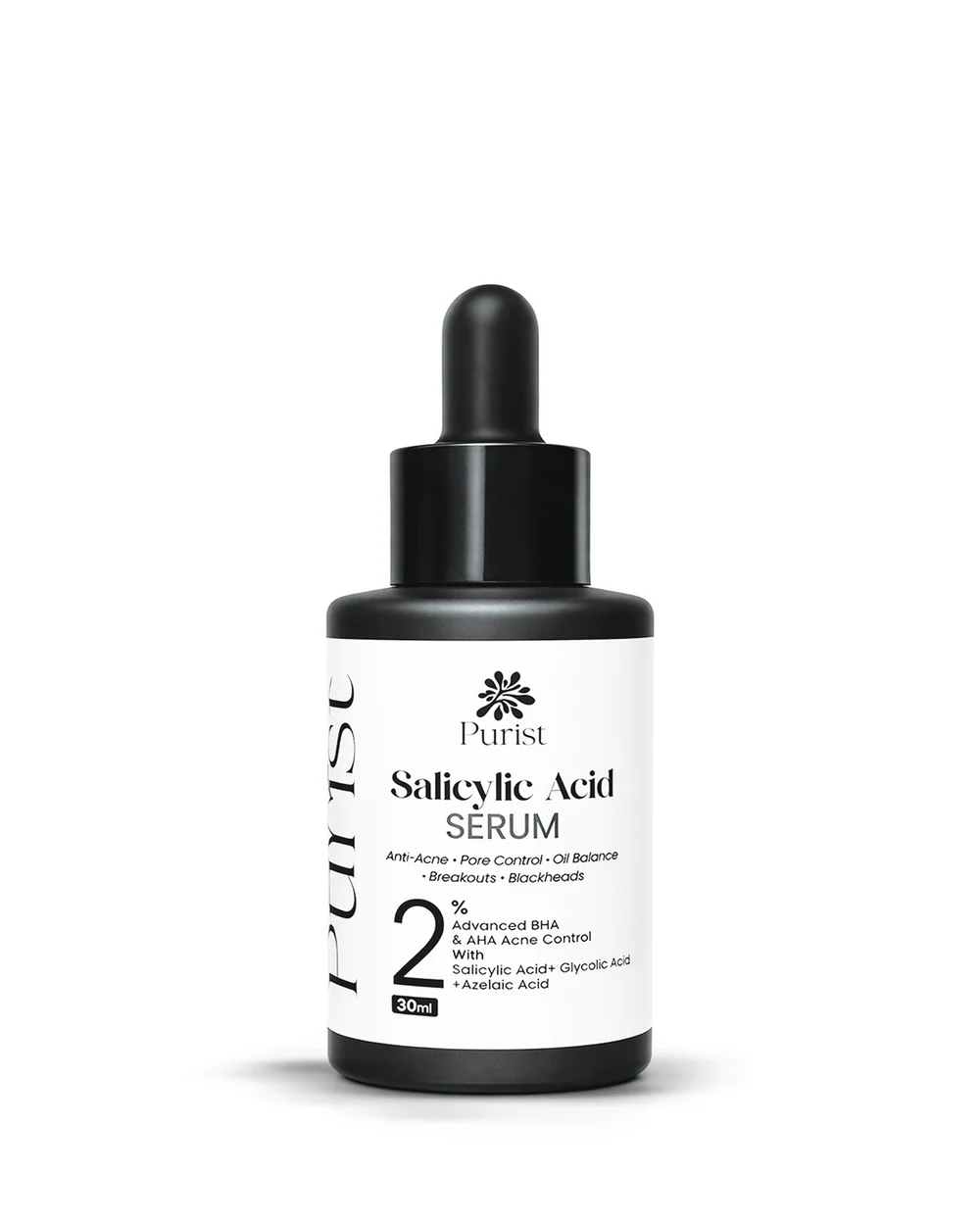
If you're looking for a leave-on treatment for oily or congested areas, a salicylic acid serum can be a practical addition to a simple routine.
Salicylic Acid Serum vs Salicylic Acid Cleanser
Both can be useful, but they work differently.
A salicylic acid cleanser is rinsed off after a short contact time. It can be a practical option when you want a simpler routine or your skin does not tolerate leave-on exfoliants well.
A serum stays on the skin.
That makes it more suitable when your main concern is persistent congestion, blackheads or uneven texture and you want a leave-on BHA treatment.
For combination skin, neither is automatically the better choice. Your skin type, concerns and tolerance should decide.
How to Use Salicylic Acid on Combination Skin
This is where many routines go wrong.
People notice that their T-zone is oily, start using salicylic acid every day and eventually end up with dry, irritated cheeks.
You do not need to treat your entire face aggressively.
Start Slowly
Apply your salicylic acid serum according to the product's directions.
If you are new to leave-on BHA, begin with less frequent use rather than immediately applying it every day.
Give your skin time to show you how it responds.
Focus on Congested Areas
If your forehead, nose and chin are the areas with blackheads and excess oil, you may not need to apply a strong exfoliant heavily to your cheeks.
Targeting the areas that actually need it can make your routine easier to tolerate.
Moisturize Afterward
Oily skin still needs hydration.
A lightweight, non-comedogenic moisturizer can help reduce the dry, tight feeling that sometimes follows exfoliation.
Do not skip moisturizer simply because your T-zone gets shiny.
Wear Sunscreen During the Day
A broad-spectrum sunscreen is an important part of any daytime skincare routine, particularly when exfoliating acids are part of your routine.
Choose an SPF that you can comfortably use every day rather than buying one that feels unpleasant and eventually sits unused.
Can You Use Niacinamide With Salicylic Acid?
Yes.
Niacinamide and salicylic acid can work well together when your skin tolerates both.
They address different aspects of a routine. Salicylic acid focuses on exfoliation and pore congestion, while niacinamide can support the skin barrier and help with the appearance of excess oil and uneven tone. Some people also pair salicylic acid with a niacinamide serum to support a more balanced skincare routine.
You do not necessarily need two separate serums, either.
Some formulas already combine both ingredients.
For combination skin, that can be a convenient way to keep your routine short.
What About Hyaluronic Acid?
Hyaluronic acid is a humectant, meaning it helps attract and retain water in the skin.
It does not exfoliate pores or replace salicylic acid.
Instead, it can complement an exfoliating routine by adding hydration.
If your cheeks feel dry while your T-zone remains oily, a hydrating ingredient can be useful alongside your BHA routine.
Can You Use Salicylic Acid With Retinol?
You can, but that does not mean you should layer both together immediately.
Retinoids and salicylic acid can both be useful for acne and texture, but using multiple active ingredients at once can increase the chance of irritation.
If your routine already contains retinol, introduce salicylic acid carefully.
One simple approach is to use them on different nights rather than applying both at the same time.
Your skin does not get bonus points for surviving the strongest routine.
Consistency beats aggression.
Salicylic Acid for Blackheads and Clogged Pores
Blackheads are one of the concerns for which salicylic acid is particularly useful.
A blackhead forms when material inside a pore becomes exposed to air and darkens. The dark colour is not simply dirt sitting on top of the skin.
Salicylic acid can help loosen dead skin cells and sebum within the pore, which is why it is commonly used in products designed for comedonal acne and congestion.
Results take time.
A serum is not supposed to make every blackhead disappear overnight. Regular use, appropriate cleansing and a consistent skincare routine matter more than aggressive spot treatments.
Salicylic Acid for Combination Skin With Acne
If your combination skin is also acne-prone, salicylic acid may help with clogged pores and some types of acne lesions.
But not every breakout is the same.
Small blackheads and whiteheads are different from deep, painful inflammatory acne. Persistent, severe or scarring acne may need treatment beyond an over-the-counter serum.
If breakouts are painful, widespread or leaving scars, getting advice from a dermatologist is more appropriate than continuously adding stronger products.
Common Mistakes to Avoid
Using It Every Day From the Start
More frequent application does not guarantee faster results.
Start according to the product instructions and increase frequency only if your skin tolerates it.
Applying Too Many Actives
Salicylic acid, glycolic acid, retinol, benzoyl peroxide and other active ingredients can all have a place in skincare.
Using several strong treatments together can also leave your skin irritated.
Build your routine around your actual concerns.
Scrubbing Your Skin
A gritty scrub is not necessary just because you have blackheads.
Physical scrubbing can add irritation to a routine that already contains a chemical exfoliant.
Using Too Much Product
A larger amount will not make salicylic acid work faster.
Follow the product's directions and give it time to work.
Ignoring Dry Areas
Combination skin is still one face.
If your cheeks become tight, flaky or uncomfortable, that is useful feedback. Reduce exfoliation and focus on restoring hydration instead of pushing through irritation.
A Simple Routine for Combination Skin
You do not need ten products.
Morning
-
Gentle cleanser
-
Hydrating or treatment serum if needed
-
Lightweight moisturizer
-
Broad-spectrum sunscreen
Evening
-
Gentle cleanser
-
Salicylic acid serum on appropriate nights
-
Moisturizer
On nights when you use another strong active such as retinol, consider keeping the routine simpler rather than layering everything together.
What Results Should You Expect?
Skincare takes patience.
You may notice that your skin feels smoother before you see a dramatic change in breakouts or blackheads.
The goal is gradual improvement in congestion, texture and overall clarity—not perfectly poreless skin.
And remember: pores are normal skin structures. A serum can help reduce the appearance of congestion, but it cannot permanently erase pores.
That is an important distinction when choosing skincare online.
Is Salicylic Acid Right for Your Combination Skin?
Salicylic acid can be a useful ingredient if your combination skin is dealing with blackheads, clogged pores, excess oil or acne-prone areas.
The trick is using it strategically.
Choose a formula that fits your skin, introduce it gradually, moisturize regularly and avoid turning your routine into an arms race between active ingredients.
If your skin is already irritated, burning or peeling, adding another exfoliant is probably not the answer.
Sometimes the smartest skincare move is to simplify.
Frequently Asked Questions
Is salicylic acid good for combination skin?
Yes. Its oil-soluble nature makes salicylic acid particularly useful for combination skin with clogged pores, blackheads and excess oil, especially around the T-zone.
Can I use salicylic acid every day?
Some people can tolerate daily use, while others cannot. Follow your product's instructions and start gradually if you are new to salicylic acid.
Should I apply salicylic acid to dry or damp skin?
Follow the directions for your specific product. If irritation is a concern, applying leave-on actives to completely dry skin can be more comfortable than applying them immediately after washing.
Can salicylic acid remove blackheads permanently?
No skincare ingredient permanently removes pores or guarantees that blackheads will never return. Salicylic acid can help manage pore congestion with consistent use.
Can combination skin use salicylic acid and niacinamide?
Yes. They can be used in the same routine when your skin tolerates both ingredients.
Should I use salicylic acid on dry cheeks?
If your cheeks are already dry or irritated, applying an exfoliating acid there may make the problem worse. Consider focusing treatment on areas that are actually congested.
When should I see a dermatologist?
Consider professional advice if your acne is painful, persistent, severe, scarring, or not improving with a consistent over-the-counter routine.
Final Takeaway
The best salicylic acid routine for combination skin is not necessarily the strongest one.
It is the one you can use consistently without damaging your skin barrier.
Start with the concerns you actually have. Treat oily, congested areas thoughtfully, keep dry areas hydrated, introduce active ingredients slowly and give your routine enough time to work.
Healthy skin does not need to be scrubbed into submission.
It needs the right ingredients, used consistently and with a little restraint.

 English
 Arabic
 French
 Spanish
 Portuguese
 Deutsch
 Turkish
 Dutch
Dutch
 Italiano
 Russian
 Portuguese (Brazil)
 Greek
Greek
