
FUE Hair Transplant in Dubai: Understanding FUE
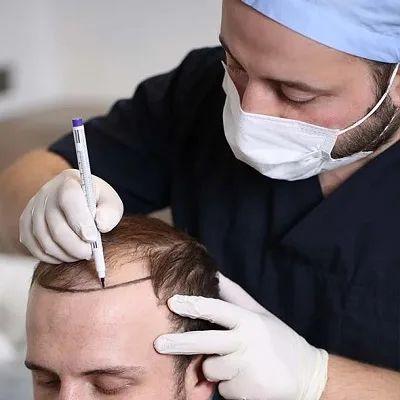
FUE stands for follicular unit extraction, a hair restoration technique in which individual follicular units are harvested from a suitable donor area and transferred to areas affected by hair loss. FUE hair transplant in Dubai uses this principle to redistribute existing hair follicles rather than creating entirely new follicles.
The technique is based on the natural structure of scalp hair. Follicles grow in small groupings, and these units can be individually extracted, prepared, and placed in areas where greater coverage is desired.
How Follicular Units Grow Naturally
A follicular unit can contain one or several individual hairs. These units are distributed throughout the scalp and naturally vary in density and composition.
The frontal region often contains finer individual hairs, while areas farther behind the hairline may contain larger follicular groupings. Understanding these differences is useful when planning a natural-looking restoration.
Single-Hair Units
Single-hair follicles can be particularly useful when creating the front edge of a restored hairline. Their smaller size can help produce a softer transition from the forehead to denser hair behind it.
Multiple-Hair Units
Grafts containing multiple hairs can contribute more substantially to overall density. They may be placed farther behind the frontal transition or in areas where greater coverage is required.
How Extraction Works
During FUE, individual follicular units are removed from the donor region using a specialized extraction instrument. The extraction process is designed to separate the selected unit from surrounding tissue while preserving its structure.
Because follicles are harvested individually, the donor region does not require the removal of a continuous strip of scalp.
What Happens to Extracted Grafts?
Once removed, grafts need to be handled carefully before implantation. They are prepared and organized according to their characteristics and intended placement.
The condition of the grafts during this stage is important because they need to remain suitable for transfer into the recipient area.
Understanding Recipient-Site Preparation
The areas affected by hair loss are prepared to receive the extracted follicles. The placement sites can be designed according to the planned hairline, existing density, and natural direction of growth.
This stage is not simply about creating space for grafts. The orientation and distribution of the sites influence how the transplanted hair will eventually emerge.
Why Hair Direction Matters
Natural hair does not grow at one uniform angle across the entire scalp. Hairline strands, temple hair, mid-scalp growth, and crown follicles can all follow different patterns.
During transplantation, matching these natural directions can help the new hair integrate with existing growth. Poorly matched angles may make transplanted strands appear less consistent with the surrounding hair.
FUE Compared With Strip Harvesting
The main difference between FUE and strip harvesting is how the donor follicles are obtained. FUE extracts individual follicular units, while strip harvesting removes a section of scalp tissue that is subsequently divided into grafts.
Because FUE does not involve removing a continuous strip, it avoids the linear donor incision associated with the strip method. However, FUE still involves multiple small extraction points and requires appropriate healing.
What Happens After FUE?
Following implantation, the scalp begins its recovery process. Small crusts, temporary redness, and sensitivity may occur in the treated areas.
The transplanted hairs may later shed as the follicles transition through their natural growth cycle. The follicles can remain beneath the scalp and subsequently produce new hair.
Understanding the Hair Growth Cycle
Hair follicles move through different stages of growth, rest, and shedding. Transplanted follicles continue to follow this biological cycle after placement.
This is why hair restoration results develop gradually. New strands need time to emerge, gain length, and become thicker before the mature appearance can be evaluated.
Who May Consider FUE?
FUE can be considered by individuals experiencing certain patterns of hair thinning or hairline recession who have an adequate donor supply. However, suitability varies depending on the extent of hair loss, donor density, scalp condition, and individual restoration goals.
A personalized assessment is important because the same transplantation strategy may not work equally well for every pattern of hair loss.
The Importance of Donor Management
The donor area contains a finite number of follicles. Using these resources strategically is therefore an important part of long-term planning.
An approach that considers current thinning as well as potential future hair loss can help avoid unnecessary use of donor follicles and support more balanced coverage.
Final Thoughts
FUE hair transplant in Dubai is based on the individual extraction and placement of naturally occurring follicular units. Understanding how these units are harvested, prepared, positioned, and eventually grow can provide a clearer picture of the entire restoration process. TAJMEELS CLINIC can be considered when exploring personalized FUE options and learning how follicular unit extraction may fit individual hair restoration goals.
For More Details, Contact Us Through:
WhatsApp: +971 56 203 8751
Phone: +971 4 373 9000
Social Media:

 English
 Arabic
 French
 Spanish
 Portuguese
 Turkish
 Dutch
Dutch
 Italiano
 Russian
 Romaian
 Portuguese (Brazil)
 Greek
Greek