

Is PRP Hair Treatment Good for Thinning Hair?
Hair thinning can affect both the appearance of the hair and a person’s confidence, especially when strands gradually become finer or the scalp becomes more visible. For people exploring treatment options, PRP Hair Treatment may be considered because it focuses on supporting existing hair follicles rather than surgically replacing them. When researching PRP Hair Treatment cost in Islamabad, patients should also consider how the treatment works, who may benefit from it, and what kind of results can realistically be expected.
The PRP Hair Treatment cost in Islamabad can vary according to several factors, including the severity of thinning, the number of sessions recommended, the condition of the existing follicles, and the individual treatment plan. Understanding these factors can help patients make informed decisions instead of focusing only on the treatment expense. Since every case of thinning hair is different, a personalized assessment can help determine whether PRP is a suitable option.
How Does PRP Hair Treatment Help Thinning Hair?
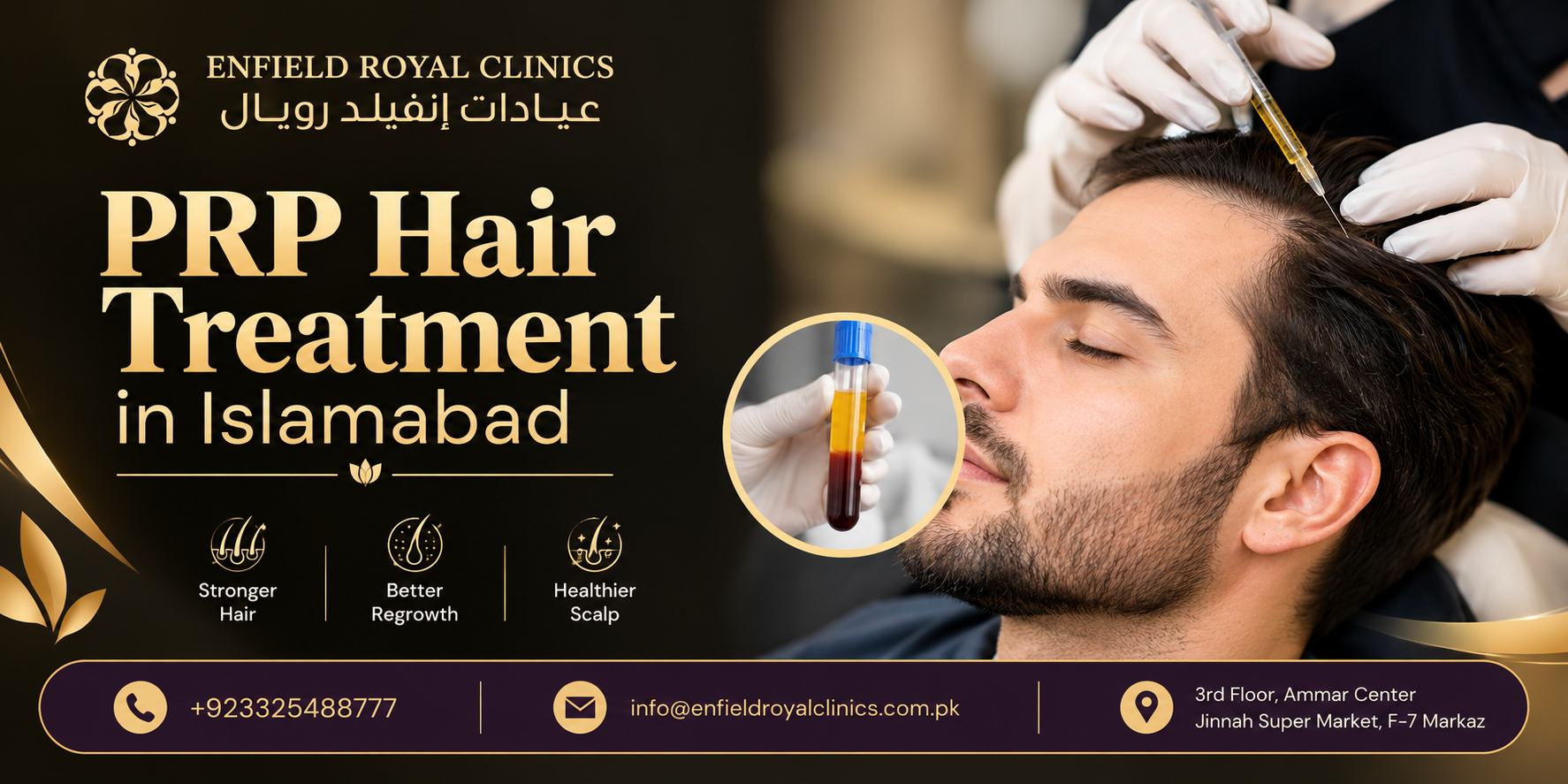
PRP stands for platelet-rich plasma. The treatment uses a small sample of the patient’s blood, which is processed to concentrate platelets and growth-related components. The prepared plasma is then delivered into selected areas of the scalp where thinning or weakened hair is present.
The purpose is to support the environment around existing follicles. The growth factors found in platelet-rich plasma may encourage follicular activity and help support healthier-looking hair growth.
PRP does not transplant new follicles into thinning areas. Instead, it is intended to work with follicles that are already present. This makes the condition of the existing follicles an important factor when determining whether the treatment may be beneficial.
Is PRP Suitable for Different Types of Hair Thinning?
PRP may be considered for people experiencing certain forms of progressive hair thinning, particularly when the follicles are still active. Individuals with early or moderate thinning may have more potential for improvement than those with advanced hair loss where follicles have become inactive.
The potential suitability of PRP can depend on:
- The underlying cause of hair loss
- The duration of hair thinning
- The condition of existing follicles
- The pattern and severity of hair loss
- Overall health and nutritional status
- Genetic factors
- Scalp condition
Thinning caused by different factors may require different approaches. For example, genetic hair loss, nutritional deficiencies, hormonal changes, and certain medical conditions can affect hair in different ways. Identifying the cause is therefore an important part of developing an appropriate treatment plan.
What Improvements Can PRP Provide for Thinning Hair?
PRP may help improve the appearance of thinning hair by supporting weakened follicles. Suitable patients may gradually notice stronger-looking strands, improved density, or better overall scalp coverage.
Potential improvements may include:
- Healthier-looking hair
- Increased appearance of hair thickness
- Support for weakened follicles
- Improved visual density
- Reduced appearance of progressive thinning in some cases
Results usually develop gradually rather than immediately. Hair follicles follow natural growth cycles, so the scalp needs time to respond to treatment. Some patients may notice changes in shedding or hair texture before visible improvements in density become apparent.
It is important to remember that PRP does not guarantee the same outcome for every patient. The response depends on the condition of the follicles and the cause and stage of hair loss.
How Long Does PRP Take to Improve Thinning Hair?
PRP Hair Treatment generally requires patience because hair growth is a gradual biological process. Immediate new hair growth should not be expected directly after a session.
Some individuals may notice early changes within several weeks, while more noticeable improvements in thickness and density can take several months. A series of sessions may be recommended to provide continued support to the follicles.
Progress can be easier to evaluate through regular follow-up appointments and photographs taken under similar lighting and conditions. This can help identify gradual changes that may not be obvious when looking at the hair every day.
The treatment timeline can also differ according to age, genetics, scalp health, nutritional status, and the severity of thinning.
What Factors Affect PRP Results?
Several factors can influence how well a patient responds to PRP. One of the most important is the condition of the existing hair follicles. PRP is designed to support follicles that are still present, so it may have limited potential in areas where follicles are no longer functioning.
Other factors that may influence results include:
- Age
- Genetic pattern of hair loss
- Duration of thinning
- Underlying medical or hormonal factors
- Nutrition
- Scalp health
- Lifestyle
- Treatment consistency
- Individual response to PRP
Patients should also understand that treating the underlying cause of hair loss can be important. If a nutritional deficiency or another contributing condition is responsible for excessive shedding, addressing that issue may form part of a broader hair-care strategy.
How Many PRP Sessions May Be Required?
PRP is commonly planned according to the individual’s hair condition rather than using one standard schedule for everyone. A patient with mild thinning may have different treatment requirements from someone with more advanced hair loss.
Multiple sessions may be recommended to provide ongoing support to the follicles. Follow-up evaluations can help determine whether the treatment is producing the expected response and whether additional sessions may be appropriate.
Some patients may also require maintenance treatment after the initial course. The need for maintenance depends on the individual’s response and the factors contributing to continued hair loss.
When considering PRP Hair Treatment cost in Islamabad, patients should therefore look at the complete treatment plan, including the recommended number of sessions and follow-up care, rather than considering the cost of only one session.
Can PRP Restore Hair in Completely Bald Areas?
PRP is primarily intended for thinning hair where follicles are still present and capable of producing hair. It does not create completely new follicles.
For this reason, completely bald areas with inactive follicles may not respond to PRP in the same way as areas with weakened but functioning follicles. Patients with advanced hair loss may need to discuss other hair restoration options depending on their individual circumstances.
This distinction is important because realistic expectations can help patients understand what PRP can and cannot achieve. The treatment may support natural hair growth, but it should not be presented as a guaranteed method for complete hair restoration.
How Can Patients Support Healthy Hair After PRP?
Maintaining good scalp and hair-care habits can support overall hair health. Patients should follow the recommended aftercare instructions after each treatment session and avoid unnecessary scalp irritation.
A balanced diet containing adequate protein, vitamins, minerals, and other nutrients can also support normal hair-growth processes. Proper hydration and general wellness may contribute to healthier-looking hair.
Patients may also benefit from avoiding excessive heat, harsh chemical treatments, and hairstyles that place repeated tension on the hair. If ongoing shedding is related to stress, nutritional problems, hormonal changes, or another underlying factor, addressing that issue may be important for long-term hair management.
Regular follow-up can help monitor progress and determine whether the treatment strategy should be continued or adjusted.
Frequently Asked Questions
1. Is PRP good for thinning hair?
PRP may be beneficial for suitable individuals with thinning hair, particularly when the existing follicles are still active. It may support weakened follicles and improve the appearance of hair density and thickness over time.
2. Can PRP make thin hair thicker?
PRP may help some patients achieve stronger-looking and thicker hair by supporting existing follicles. However, results vary, and the treatment cannot guarantee the same degree of improvement for everyone.
3. How long does PRP take to show results for thinning hair?
Visible results usually develop gradually. Some patients may notice early changes within weeks, while improvements in hair thickness and density may take several months and multiple treatment sessions.
4. Is PRP permanent for thinning hair?
PRP should not be considered a guaranteed permanent solution. Hair thinning can continue due to genetics, aging, hormonal changes, or other factors. Some individuals may require maintenance treatment or additional hair-management strategies.
For more information visit Enfield royal clinic in islamabad

 English
 Arabic
 French
 Spanish
 Portuguese
 Deutsch
 Turkish
 Dutch
Dutch
 Italiano
 Russian
 Romaian
 Portuguese (Brazil)