

Interior Designers in South Delhi Budget Mistakes (2026)
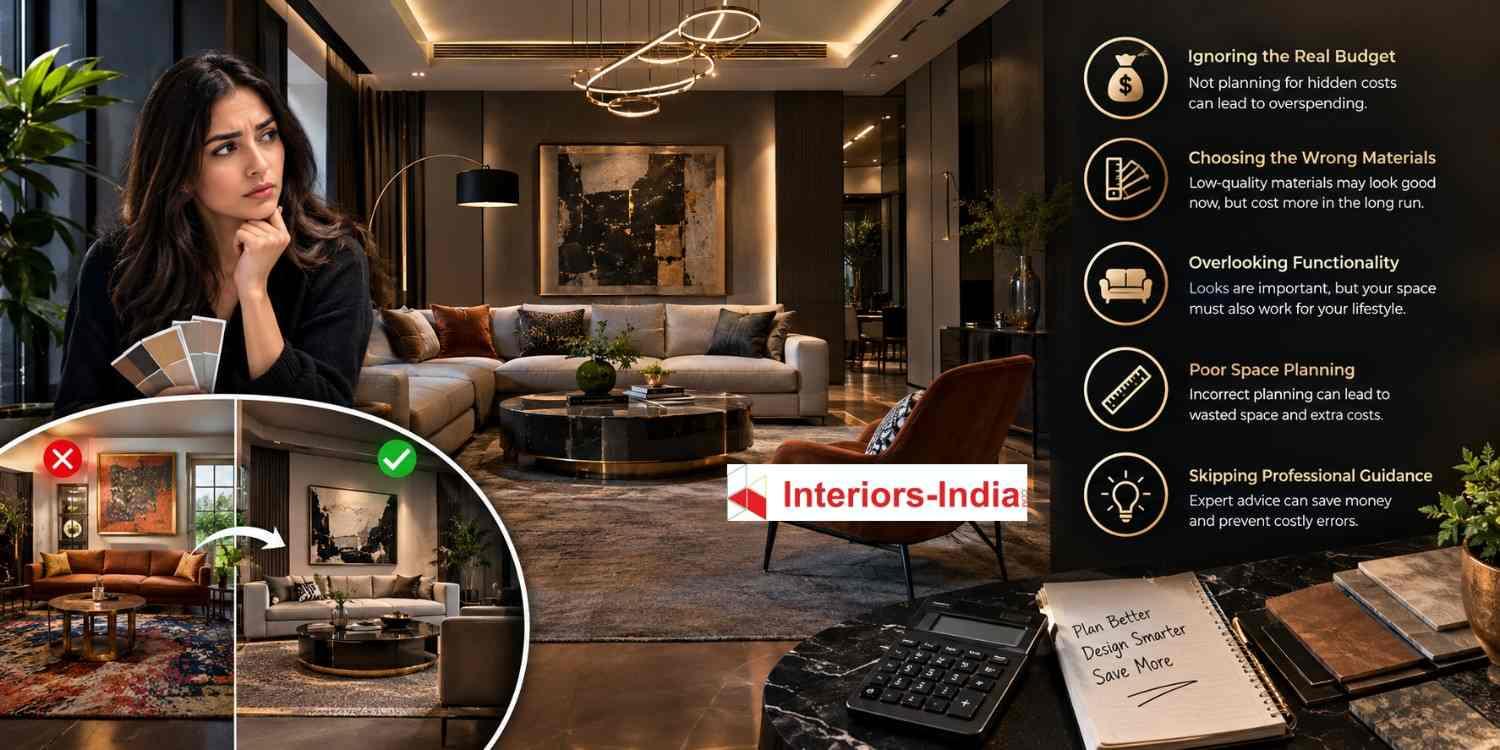
When planning an interior design for your house, one needs much more than just selecting beautiful furniture, high-quality materials, and colours that are trendy. The owners who look for Interior Designers in South Delhi should know what budget they have, how they will execute their project and what expenses may occur during the renovation process.
Houses in South Delhi differ from each other greatly, from builder floors in Greater Kailash and Lajpat Nagar, spacious apartments in Saket and individual houses in Panchsheel Park. There is a great variety of specific demands for storage, electric wiring, carpentry, lighting, and spatial arrangement.
By 2026, a well-executed interior begins with the establishment of priorities and spending budget prior to purchasing materials. Interiors-India will help you approach your interior project with a functional, personalized, and realistic attitude.
1. Setting an Unrealistic Interior Design Budget
One of the most common mistakes is making estimates for the whole project based on furniture costs or appealing photographs on the internet. In addition, the cost may include civil work, electrical works, plumbing, lighting, installation, transport, and finishing.
For instance, a two bedroom builder floor in Lajpat Nagar may need electrical points, kitchen cabinetry, wardrobe installation, and improvement in the bathroom. If all these points are overlooked in the initial estimate, the project becomes more costly than expected.
Before you contact Top Interior Designers in Delhi make a list of all the essential requirements and divide your budget into different sections. It will be easy for you to compare the quotations.
2. Ignoring Realistic Interior Design Costs in South Delhi
The cost of interior construction is based on the size of the building, the current condition of the building, the material used, the complexity of design, and customization. A newly acquired flat would normally have different needs than a builder floor which requires some repair or servicing.
The figures below are indicative planning costs for 2026 and not fixed market quotes. The cost needs to be verified through a site inspection and the scope of work.
Indicative Interior Design Budget
- Home with one bedroom: ₹3 lakh to ₹7 lakh for essentials like interiors and practical storage.
- Home with two bedrooms: ₹5 lakh to ₹12 lakh for a functional kitchen, wardrobes, lighting, and living area furniture.
- Home with three bedrooms: ₹8 lakh to ₹20 lakh for a complete package of interiors with custom-made storage and finishes.
- Premium interiors: ₹20 lakh or above, depending on the size of the property, bespoke furniture, imported finishes, and installations.
The costs are based on different levels of furnishing and carpentry rather than same and complete packages. The cost of appliances, furniture, major civil works, air conditioning, and renovation of bathrooms might be extra costs.
To have proper control over the budget, it is recommended to keep a separate contingency fund of 10-15% of the project cost estimate. Old buildings like Green Park and Safdarjung Enclave might need some extra work after stripping out the existing finishes.
3. Choosing Materials Based Only on Appearance
Materials which look premium may look attractive but looks do not always matter. A good choice of material will be based on durability, maintenance, exposure to moisture, ease of cleaning, and frequency of usage of the surface.
For instance, a family kitchen in Greater Kailash will get more benefits out of durable and easy to clean countertops and moisture resistant cabinets than any other delicate finish which will require regular maintenance.
Likewise, high gloss laminates may be suitable for one design idea while textured laminates or wood finishes may prove more effective in a busy family kitchen. What really matters is the compatibility between appearance and maintenance.
Before deciding on the materials, ask for samples and have the specification confirmed in writing. Interiors-India may be approached while designing an interior scheme.
4. Underestimating Storage and Space Planning
A beautiful-looking house may be uncomfortable due to poor planning of the storage and circulation areas. Big pieces of furniture, odd wardrobe doors, and lack of storage in the kitchen frequently cause problems which are hard to fix once installed.
Vertical storage, sliding wardrobes, built-in cabinets, and multifunctional furniture are some solutions which may help to utilize the space better in South Delhi houses. Nevertheless, each solution should take into consideration doorways, circulation, ventilation, and access to electricity.
Consider these practical improvements before finalising the layout:
- Take measurements of bedrooms, corridors, kitchen workspaces, and doorways prior to purchasing furniture.
- Plan your wardrobes based on real clothes, luggage, and household storage requirements.
- Make sure that commonly used kitchen appliances remain within easy reach without blocking workspaces.
- Consider using versatile furniture if it makes sense without overcrowding the room.
- Check locations for sockets, lights, and appliances sizes before starting carpentry work.
For example, a family residing in Saket will require a study nook and more storage space than an elaborate furniture item. Considering the actual usage makes it possible to avoid future remodeling expenses.
5. Comparing Quotations Without Checking Their Scope
Choosing a designer or contractor based on a lower quotation at the outset can result in additional costs. Though two quotations might look alike, they might have different materials, hardware brand names, installation services, project management, and warranties.
An estimate for a modular kitchen, for instance, should contain information about materials used for cabinets, interior finishing, hardware, countertops, accessories, installation, and the exclusion of electrical and plumbing work. Otherwise, it will be impossible to compare the total cost.
If you are choosing Interior Designers in South Delhi request a detailed estimate and specifications in writing. Make sure that the terms of payments, delivery, site supervision, and change approvals are included.
Interiors-India recommends taking a planning approach where the concept of the design, materials, and budget are discussed simultaneously. This allows clients to know what they are paying for before anything is executed.
6. Starting Work Without a Detailed Design Plan
Beginning carpentry or civil work before approving the layout is another avoidable budgeting mistake. Changes made after manufacturing or installation can involve new materials, additional labour, delivery delays, and wasted components.
A complete planning stage should include measurements, furniture layouts, lighting positions, material selections, and working drawings where required. Three-dimensional visualisations can help homeowners understand the proposed appearance, but technical drawings and written specifications remain essential for execution.
For a renovation in Hauz Khas, the design team should also identify existing plumbing lines, electrical constraints, structural limitations, and any building permissions that may be necessary. Structural alterations should never be undertaken without appropriate professional assessment and approvals.
A clear design plan allows the homeowner to make important decisions before costs become difficult to control.
7. Forgetting Hidden and Recurring Expenses
Interior budgets frequently exclude costs that appear minor individually but become substantial when combined. Delivery charges, debris removal, additional electrical points, wall repairs, temporary accommodation, and replacement of damaged fittings can all affect the final expenditure.
Older properties may also reveal dampness, uneven flooring, outdated wiring, or plumbing leaks during renovation. These issues should be assessed early wherever possible, particularly before new cabinetry or wall finishes conceal the affected areas.
Keep a separate record of approved changes and additional expenses throughout the project. Do not treat the contingency reserve as money available for optional upgrades; preserve it for genuine unforeseen requirements.
8. Following Trends Instead of Your Lifestyle
The interior design trend can give ideas, but to copy it without taking into account the requirements of the family will lead to unnecessary costs. The decorative finish of walls, the ceiling treatment, the lighting and the custom furniture can be costly and not make the house more functional.
A good design should take into account the number of residents, the type of work, the storage requirements, the cleaning preferences, and the maintenance requirements. Families with kids may prefer tough materials, while people working from home require proper lighting and acoustic comfort.
Homeowners looking for the Best Interior Designer in Dwarka should use this rule to judge different designs. Regardless whether the house is in Dwarka or South Delhi, the best design choice will be the one which fits the house, the owner and the budget.
9. The End-to-End Interior Execution Process
A structured execution process helps reduce confusion, minimise rework, and keep spending aligned with the approved plan. Interiors-India follows a design-focused approach that homeowners can use as a reference when organising their own project requirements.
Step 1: Discovery and site assessment
Discuss lifestyle requirements, preferred design styles, the property's existing condition, and the available budget. Take accurate measurements and identify repairs or technical constraints that could influence the estimate.
Step 2: Space planning and concept development
Develop furniture layouts, storage solutions, circulation plans, and the overall design direction. Review the proposed arrangement before moving forward with detailed specifications.
Step 3: Detailed costing and material selection
Prepare an itemised estimate covering materials, labour, installations, and agreed services. Confirm finishes, hardware, appliances, exclusions, and the contingency reserve before signing off on the scope.
Step 4: Drawings and approvals
Finalise working drawings, electrical layouts, lighting positions, and relevant service details. Obtain necessary approvals before starting any work that requires them.
Step 5: Procurement and execution
Coordinate material orders, carpentry, electrical work, plumbing, painting, and installations according to the agreed sequence. Inspect completed stages before allowing subsequent work to conceal them.
Step 6: Quality checks and handover
Check cabinet alignment, drawer movement, lighting, plumbing connections, finish quality, and appliance operation. Record outstanding defects, confirm warranty documentation, and retain the final approved cost statement.
10. A Practical Client–Designer Conversation
Client: We are looking to remodel our house in South Delhi without going above our budget limits.
Designer: Interior Designers in South Delhi will help you in cost planning and prioritising the necessary renovations.
Client: But how do we strike a balance between quality, style, and cost?
Designer: Interiors-India concentrates more on space utilisation and designs.
Summary
Interior design budget errors can be avoided through proper cost estimates, specification, material selection, and execution plans. The owners need to judge the design options based on the scope, quality, functionality, and maintenance involved instead of judging them purely based on the price involved.
If you are remodeling your builder floor in South Delhi or furnishing your new apartment in Dwarka, proper planning will enable you to make the right decisions and avoid spending unnecessarily. Interior-India is an appropriate starting point for those looking into interior design concepts and solutions.
Some Important Questions
1. How much does interior design cost in South Delhi in 2026?
The cost required for a one-bedroom home would be around ₹3 lakh to ₹7 lakh, and for a two-bedroom home, it may come to ₹5 lakh to ₹12 lakh for chosen interior work. For a three-bedroom home, it may go from ₹8 lakh to ₹20 lakh.
2. How can I avoid unexpected interior design expenses?
Obtain an itemized quote prior to commencement of work. Clarify material details, labor costs, installation costs, exclusions, payment schedule, and contingency of around 10% to 15%.
3. What should I check before hiring an interior designer?
Review previous projects, understand the scope of the proposed work, compare material specifications, and determine who will coordinate the work. Make sure that payment terms, schedules, changes, and warranties are in writing.
4. Is customised furniture more expensive than modular furniture?
Customized furniture is likely to be costlier due to the dimensions and finishes required. It is not certain how much modular furniture will cost; however, it could prove to be more affordable.
5. How do I choose between Interior Designers in South Delhi and a designer in Dwarka?
Consider project expertise, scope of services, quality of design, clear pricing and implementation skills rather than just the location factor. In both instances, of looking for Interior Designers in South Delhi and the Best Interior Designer in Dwarka, go for an expert whose proposal is appropriate to your requirements.
About us -
Official Mobile No. - +91 971-812-5263
Official Email - team@interiors-india.com

 English
 Arabic
 French
 Spanish
 Portuguese
 Turkish
 Dutch
Dutch
 Italiano
 Russian
 Romaian
 Portuguese (Brazil)
 Greek
Greek
