

GST Compliance for Growing Businesses Building a Reliable Routine
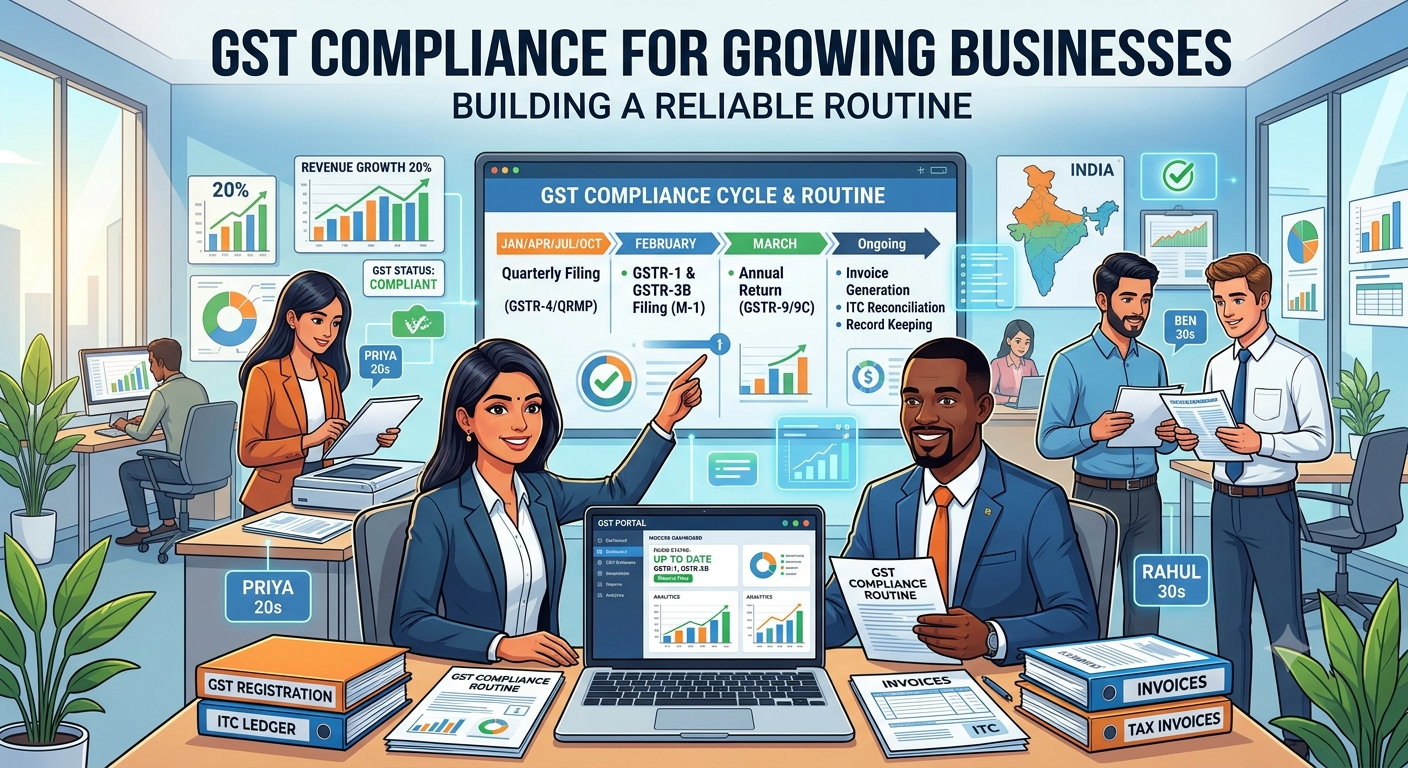
As a business grows, managing GST compliance becomes an important part of maintaining accurate financial records and running operations smoothly. Increasing transactions, new customers, additional suppliers, and changing business activities can make compliance more complex. A reliable routine helps businesses organise documentation, review transactions, and meet applicable GST requirements more efficiently.
Understand Your GST Responsibilities
Every business should understand the GST requirements that apply to its activities. These may depend on the nature of the business, turnover, registration status, type of transactions, and applicable regulations.
Business owners should remain aware of relevant return filing requirements, tax payment obligations, invoice rules, and recordkeeping responsibilities. Since requirements may change, it is important to review official guidance and seek professional advice when necessary.
Maintain Accurate Sales and Purchase Records
Accurate transaction records form the foundation of a reliable GST compliance process. Businesses should maintain organised sales invoices, purchase invoices, credit notes, debit notes, and other supporting documents.
Each transaction should be recorded consistently, with details checked for accuracy. Missing or incorrect information can create difficulties during reconciliation and return preparation.
A clear recordkeeping system also helps businesses locate documents quickly when reviewing transactions or responding to compliance-related queries.
Reconcile GST Records Regularly
Reconciliation helps identify differences between accounting records, transaction documents, and relevant GST statements. Businesses should review these records periodically rather than waiting until a filing deadline approaches.
During reconciliation, check for missing invoices, duplicate entries, incorrect tax classifications, and differences between recorded transactions and available statements.
Resolving discrepancies early can make return preparation more manageable and reduce the risk of avoidable errors. Any correction should follow the applicable GST rules and procedures.
Create a GST Compliance Calendar
A compliance calendar helps businesses keep track of filing dates, tax payments, internal reviews, and documentation requirements. Assign responsibility for each task so that important activities are not overlooked.
The calendar should reflect the business's actual registration status and applicable filing obligations. Review it whenever business activities or regulatory requirements change.
Regular reminders and an internal review process can help teams prepare documents in advance instead of rushing at the last minute.
Keep Financial Records Organised
A consistent document management system makes GST compliance easier. Store invoices, accounting records, payment information, and supporting documents in clearly labelled digital or physical folders.
Use a consistent naming system and restrict access to authorised employees. Digital records should be backed up securely, and documents should be retained for the period required under applicable law.
Organised records can also support budgeting, cash flow monitoring, financial reporting, and business planning.
Coordinate GST Compliance With Financial Planning
GST compliance should not operate separately from a business's wider financial management process. Regularly reviewing tax-related obligations alongside income, expenses, cash flow, and future business requirements can help owners make better-informed decisions.
Corporate tax planning India is another important consideration for growing businesses. While GST compliance focuses on applicable indirect tax obligations, corporate tax planning generally concerns direct tax responsibilities and the lawful management of a company's tax position. Businesses should consider both areas when reviewing their financial processes, while ensuring that each obligation is handled according to the relevant rules.
Professional advice can help businesses understand how their accounting practices, tax responsibilities, and long-term financial objectives fit together.
Train Employees and Assign Responsibilities
GST compliance often involves several people, including finance staff, accountants, sales teams, and procurement employees. Everyone involved should understand the importance of accurate invoices, timely documentation, and consistent transaction reporting.
Assign clear responsibilities for collecting records, checking invoices, reconciling transactions, and preparing information for filings. A documented internal process can reduce confusion when employees change roles or business activity increases.
Review Your Process as the Business Grows
A process that works for a small business may become difficult to manage as transaction volumes increase. Review your compliance routine periodically to identify repetitive tasks, documentation gaps, and opportunities to improve accuracy.
Accounting software and other digital tools may help organise records and track transactions, but businesses should still review the information for completeness and correctness.
When operations expand into new locations, introduce new products, or change their business structure, review whether these changes affect their GST or other tax obligations.
Conclusion
Building a reliable GST compliance routine requires accurate records, regular reconciliation, clear responsibilities, and a well-maintained compliance calendar. These habits help growing businesses manage their obligations more consistently and keep financial information organised.
By connecting GST processes with broader financial management and Corporate tax planning India, businesses can develop a more coordinated approach to compliance and support sustainable growth. Requirements vary by business, so professional guidance should be obtained whenever specific tax obligations need clarification.
Frequently Asked Questions
1. Why is a regular GST compliance routine important for growing businesses?
A regular routine helps businesses maintain accurate records, monitor applicable deadlines, identify discrepancies, and prepare required documentation more efficiently.
2. Which documents should businesses maintain for GST compliance?
Common documents include sales and purchase invoices, credit notes, debit notes, accounting records, and relevant transaction statements. Specific recordkeeping requirements depend on applicable rules and business activities.
3. How often should GST records be reconciled?
Businesses should reconcile records periodically, with the frequency based on transaction volume and operational needs. Regular checks help identify discrepancies before return preparation.
4. How is GST compliance different from corporate tax planning?
GST compliance concerns applicable goods and services tax obligations, while corporate tax planning focuses on direct tax responsibilities and lawful tax management for companies. Both should be addressed according to the relevant rules.
5. Can professional support help businesses manage tax compliance?
Yes. Qualified tax and accounting professionals can help businesses understand their obligations, review records, identify discrepancies, and maintain suitable compliance processes.

 English
 Arabic
 French
 Spanish
 Portuguese
 Deutsch
 Turkish
 Dutch
 Italiano
 Russian
 Romaian
 Greek
