

Air Freight vs. Sea Freight: How to Choose the Right Freight Forwarding Solution
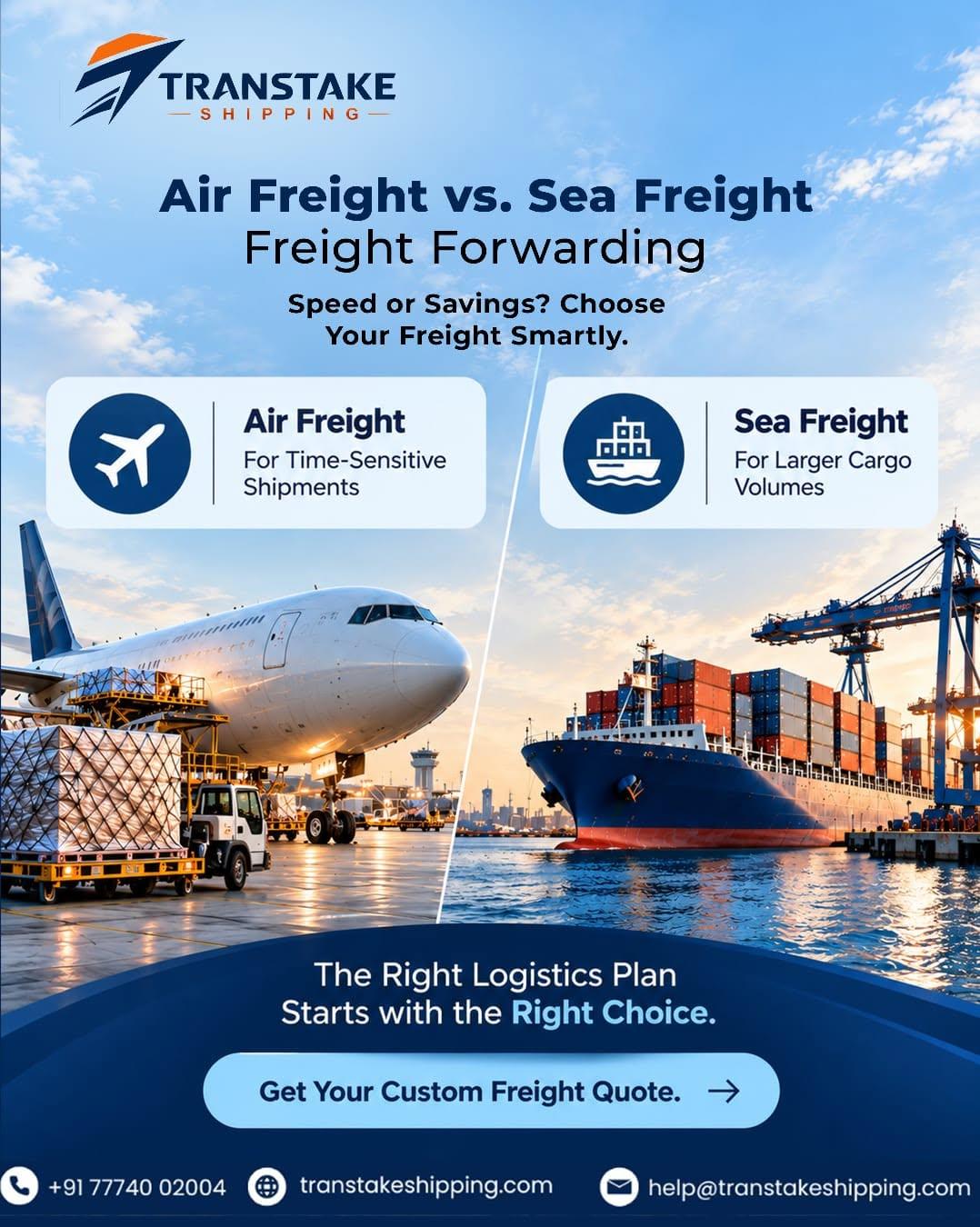
When shipping goods internationally, choosing the right transportation method can influence your budget, delivery schedule, and supply chain efficiency. Businesses commonly compare air freight and sea freight when planning imports and exports.
Transtake Shipping provides freight forwarding and logistics coordination to help businesses organize international cargo movement. Understanding the differences between air and sea freight can help you select a shipping method that suits your shipment requirements.
What Is Air Freight?
Air freight involves transporting cargo by aircraft. It is commonly considered for urgent consignments, time-sensitive products, commercial samples, and goods that need to reach their destination relatively quickly.
Benefits of Air Freight
-
Faster transit: Air freight is generally faster than ocean freight over long international distances.
-
Suitable for urgent cargo: Useful when delivery deadlines are important.
-
Frequent service options: Depending on the route, businesses may have several flight schedules to consider.
-
Shipment planning: Can help businesses respond to urgent inventory and replenishment requirements.
What to Consider
Air freight can cost more than sea freight, particularly for heavy or bulky shipments. Pricing may depend on actual weight, volumetric weight, route, cargo type, and applicable handling charges.
What Is Sea Freight?
Sea freight, also called ocean freight, transports goods by ship between ports. It is widely used for large commercial consignments, industrial equipment, raw materials, and other cargo that can accommodate longer transit times.
Benefits of Sea Freight
-
Suitable for large shipments: Container shipping accommodates many types of commercial cargo.
-
FCL and LCL options: Businesses can consider a full container or shared container space.
-
Practical for planned shipments: Works well when inventory and delivery schedules allow for longer transit times.
-
International cargo capacity: Offers options for transporting substantial cargo volumes.
What to Consider
Sea freight generally has longer transit times and may involve port handling, customs procedures, consolidation, and inland transportation. Businesses should plan for the complete journey rather than the vessel transit time alone.
Air Freight vs. Sea Freight: Key Differences
| Factor | Air Freight | Sea Freight |
|---|---|---|
| Transit time | Generally faster | Generally slower |
| Shipping cost | Often higher, especially for bulky cargo | Often economical for larger shipments |
| Best suited for | Urgent and time-sensitive cargo | Larger shipments and planned cargo movements |
| Cargo capacity | Subject to aircraft limits | Suitable for many large-volume consignments |
| Common options | Airport-to-airport and coordinated door-to-door services | FCL and LCL container shipping |
| Planning considerations | Flight schedules, chargeable weight, handling | Sailing schedules, port handling, container space |
Actual transit times and costs depend on the route, carrier, cargo characteristics, service level, and other charges.
Which Shipping Method Should You Choose?
Choose Air Freight When Speed Matters
Air freight may be suitable when a shipment has a tight delivery deadline, when goods are needed urgently, or when the value of faster delivery justifies the additional transportation cost.
Choose Sea Freight When Cargo Volume Is Larger
Sea freight may be a good option for bulky or large-volume cargo when the delivery schedule allows for longer transit times. Compare FCL and LCL options according to your cargo volume and total shipping costs.
Compare the Total Logistics Cost
Do not compare only the advertised freight rate. Consider pickup, packing, handling, documentation, customs clearance, insurance where appropriate, port or airport charges, and final delivery.
How a Freight Forwarder Can Help
A freight forwarder helps coordinate the movement of goods and related logistics activities. Depending on the service arrangement, this can include transport booking coordination, shipment documentation support, cargo handling arrangements, customs clearance coordination, and inland transportation.
Working with a logistics provider can help businesses compare shipping options and organize their cargo movement more effectively.
Freight Forwarding Support from Transtake Shipping
Transtake Shipping supports businesses with freight forwarding and logistics coordination for international shipments. Our service offerings include air freight forwarding, ocean freight coordination, transportation support, and customs clearance assistance.
Share your cargo dimensions, weight, origin, destination, and preferred delivery schedule to discuss suitable shipping options for your business.
Contact Transtake Shipping
-
Phone: +91-77740 02004
-
Website: https://www.transtakeshipping.com
-
Email: help@transtakeshipping.com
Conclusion
Air freight and sea freight serve different shipping needs. Air freight is generally preferred when speed is important, while sea freight is often suitable for larger shipments and planned deliveries. The best choice depends on your cargo, budget, destination, and timeline.
Contact Transtake Shipping to discuss your freight forwarding requirements and explore a suitable logistics approach.

 English
 French
 Spanish
 Portuguese
 Deutsch
 Turkish
 Dutch
 Italiano
 Russian
 Romaian
 Portuguese (Brazil)
 Greek
