

OPG Full Form in Dental: What Does It Mean?
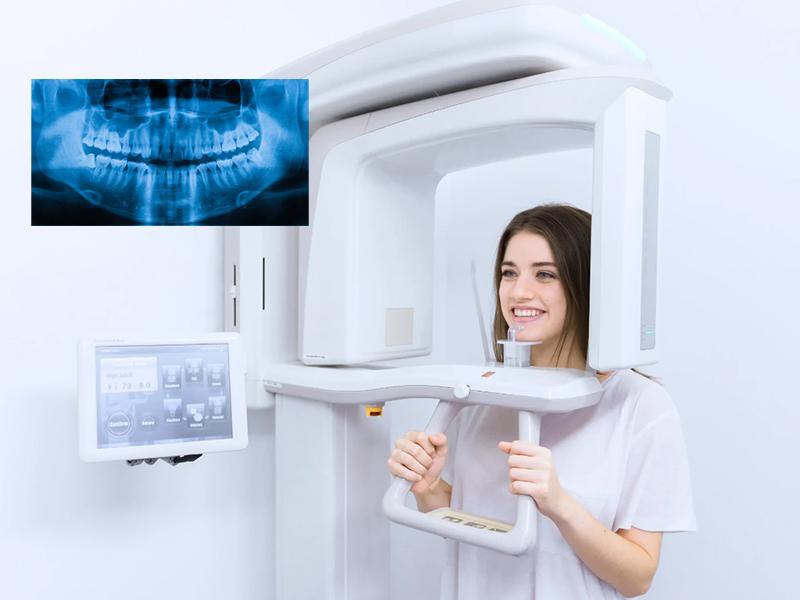
Dental X-rays help dentists examine areas of the mouth that cannot be seen clearly during a routine visual examination. They can provide useful information about the teeth, jawbones, and surrounding structures, helping dentists assess certain dental conditions and plan appropriate treatment.
The OPG full form in dental terminology is Orthopantomogram. It refers to a panoramic dental X-ray that captures a broad view of the upper and lower jaws, teeth, and surrounding structures in a single image. At Imperial Smiles Dental, patients can discuss why an OPG may be recommended and how the scan may contribute to their dental assessment.
What Is an OPG in Dentistry?
An OPG is a type of dental imaging test that produces a panoramic image of the mouth. Unlike a small dental X-ray that focuses on one or a few teeth, an OPG displays a wider area, including both jaws and many of the teeth.
The machine rotates around the patient's head while capturing the image. The process is usually quick and does not require anything to be placed inside the mouth.
Dentists use the image alongside a clinical examination and the patient's dental history. The scan can help identify issues that may require closer investigation.
Why Do Dentists Recommend an OPG?
An OPG may be recommended when a dentist needs a broad overview of the teeth and jaws. Common reasons include:
1. Checking Wisdom Teeth
Wisdom teeth may become impacted or fail to erupt properly. An OPG can help show their position and relationship to neighbouring teeth and nearby structures.
2. Assessing Jawbone and Teeth
The image may help identify certain abnormalities involving the jawbone, tooth roots, or developing teeth. If an area needs closer examination, additional imaging may be recommended.
3. Planning Dental Implants
Before implant treatment, a dentist may use an OPG to assess the general condition of the teeth and jaws. However, an OPG does not provide all the detailed measurements required for every implant procedure. Three-dimensional imaging, such as CBCT, may be needed when clinically indicated.
4. Evaluating Orthodontic Concerns
An OPG may help dentists and orthodontists assess tooth development, missing teeth, and the position of unerupted teeth as part of treatment planning.
5. Investigating Dental Problems
When a patient has unexplained symptoms or a suspected dental abnormality, an OPG may provide useful information. The dentist will decide whether this broad image is suitable or whether more targeted imaging is necessary.
OPG Imaging at Imperial Smiles Dental
If your dentist recommends an OPG, ask what the scan is intended to assess and whether the results may change your treatment plan. Understanding the purpose of an X-ray can help you feel more comfortable and make informed decisions about your dental care. Imperial Smiles Dental can help patients discuss their dental concerns and understand the role of diagnostic imaging in treatment planning.
How Is an OPG X-Ray Performed?
The procedure is generally straightforward.
First, the dental professional explains the scan and asks you to remove items such as earrings, necklaces, glasses, or removable metal objects that could interfere with the image.
You will stand or sit in the designated position and follow instructions to keep your head still. Depending on the equipment, you may be asked to bite gently on a positioning guide.
The machine then rotates around your head to capture the image. You must remain still during the scan to avoid blurring. The image is reviewed by an appropriately trained professional, and your dentist explains the relevant findings.
The procedure is usually painless and does not involve injections.
Is an OPG Better Than a Regular Dental X-Ray?
Neither type of X-ray is automatically better for every situation. They serve different purposes.
A small intraoral X-ray can show details of specific teeth and their surrounding tissues. An OPG provides a broader view of both jaws and is useful when the dentist needs to examine a larger area.
For example, a dentist investigating a particular tooth may prefer a targeted dental X-ray. If the concern involves wisdom teeth or the overall jaw structure, an OPG may be more appropriate.
The choice depends on the clinical question, and additional imaging should only be used when justified.
Is an OPG X-Ray Safe?
An OPG uses ionising radiation, but the radiation dose from a typical dental panoramic X-ray is generally low. The scan should still be performed only when it is expected to provide information that can support diagnosis or treatment.
Tell your dentist if you are pregnant or think you may be pregnant before undergoing imaging. The dental team can assess the need for the scan and take appropriate precautions.
Following positioning instructions also helps produce a clear image and may prevent the need to repeat the scan.
What Can an OPG Detect?
An OPG may help identify impacted teeth, missing teeth, certain jawbone abnormalities, and some dental infections or lesions. However, it cannot reliably reveal every dental problem.
Small cavities, fine root details, and certain gum-related conditions may require clinical examination or more targeted imaging. An OPG should not be treated as a complete diagnosis on its own.
Conclusion
The OPG full form in dental terminology is Orthopantomogram, a panoramic X-ray that provides a broad view of the teeth and jaws. It can support the assessment of wisdom teeth, jaw structures, and selected dental conditions, although additional imaging may sometimes be necessary. At Imperial Smiles Dental, patients can ask their dentist whether an OPG is appropriate for their individual dental needs.

 English
 Arabic
 French
 Spanish
 Portuguese
 Turkish
 Dutch
 Italiano
 Russian
 Romaian
 Portuguese (Brazil)
 Greek
