

RCCB Breaker Safety Guide for Home & Business | Jawad Electric
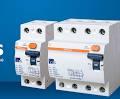
RCCB Circuit Breakers and Electrical Safety
Choosing the right protective equipment is essential for any modern electrical installation, whether for a residential home, commercial building, or industrial facility. Electrical hazards like current leakage, short circuits, and overloads pose serious safety risks that require specialized devices to prevent equipment damage and electrical shock.
When designing a secure distribution board, understanding how different switching and safety devices operate ensures optimal protection. High-grade electrical components sourced through trusted suppliers like Jawad Electric help maintain safety standards across diverse setups by preventing accidental faults from escalating into hazards.
What is an RCCB Circuit Breaker?
A Residual Current Circuit Breaker, commonly known as an RCCB breaker, is a specialized electrical safety device designed to protect people from electric shock and electrocution caused by direct or indirect contact. Unlike standard circuit breakers that only trip during a short circuit or overload, an RCCB constantly monitors the balance of electrical current flowing through the live and neutral wires.
If the device detects an imbalance—meaning a small amount of current is leaking to the ground through a faulty appliance or human touch—it disconnects the circuit within milliseconds. This rapid response prevents dangerous current levels from passing through the human body, making it an indispensable safety addition to distribution boards alongside standard protective switches.
Key Differences Between RCCBs and Standard Circuit Breakers
While people often group all safety switches together, traditional circuit breakers and residual current devices serve entirely different protective functions within an electrical network.
-
Overload and Short-Circuit Protection: Standard circuit breakers protect the wiring insulation and electrical fixtures from overheating and catching fire by cutting off power when excessive current flows through the circuit.
-
Leakage and Shock Protection: An RCCB focuses purely on earth leakage faults. It does not protect against standard overloads unless paired with an MCB (Miniature Circuit Breaker) or integrated into an RCBO unit.
-
Operational Mechanism: Standard breakers use thermal and magnetic triggers, whereas residual current devices rely on a toroidal current transformer to detect phase and neutral imbalances.
Using these devices together creates a comprehensive defense system that safeguards both the physical infrastructure and the individuals operating the equipment.
Choosing Reliable Electrical Components
Sourcing durable and certified components is critical for long-term electrical reliability. Faulty or uncertified protection devices can fail during an emergency, leaving circuits vulnerable to dangerous faults. When setting up distribution boards, engineers and electricians look for robust build quality, high breaking capacity, and compliance with international safety standards.
Suppliers such as Jawad Electric provide a wide range of electrical distribution materials, switches, and protective gear suitable for various commercial and residential requirements. Ensuring proper installation by a qualified professional guarantees that every safety device functions correctly under fault conditions.
Frequently Asked Questions
What is the primary function of an RCCB breaker?
An RCCB breaker detects earth current leakages and disconnects the power supply instantly to prevent severe electrical shocks and electrocution.
Can an RCCB replace standard circuit breakers?
No, an RCCB cannot replace standard circuit breakers because it does not trip on overloads or short circuits unless it is a combined RCBO unit. Both devices must work together.
How often should an RCCB be tested?
Most manufacturers recommend pressing the test button on the unit monthly to ensure the internal mechanical and electrical tripping mechanism functions properly.
Why does an RCCB trip unexpectedly?
Frequent tripping usually indicates earth leakage caused by moisture in appliances, damaged insulation, faulty heating elements, or wiring issues.
Conclusion
Integrating dependable protective devices into an electrical network is vital for safeguarding human life and property against unforeseen faults. By combining standard overcurrent protection with the sensitive ground-fault detection of an RCCB breaker, electrical systems remain resilient against both structural overloads and dangerous current leaks. Proper selection, installation, and regular testing of these components through reliable suppliers like Jawad Electric ensure a secure environment for any residential or commercial space.

 Arabic
 French
 Spanish
 Portuguese
 Deutsch
 Turkish
 Dutch
 Italiano
 Russian
 Romaian
 Portuguese (Brazil)
 Greek
