

Are Digital Water Systems Transforming Pump Operations Across China?
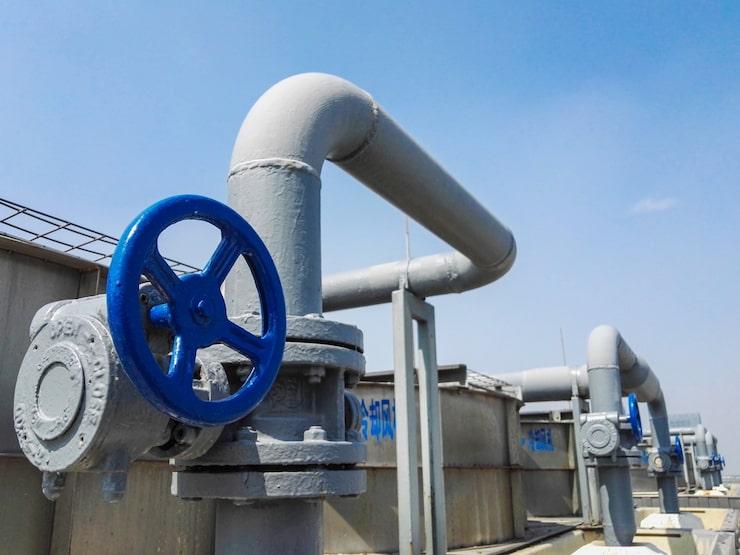
China’s water pump sector is closely connected with the country’s extensive water infrastructure, agricultural irrigation, municipal supply systems, flood control, industrial operations, and regional water-transfer projects. Pumps perform a fundamental role in moving water between rivers, reservoirs, treatment facilities, irrigation networks, cities, and industrial sites. As China continues investing heavily in water conservancy, demand is increasingly focused on equipment that combines dependable hydraulic performance with energy efficiency, automation, and long operating life.
According to a Vyansa Intelligence report, the China water pump market was valued at USD 8.71 billion in 2025 and is projected to reach USD 11.06 billion by 2032, representing a 3.47% CAGR during 2026–2032.
Water Conservancy Investment Supports Pumping Infrastructure
China continues to invest substantially in water infrastructure. Official government information shows that more than RMB 1.28 trillion was invested in water conservancy facilities during 2025, marking the fourth consecutive year in which annual investment exceeded RMB 1 trillion.
A total of 47,563 water conservancy projects were undertaken during the year. This investment covered priorities including flood and drought prevention, water-resource management, ecological restoration, and digital water systems.
For a China water pump market analysis, this infrastructure activity is particularly important because pumping equipment is required across water transfer, drainage, irrigation, municipal supply, and other water-management projects.
Major Water-Transfer Projects Require High-Capacity Pumps
China’s extensive geography creates situations where water needs to be transferred between different river basins and regions. Large pumping stations become critical when gravity alone cannot provide the required water movement.
A practical example is the Fenghuangjing Pumping Station within the Yangtze-to-Huaihe Water Diversion Project. The station entered operation in 2025 and strengthened the project’s ability to transfer water from the Yangtze River into the Huaihe River system.
The wider project stretches across a 723-kilometre water-transmission route and serves areas in Anhui and Henan provinces. This demonstrates the importance of high-capacity pumping equipment within major regional water-security projects.
Agricultural Irrigation Creates Extensive Applications
Agriculture represents another significant application for water pumps. China had approximately 1.09 billion mu of effectively irrigated farmland by the end of 2025, according to official government information.
These detailed industry insights highlight the scale of irrigation requirements across the country. Pumps are needed to abstract water from rivers and reservoirs, move it through irrigation systems, and distribute it to agricultural areas where natural water availability may be insufficient.
Modernization of older irrigation infrastructure can also create replacement requirements for pumps, motors, electrical systems, and automated controls.
Pumping Stations Are Being Upgraded for Greater Capacity
Many existing pumping facilities were constructed decades ago and now need modernization to meet contemporary agricultural and water-management requirements.
Recent projects demonstrate this process. In Hubei, for example, two irrigation pumping stations originally built in 1986 underwent capacity improvements before returning to operation in 2025. The upgraded infrastructure provides irrigation support for approximately 100,000 mu of farmland.
This illustrates why replacement and refurbishment can be as important as completely new installations when assessing the latest industry analysis.
Urban Water Supply Requires Dependable Equipment
China’s continued urban and regional development creates extensive requirements for potable-water transportation. Pumps move raw water toward treatment plants, maintain pressure within distribution systems, and transfer treated water to reservoirs and communities.
A recent water-resource project in Chongqing demonstrates this role. A newly developed pumping station has been designed to transfer raw water through almost 20 kilometres of pipeline to a local treatment facility, ultimately supporting water requirements for a substantial population.
Municipal applications place particular emphasis on reliability because unexpected pump failures can directly affect community water supplies.
Flood Management Creates High-Capacity Applications
Water pumps also form an important component of China’s flood-control infrastructure. Heavy rainfall and high river levels can create substantial drainage requirements in vulnerable urban and low-lying areas.
Drainage pumping stations need the ability to move large volumes of water quickly during extreme conditions. Equipment can remain relatively inactive during normal periods before being required to operate reliably during emergencies.
For a water pump industry report, this means equipment selection needs to consider resilience and rapid operational readiness alongside conventional efficiency measures.
Digitalization Is Changing Pump Operation
China’s wider water-management strategy increasingly incorporates digital systems. Connected sensors can provide information about pressure, flow, vibration, water levels, and equipment conditions.
Integrating pumps with automated controls allows operators to respond more efficiently to changing demand. Variable-speed systems can adjust pump output, while remote monitoring can help maintenance teams identify unusual performance before equipment failure occurs.
Digital capabilities are particularly useful for large water networks containing numerous pumping stations spread across extensive geographic areas.
Energy Efficiency Is an Important Lifecycle Consideration
Water pumps can operate for thousands of hours each year, making electricity consumption a major component of lifecycle expenditure.
Correct equipment sizing, efficient motors, variable-speed drives, hydraulic optimization, and intelligent control systems can reduce unnecessary energy use. Operators modernizing older pumping stations therefore have an opportunity to improve efficiency rather than simply replacing existing equipment with equivalent technology.
Industrial Applications Broaden Equipment Requirements
China’s extensive manufacturing sector creates additional demand for pumps used in process water, cooling systems, circulation, cleaning, water treatment, and other industrial fluid-handling applications.
Industrial operating conditions can vary considerably. Some facilities require pumps capable of handling high temperatures, corrosive liquids, or continuous operation, while others prioritize precise flow control and high reliability.
This application diversity creates opportunities across multiple pump technologies rather than a single standardized product category.
Modern Pumping Systems Will Support China’s Water Resilience
China’s water pump sector is being shaped by major infrastructure investment, agricultural irrigation, regional water-transfer projects, urban water supply, flood protection, and industrial requirements.
Future competitiveness will increasingly depend on more than basic pumping capacity. Equipment manufacturers that combine hydraulic efficiency, dependable construction, digital monitoring, intelligent control, and strong lifecycle support can address the changing requirements of China’s water infrastructure.
As water-resource management becomes more sophisticated, pumps will remain fundamental to ensuring that water can be moved efficiently and reliably wherever communities, agriculture, and industries require it.

 English
 Arabic
 French
 Spanish
 Portuguese
 Deutsch
 Turkish
 Dutch
 Russian
 Romaian
 Portuguese (Brazil)
 Greek
