

Citizen Developer: Transform Business Ideas Into Apps
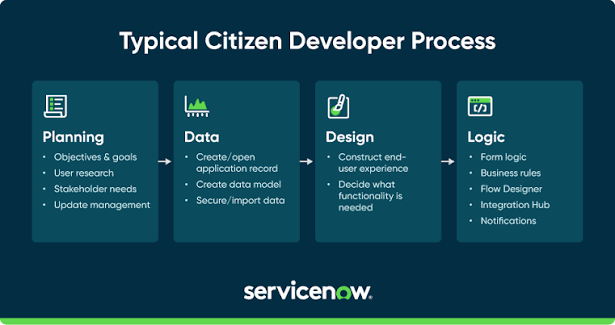
Modern businesses need flexible digital solutions to manage daily operations, improve customer experiences, and support employee productivity. However, developing new software through traditional programming can require specialized expertise, extensive planning, and significant resources. This challenge has encouraged organizations to explore easier ways to build applications and automate business processes.
A citizen developer helps address this need by using no-code and low-code platforms to create practical digital solutions without necessarily having a professional programming background. These individuals understand their workplace challenges and use accessible technology to develop tools that make everyday tasks easier.
Citizen development is becoming an important part of business innovation because it allows employees to contribute directly to digital improvements. Instead of waiting for every small application request to pass through a busy development department, trained employees can create suitable solutions with approved tools and guidance from IT professionals.
Understanding the Role of a Citizen Developer
A citizen developer is an employee who builds applications, digital workflows, or automated processes using development platforms designed for users with limited coding experience.
These individuals usually work in departments such as marketing, administration, finance, human resources, sales, and operations. Their primary advantage is their understanding of business requirements.
For example, an operations employee may notice that colleagues spend considerable time updating spreadsheets manually. By using a visual application builder, the employee can develop a tool that collects information, organizes records, and sends notifications automatically.
Similarly, a human resources professional might create a digital onboarding application that helps managers track employee documents and communicate important tasks.
The purpose of citizen development is to connect business knowledge with technology. Employees can solve appropriate problems themselves while professional developers focus on advanced software engineering and more complex business requirements.
Why Citizen Developers Matter to Modern Businesses
Businesses frequently need small digital improvements that do not justify building an entirely custom software system. Citizen development provides an alternative for addressing these requirements.
Faster Business Innovation
When employees can build simple applications themselves, they can experiment with solutions and improve processes without relying entirely on traditional development cycles.
A team can create an initial version of an internal tool, collect feedback from colleagues, and refine the application according to practical needs.
This flexibility helps businesses respond to changing requirements and discover better ways of working.
Better Use of Employee Knowledge
Employees who perform daily operational tasks often understand the problems that affect their productivity.
A citizen developer can translate this knowledge into useful application features, such as automated reminders, approval forms, task assignments, and centralized records.
Because the solution is designed around real working conditions, it may be more practical than a tool developed without sufficient input from the people who use the process.
Improved Operational Efficiency
Manual processes can create delays, duplicate information, and unnecessary administrative work. Citizen developers can automate repetitive activities and reduce the effort required to complete routine tasks.
For example, a business could replace email-based equipment requests with a centralized application that records submissions, assigns approvals, and tracks progress.
This makes information easier to access and can improve accountability across departments.
Reduced Pressure on Development Teams
Professional developers often manage complex applications, infrastructure, integrations, and technical maintenance. Citizen development allows business users to handle suitable low-risk requirements using approved platforms.
This arrangement can help technical teams focus on work that demands deeper programming knowledge while maintaining appropriate oversight of employee-created applications.
How No-Code and Low-Code Platforms Support Citizen Development
No-code and low-code platforms provide the foundation for citizen development. They simplify application creation through visual interfaces, reusable components, templates, and workflow tools.
No-Code Development
No-code platforms allow users to build applications without writing traditional programming code for many common tasks.
Users can arrange visual elements, configure forms, connect supported data sources, and define workflow actions through accessible interfaces.
These tools are useful for simple internal applications, event registration, task tracking, customer feedback forms, and basic process automation.
Low-Code Development
Low-code platforms also use visual development features but allow users to add code when additional customization is required.
They can support more advanced workflows, specialized integrations, and applications with requirements that go beyond standard templates.
Low-code development may be particularly useful when a business needs flexibility while still allowing employees to handle much of the application-building process.
Choosing the Right Platform
The best platform depends on the business problem, existing software, budget, security requirements, and technical complexity.
Organizations should evaluate integration capabilities, user permissions, data storage, administration features, and long-term maintenance before selecting a tool.
A simple application may work well with a no-code solution, whereas an application involving sensitive information or complex integrations may require professional development support.
Practical Examples of Citizen Development
Citizen development can support many business activities. Its value becomes clearer when applied to everyday operational challenges.
Employee Onboarding Applications
Human resources teams can create applications that organize onboarding tasks, track document submissions, and notify relevant employees when action is required.
This can make the onboarding process more organized and reduce repeated follow-up messages.
Sales Tracking Tools
Sales teams can develop internal tools for recording customer inquiries, monitoring lead status, assigning follow-up activities, and reviewing sales progress.
Such applications can improve visibility and help employees maintain consistent records.
Inventory Management Solutions
Small businesses can use citizen development platforms to record stock movements, monitor available products, and create alerts when inventory needs attention.
The suitability of this approach depends on the complexity and reliability requirements of the inventory system.
Marketing Workflow Automation
Marketing employees can automate routine activities such as collecting campaign requests, organizing content approvals, assigning tasks, and notifying team members about upcoming deadlines.
These improvements can reduce administrative work and help teams coordinate campaigns more effectively.
Customer Service Applications
Customer service departments can build internal request forms and tracking applications that help employees organize customer issues, assign responsibilities, and monitor resolution progress.
Sensitive customer information should only be handled through approved systems with suitable access controls.
Essential Skills for Becoming a Citizen Developer
Citizen development is accessible to people with different professional backgrounds, but certain skills help them build more useful and reliable applications.
Business process analysis: Understanding how a task works helps identify unnecessary steps and opportunities for improvement.
Logical thinking: Applications rely on conditions, actions, and rules. Users need to understand how information moves through a process.
Data management: Knowledge of spreadsheets, databases, forms, and structured information helps developers organize application data effectively.
Problem-solving: A good citizen developer focuses on the underlying problem instead of adding unnecessary features.
Communication: Working with colleagues and IT specialists helps ensure the application meets business requirements.
Security awareness: Understanding permissions, confidential information, and organizational policies helps reduce the risks associated with application development.
These skills can be developed gradually through practical projects, platform tutorials, internal training, and collaboration with experienced colleagues.
Common Challenges in Citizen Development
Although citizen development offers many advantages, organizations should understand its potential limitations.
Security and Privacy Concerns
Applications may collect employee records, financial information, customer details, or other confidential data. Incorrect permissions or unauthorized integrations can expose this information.
Businesses should provide approved platforms, access controls, security guidelines, and appropriate review procedures.
Lack of Standardization
Different departments may create similar applications that store information in inconsistent formats or duplicate existing functionality.
Shared templates, internal documentation, and platform standards can help maintain consistency.
Application Maintenance
An application may become difficult to maintain if its creator leaves the organization or connected services change.
Businesses should document important workflows, assign appropriate ownership, and establish maintenance procedures.
Limitations of Visual Development Tools
No-code and low-code platforms are not suitable for every project. Applications that require advanced architecture, specialized performance, extensive integrations, or complex security controls may need professional developers.
Recognizing these limitations helps organizations choose the right development approach for each requirement.
Best Practices for Successful Citizen Development
Organizations can improve citizen development outcomes by creating a structured environment where employees can innovate responsibly.
Start with clearly defined business problems and encourage employees to build small, manageable applications before attempting larger projects.
Provide training so users understand the capabilities and limitations of their chosen platforms. Establish clear rules about approved tools, data access, application ownership, and deployment.
Involve IT professionals when applications connect to important systems, handle sensitive information, or affect critical business operations.
Testing is also essential. Applications should be checked for incorrect inputs, workflow errors, permission problems, and unexpected behavior before being introduced to wider teams.
Finally, monitor application performance and collect user feedback. Regular improvements help ensure that the solution remains useful as business requirements evolve.
The Future of Citizen Development
Citizen development is expected to remain an important approach to business technology as visual development tools, workflow automation, and artificial intelligence become more accessible.
AI-assisted platforms can help users generate application components, suggest workflow logic, and explain technical concepts. These capabilities may make application creation easier for people with limited development experience.
However, AI-generated applications still require human review, appropriate testing, and security checks. Businesses must ensure that automated solutions meet their operational and compliance requirements.
Organizations that combine citizen development with professional technical guidance can encourage employees to contribute ideas while maintaining reliable technology standards.
Frequently Asked Questions
What does citizen developer mean?
A citizen developer is a business user who creates applications or automates workflows using no-code or low-code development platforms without necessarily having professional programming skills.
Can anyone become a citizen developer?
Many employees can learn citizen development if they understand business processes, are comfortable learning digital tools, and follow their organization's technology policies.
Is citizen development the same as traditional software development?
No. Citizen development emphasizes accessible visual tools and business-led solutions, while traditional software development generally involves more direct programming and specialized engineering practices.
Which tools are used by citizen developers?
Common options include Microsoft Power Apps, Google AppSheet, Airtable, and workflow automation platforms. The right choice depends on the organization's requirements and approved technology environment.
How does citizen development benefit small businesses?
It can help small businesses create internal applications, organize information, automate routine tasks, and improve productivity without requiring custom software development for every minor requirement.
What are the main risks of citizen development?
The main risks include weak security controls, poor documentation, duplicated applications, maintenance difficulties, and unauthorized access to sensitive business data.
Can citizen developers build applications using AI?
Yes. Some platforms provide AI-assisted application building and workflow automation. The resulting applications must still be tested and reviewed before being used in real business operations.
Does citizen development eliminate the need for programmers?
No. Professional developers remain essential for complex applications, advanced integrations, system architecture, security, and long-term technical maintenance.
Conclusion
Citizen development gives employees a practical way to turn business ideas into digital solutions using accessible development platforms. It can help organizations improve workflows, reduce repetitive work, organize information, and respond to operational challenges more efficiently.
However, successful implementation requires appropriate training, reliable platforms, clear governance, and collaboration between business users and professional IT teams.
By starting with practical problems, choosing suitable tools, and maintaining strong security and documentation practices, organizations can make citizen development a valuable part of their digital transformation strategy.

 English
 Arabic
 French
 Portuguese
 Deutsch
 Turkish
 Dutch
 Italiano
 Russian
 Romaian
 Portuguese (Brazil)
 Greek
