

How to Identify Low Spots That Cause Yard Drainage Problems
A healthy yard depends on more than regular mowing, watering, and landscaping. Proper drainage is equally important for keeping your lawn in good condition. When water collects in certain areas after rainfall, it may indicate low spots in your yard. These depressions can prevent water from flowing away naturally, leading to standing water, muddy patches, and damage to your lawn.
Identifying low spots early can help you address drainage problems before they affect your landscape or create more expensive repairs. By understanding the warning signs and knowing what to look for, you can determine whether your yard needs grading improvements or a professional drainage solution.
What Causes Low Spots in a Yard?
Low spots are areas of ground that sit lower than the surrounding landscape. They can develop for several reasons, including soil settling, improper grading, erosion, and changes made during construction or landscaping projects.
Heavy rainfall can make these areas more noticeable because water naturally moves toward lower ground. If the soil cannot absorb the water quickly enough or there is no suitable drainage route, moisture begins to collect.
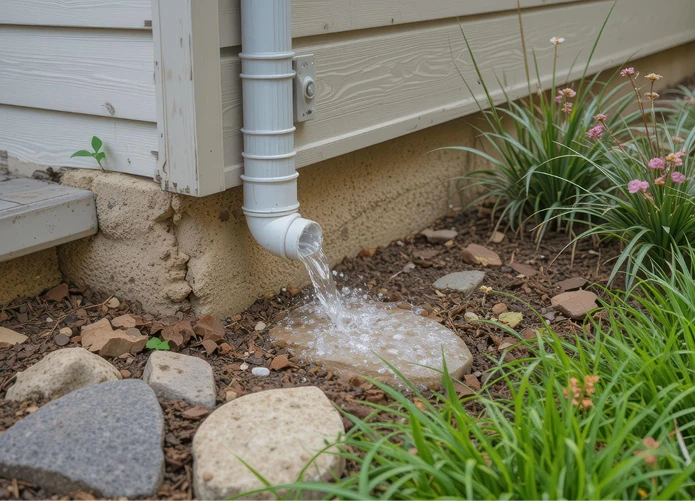
Compacted soil and clay-heavy soil can make the problem worse by slowing water infiltration. Downspouts that discharge water into the yard may also contribute to pooling when they direct too much runoff toward a low area.
1. Look for Standing Water After Rainfall
One of the easiest ways to identify low spots is to inspect your yard after a rainstorm. Walk around the property once the rain has stopped and look for areas where water remains on the surface.
Small puddles that disappear relatively quickly may not indicate a serious problem. However, water that continues to collect or remains for a prolonged period deserves closer attention, especially if the same areas become wet after every rainfall.
Pay attention to depressions in the lawn, areas near walkways, and sections where water gathers along planting beds. Marking these locations can help you identify recurring patterns and determine where drainage improvements may be needed.
2. Watch for Uneven Grass Growth
The condition of your grass can provide useful clues about drainage problems. Low spots often remain wetter than the surrounding lawn, creating conditions that affect grass growth.
You may notice yellowing grass, thinning patches, moss growth, or areas where the ground feels consistently soft underfoot. In some cases, grass may grow more quickly in damp areas before becoming weak or damaged because of excessive moisture.
Compare these sections with nearby areas that appear healthier. If poor grass growth repeatedly occurs in the same low-lying locations, excess water may be contributing to the problem.
3. Check the Slope of Your Yard
Your yard should generally direct surface water away from your home's foundation and toward an appropriate drainage outlet. If the ground slopes inward or creates a depression, water may collect instead of flowing away.
Stand back and observe the overall shape of your landscape. Look for areas where the ground dips between higher sections or slopes toward your home, patio, or garage.
For a closer inspection, use a long, straight board and a level to check smaller areas for uneven ground. This can help reveal shallow depressions that are difficult to notice from a distance. More extensive grading concerns may require a professional assessment to determine the appropriate slope and drainage direction.
4. Inspect Soil for Excess Moisture
Soil conditions can help you understand why water is collecting in a particular area. After rainfall, gently check the ground in suspected low spots and compare it with nearby sections.
If the soil remains muddy, feels unusually soft, or is difficult to walk on long after surrounding areas have dried, drainage may be inadequate. Compacted soil or heavy clay can slow the movement of water through the ground.
Avoid repeatedly walking across saturated areas because this can compact the soil further and make drainage more difficult. If the problem persists, consider having the soil and grading evaluated.
5. Check Downspouts and Nearby Structures
Sometimes, a low spot becomes a drainage problem because water is being directed toward it. Inspect roof downspouts, driveway edges, patios, and walkways to see where rainwater flows.
A downspout that releases water into a shallow depression can quickly create standing water during heavy rainfall. Similarly, improperly sloped hard surfaces may direct runoff into the lawn rather than toward a suitable outlet.
Correcting these water flow patterns may reduce pooling without requiring major landscape changes.
When Should You Consider Professional Yard Drainage Services?
If water continues to collect despite basic maintenance, professional help may be necessary. Depending on the cause, solutions can include landscape grading, surface drains, French drains, catch basins, or other drainage improvements.
A drainage professional can evaluate the property's slope, soil conditions, water flow, and existing drainage features before recommending an appropriate solution. This helps address the underlying cause rather than simply covering up the low spot.
Conclusion
Identifying low spots is an important first step toward solving yard drainage problems. Standing water, uneven grass growth, soggy soil, and changes in ground elevation can all indicate areas where water is not draining properly.
Addressing these issues early can help protect your lawn, improve the usability of your outdoor space, and reduce the risk of water collecting near your home's foundation. If recurring puddles or muddy patches are affecting your property, Hydro Dynamics Corp can help you explore professional yard drainage solutions designed around your landscape's needs.

 Arabic
 French
 Spanish
 Portuguese
 Deutsch
 Turkish
 Dutch
 Italiano
 Russian
 Romaian
 Portuguese (Brazil)
 Greek
