

Sundown Speakers: How to Achieve Clear Vocals, Strong Midrange, and Powerful Sound in Your Car Audio System
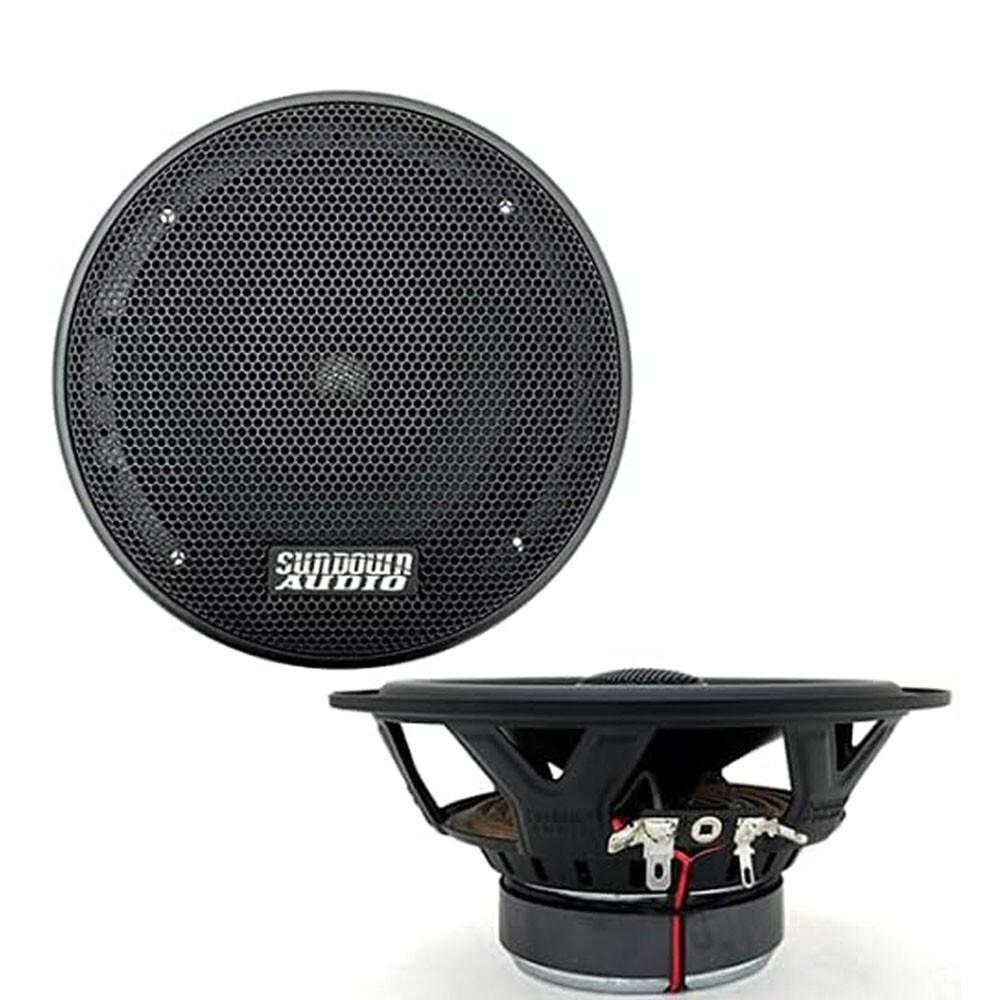
A great car audio system should make every part of a recording enjoyable, from the texture of a singer's voice to the punch of a snare drum and the detail of a guitar riff. Yet many drivers experience sound that becomes harsh at higher volume, loses clarity when bass increases, or struggles to reproduce vocals naturally. These problems often come from mismatched components, poor installation, unsuitable crossover settings, or an audio system that has not been tuned properly.
Choosing the right speakers is an important step toward improving your listening experience. Sundown speakers may appeal to enthusiasts looking for a more engaging car audio setup, particularly when they want strong output and an effective balance between vocal presence and instrumental detail. However, the results depend on selecting the appropriate speaker design, matching the amplification, and integrating every component correctly.
This guide explores the practical decisions that help you build a car audio system with clearer vocals, stronger midrange reproduction, and powerful sound without allowing volume to compromise listening quality.
Understand What You Want to Improve First
Before replacing your speakers, identify what is missing from your current system. A clear understanding of the problem will help you avoid spending money on equipment that does not address your needs.
For example, vocals that sound distant may indicate an issue with speaker placement, frequency balance, or the original system's tuning. Distortion at high volume may point toward limited amplifier output, damaged speakers, or excessive bass demands. Weak instrumental definition can result from poor speaker integration or frequency ranges that are not balanced properly.
Listen to several familiar recordings and consider these questions:
-
Can you understand lyrics clearly when the music becomes busy?
-
Do guitars, keyboards, and other instruments sound distinct from one another?
-
Does the sound remain comfortable as you increase the volume?
-
Is the bass overpowering the vocals or making the entire system sound muddy?
-
Does the music appear to come from the front of the vehicle, or does it seem scattered around the cabin?
These observations provide a useful starting point. A successful upgrade should solve identifiable problems instead of simply making the system louder.
Select a Speaker Design That Matches Your Listening Style
Car speakers are available in different configurations, and each design offers advantages depending on the installation and listening goals. Before choosing a specific model, review the manufacturer's specifications and confirm that the speaker suits your vehicle.
Coaxial Speakers for Convenient Upgrades
Coaxial speakers combine a main driver and a higher-frequency driver in a single assembly. They are often practical when replacing factory speakers while keeping modifications to a minimum.
For drivers who want a straightforward improvement, this arrangement can provide a balanced presentation without requiring separate tweeter mounting locations. Actual performance still depends on the particular model, the factory head unit, and the vehicle's acoustic environment.
Component Speakers for Greater Control
Component systems separate the main speaker driver from the tweeter. This provides more flexibility when positioning high-frequency output and creating a focused front soundstage.
Correct placement can help improve perceived instrument separation and vocal positioning. However, component systems require careful installation and crossover integration. Poorly positioned tweeters or unsuitable settings may create excessive brightness or an uneven listening experience.
Midrange and Pro-Audio-Style Drivers
Some car audio enthusiasts prioritize high output and strong midrange presence. Depending on the product range, dedicated midrange or pro-audio-style drivers may suit builds designed around energetic vocals and substantial output.
These speakers should not be treated as universal replacements for every factory speaker. Check their frequency range, sensitivity, impedance, power handling, and installation requirements. Some systems also need separate tweeters and subwoofers to provide complete frequency coverage.
The right design is the one that fits your goals and works effectively with the rest of your equipment.
Bring Vocals Forward Without Making Them Harsh
Vocals are among the most recognizable elements of music. When a singer sounds natural and intelligible, a recording feels more connected and engaging. When the vocal range is weak or excessively emphasized, the same recording can become difficult to enjoy.
Vocal clarity depends on several factors, including the speaker's frequency response, the source signal, installation conditions, and equalization. Simply increasing the treble will not necessarily make voices clearer because much of the information that gives vocals their body and presence lies in the midrange.
Start by listening to recordings with different vocal styles. Acoustic singers can reveal tonal differences, while dense rock or electronic tracks help show whether the voice remains understandable alongside other instruments.
If vocals sound thin, examine the midrange balance and the integration between the door speakers and subwoofer. If they sound sharp or tiring, check for excessive upper-midrange or treble emphasis before changing other settings.
sundown speakers should be evaluated according to the exact model and its intended role in your system. Avoid assuming that every speaker in a brand's range produces the same tonal character or serves the same purpose.
Improve Midrange Definition Across Different Music Genres
The midrange contains much of the information that gives instruments their recognizable character. Electric guitars, piano notes, snare drums, and the fundamental tones of human voices all contribute to this region.
When midrange reproduction is well balanced, instruments are easier to distinguish, and music feels connected rather than dominated by bass or treble. Achieving this balance requires more than selecting a speaker with an impressive power rating.
Consider the following characteristics when comparing products.
Frequency response: Review the published response information to understand the speaker's intended operating range. A wide specification alone does not establish how evenly or accurately the speaker reproduces sound.
Sensitivity: Sensitivity indicates how efficiently a speaker converts a given input into acoustic output under specified test conditions. A more sensitive speaker may produce greater output with the same power, although measurement methods and installation conditions matter.
Continuous power handling: RMS or continuous ratings help determine whether a speaker is appropriate for a particular amplifier. They should be considered alongside impedance, sensitivity, and the manufacturer's recommendations.
Driver construction: Cone materials, suspension design, voice coils, and motor structures influence performance in different ways. No single material or design feature guarantees superior sound.
Installation requirements: A suitable speaker can still perform poorly if it is mounted incorrectly, receives an inappropriate signal, or operates outside its intended frequency range.
Comparing these characteristics gives you a more reliable basis for choosing equipment than relying on marketing descriptions alone.
Match Speaker Output to the Amplifier
An amplifier can help a speaker system deliver clean output with greater headroom, particularly when the factory head unit struggles to provide enough power at your preferred listening level. However, adding an amplifier will not automatically correct poor installation, unbalanced frequency response, or unsuitable speaker selection.
Begin by checking the speaker's nominal impedance and continuous power-handling rating. Then review the amplifier's output at the corresponding impedance. These values should be compatible with the intended configuration.
Do not select an amplifier solely because its advertised wattage is larger than the speaker's rating. Peak power claims can be misleading when they are compared with continuous power specifications. The relevant ratings and test conditions matter more than a single large number.
Gain adjustment is another important consideration. Gain matches the amplifier's input sensitivity to the output level of the source unit. It does not increase the amplifier's available power. Excessive gain can introduce clipping and distortion, which may damage speakers.
For a factory-head-unit installation, determine whether the original system uses built-in equalization, filtering, or other processing. Some vehicles reduce bass at higher volume or apply specific frequency adjustments to the factory speakers. Understanding these behaviors can help you determine whether direct speaker replacement will achieve your goals.
Get More From the Door Installation
The door is part of the acoustic system, not simply a mounting location. Its panels, openings, mounting brackets, and surrounding materials can influence midbass response, clarity, and unwanted vibration.
A loose speaker or poorly sealed mounting adapter may reduce performance even when the driver itself is capable. Door trim can also vibrate against nearby components, creating rattles that become more noticeable during demanding musical passages.
A careful installation should address several areas.
Secure the Speaker Properly
Use a suitable mounting bracket or adapter and fasten the speaker securely. Confirm that the installation does not interfere with window movement, door handles, wiring, or other factory mechanisms.
An appropriate mounting surface helps reduce unwanted movement and supports more consistent performance.
Seal the Mounting Interface
Where the installation design allows it, suitable sealing material around the speaker and adapter can reduce unwanted air leakage. This can be particularly useful when improving midbass performance.
Use materials intended for automotive applications and preserve the door's drainage paths and moisture-management features.
Reduce Panel Resonance
Door panels may vibrate when exposed to strong midbass output. Automotive sound-deadening materials can help reduce certain panel resonances when installed correctly.
Focus on the surfaces and contact points responsible for the noise rather than covering every available area without a plan. Excess material adds weight and cost without guaranteeing a proportional improvement.
Protect Wiring and Factory Components
Secure wires away from sharp metal edges and moving parts. Preserve factory moisture barriers, avoid obstructing drainage openings, and make sure all connectors are suitable for the installation.
If a vehicle requires extensive modification, professional installation may help prevent fitment problems and electrical complications.
Balance Bass and Treble for a Fuller Sound
A speaker system can reproduce vocals clearly and still sound incomplete if the low and high frequencies are not properly balanced. Bass provides weight and rhythmic foundation, while treble adds detail and brightness.
The challenge is making these elements work together without allowing one range to overpower the others.
Door speakers may reproduce useful midbass, but many are not designed to deliver deep sub-bass at high output. Trying to force them to reproduce extremely low frequencies can increase cone movement and distortion.
A dedicated subwoofer can take responsibility for the lowest frequencies, allowing the main speakers to concentrate on their intended range. This division of work often makes it easier to achieve clean vocals and controlled bass.
Treble should be managed with similar care. Excessive high-frequency emphasis may make cymbals, consonants, and other details sound sharp. Too little treble can make music seem dull or closed-in.
Start with balanced settings and make small changes based on familiar recordings. The objective is not to maximize every frequency but to create a coherent sound that remains enjoyable across different genres.
Use Crossovers to Keep Each Speaker in Its Working Range
Crossovers help distribute frequencies to the components best suited to reproduce them. Correct settings can improve clarity, reduce unnecessary driver movement, and create a smoother transition between the speakers and subwoofer.
A high-pass filter can reduce deep bass reaching door speakers. This may be particularly helpful when those speakers are being asked to play loudly. A low-pass filter can limit the higher frequencies sent to a subwoofer.
The ideal crossover points depend on the actual equipment, speaker placement, enclosure design, and acoustic response of the vehicle. Avoid applying one universal setting to every system.
If you use a component speaker system, follow the manufacturer's instructions for the supplied crossover network and tweeter configuration. Incorrect wiring or unsuitable filtering can affect tonal balance and may damage components.
After setting the initial filters, listen for gaps or excessive overlap between frequency ranges. If the bass seems detached from the vocals or instruments lose their body, adjust the crossover and levels gradually.
Improve Soundstage and Instrument Separation
A well-designed system should create a convincing sense of where instruments and voices are positioned. The soundstage refers to the perceived width, depth, and placement of sound, while separation describes how easily listeners can distinguish individual musical elements.
Vehicle interiors make this challenging because the driver sits closer to one side of the system than the other. Speakers also occupy different positions and angles, and reflections from glass and interior surfaces can change what reaches the listener.
You can improve the result by checking left-right balance, speaker polarity, tweeter positioning, and crossover integration. In some systems, a digital signal processor provides time-alignment controls that help compensate for differences in speaker distance.
Avoid assuming that higher volume creates a better soundstage. An overly loud rear speaker or excessively bright tweeter can pull attention away from the front of the vehicle.
Use recordings with clearly separated vocals and instruments to evaluate the result. Adjust one setting at a time so you can identify which changes genuinely improve the presentation.
Tune the System Instead of Relying on Presets
Factory sound modes and equalizer presets can provide a quick starting point, but they may not suit every speaker installation. A setting designed to make factory speakers sound fuller could create excessive bass or uneven response after an upgrade.
Begin with moderate source-unit settings and confirm that the installation is working properly. Check for loose mounting hardware, incorrect polarity, and damaged wiring before attempting to correct sound problems electronically.
Next, make small equalizer adjustments. If one part of the music sounds excessively strong, reducing that region may produce a more natural result than boosting every other frequency. Large boosts can consume amplifier headroom and increase the risk of distortion.
For systems equipped with digital processing, measurements and careful listening can work together to identify response problems. Professional tuning may be helpful when the vehicle has complex factory processing, multiple amplifiers, or separate front and rear speaker zones.
Test the finished setup with several familiar recordings at different moderate volume levels. A good tune should provide consistent balance rather than making one particular song sound impressive at the expense of everything else.
Build a Complete System Around Your Priorities
Speakers are only one part of a complete car audio setup. The source unit, amplifier, subwoofer, wiring, and vehicle acoustics all contribute to the final experience.
If your main concern is vocal clarity, prioritize appropriate speaker selection, correct mounting, and balanced midrange response. If you regularly listen at higher levels, assess sensitivity, clean amplifier output, and the electrical capacity needed to support your equipment.
If you want stronger bass, consider a subwoofer and enclosure designed for the intended frequency range instead of asking door speakers to handle every low-frequency demand.
Plan your budget around the complete installation. Mounting adapters, wiring, sound treatment, signal integration, and professional tuning may be necessary to achieve the performance you expect.
A staged upgrade can also make sense. Improve the most noticeable weakness first, evaluate the result, and then decide whether another component is necessary. This approach helps avoid replacing equipment that already performs adequately.
Recognize the Signs of Distortion and System Strain
A powerful system should not need to sound harsh or unstable to be enjoyable. Distortion can result from excessive volume, amplifier clipping, damaged speakers, poor connections, or unsuitable crossover settings.
Listen for vocals that become rough at higher volume, instruments that lose definition, unexpected rattles, or bass that suddenly sounds uncontrolled. These symptoms do not always indicate a defective speaker, so investigate the installation and signal path before replacing equipment.
If the sound deteriorates as you increase volume, reduce the level and check whether the source unit or amplifier is reaching its limits. Confirm that the speaker impedance matches the amplifier's requirements and that the electrical connections are secure.
Do not continue operating a system that repeatedly enters protection mode or produces a burning smell. Turn it off and identify the fault before using it again.
Listening levels also matter for hearing safety. Sustained exposure to loud audio can cause permanent hearing damage, even when the speakers sound clear. Aim for an engaging experience that does not depend on excessive volume.
Make Your Speaker Upgrade a Lasting Improvement
The best car audio upgrades are built around compatibility, installation quality, and thoughtful tuning rather than specifications alone. Clear vocals require balanced frequency response, strong midrange depends on appropriate speaker selection and integration, and powerful sound requires clean amplification without excessive distortion.
When researching sundown speakers, compare the specific models according to their intended use, published specifications, mounting requirements, and compatibility with your current equipment. Consider the entire system before deciding which components deserve your budget.
Take time to secure the installation, establish suitable crossover settings, and evaluate the sound with familiar music. By focusing on balanced performance instead of maximum loudness, you can create a car audio system that delivers more expressive vocals, defined instruments, and an engaging listening experience on every drive.

 English
 Arabic
 French
 Spanish
 Portuguese
 Turkish
 Dutch
 Italiano
 Russian
 Romaian
 Portuguese (Brazil)
 Greek
