

Financial Technology Company for Sale
Evaluating, Acquiring, and Growing a Fintech Business
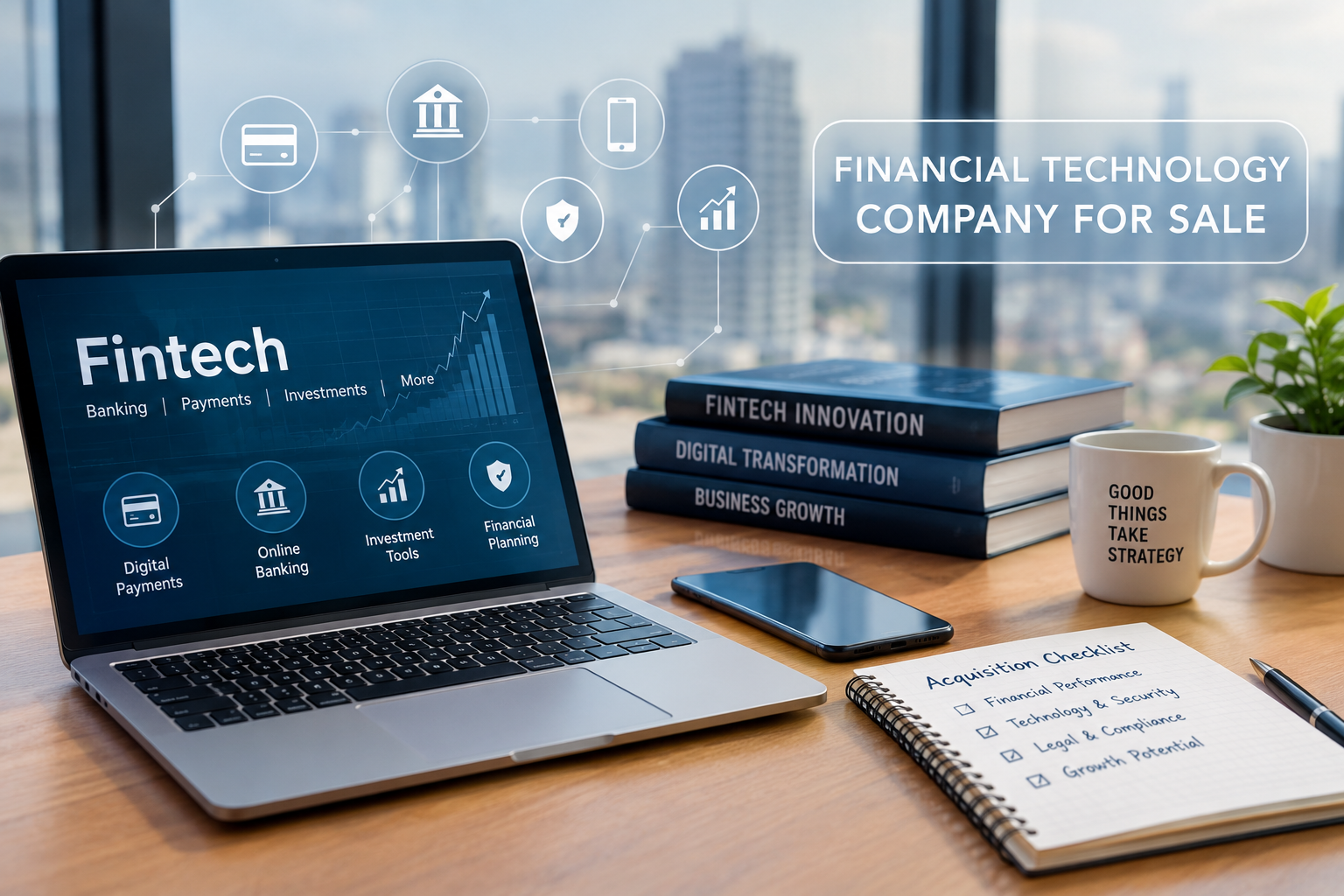
The financial technology sector continues to create opportunities for entrepreneurs, investors, and established businesses seeking to expand their presence in digital finance. From payment processing solutions to investment management software, fintech companies provide services that help individuals and organizations manage financial activities more efficiently. Exploring a Financial Technology Company for Sale can offer buyers an opportunity to acquire an established business, access existing technology, and serve customers within a growing digital marketplace.
However, purchasing a fintech business requires careful preparation. Buyers must understand its commercial performance, technology infrastructure, regulatory responsibilities, customer relationships, and future growth potential before committing capital.
Understanding the Fintech Business Market
Financial technology businesses combine digital systems with financial services to improve how money is transferred, managed, invested, or monitored. Their products may serve individual consumers, small businesses, financial institutions, and corporate clients.
Common examples include online payment platforms, digital lending providers, financial planning applications, accounting software businesses, and investment technology companies. Some firms focus on a single service, while others operate integrated platforms offering multiple financial tools.
Acquiring an existing company may provide access to established customers, experienced employees, operational processes, and developed software. Nevertheless, these advantages depend on the quality of the business being acquired. Buyers should investigate its actual performance instead of assuming that an established brand guarantees commercial success.
Why Investors Consider Acquiring a Fintech Business
Purchasing an operating fintech company can offer several strategic advantages. An established business may already have a recognizable brand, recurring revenue, supplier relationships, and a functioning technology platform.
Buyers may also benefit from existing customer acquisition channels and partnerships with banks, payment providers, or other financial service businesses. Established partnerships can help businesses launch products more quickly than developing a new operation from the ground up.
Another attraction is the potential to expand existing services. A company specializing in accounting software, for example, might introduce automated reporting tools or integrations that address additional customer needs.
However, acquisition opportunities differ considerably. Revenue concentration, outdated systems, unresolved compliance issues, and weak customer retention can reduce a company's attractiveness. A detailed assessment helps investors distinguish sustainable businesses from operations carrying excessive risk.
Catagories of Financial Technology Companies Available for Acquisition
The fintech market includes several business categories, each with different operating requirements and commercial characteristics.
Payment processing businesses: These companies facilitate electronic transactions, merchant payments, billing systems, or payment gateway services. Buyers should examine transaction volumes, processing costs, chargebacks, and relationships with payment networks.
Digital lending platforms: These businesses use technology to support loan applications, credit assessments, and lending administration. Their acquisition risks may include credit exposure, funding arrangements, and regulatory obligations.
Investment technology providers: These companies offer portfolio tracking, investment analysis, financial planning, or brokerage-related software. Buyers should investigate product reliability, data accuracy, licensing requirements, and client retention.
Financial management software firms: These businesses provide budgeting, accounting, invoicing, cash-flow monitoring, and financial reporting solutions. Their value may depend on subscription revenue, software usability, integration capabilities, and customer satisfaction.
Digital Banking Technology Providers: These companies create software for managing customer accounts, completing online registration, processing financial transactions, and supporting everyday banking activities. Technical resilience and security controls are especially important in this category.
Evaluating Financial Performance Before Purchase
Financial due diligence helps buyers determine whether a company's reported results accurately reflect its commercial position. Reviewing several reporting periods can reveal patterns that a single annual statement may not show.
Potential purchasers should examine income statements, balance sheets, cash-flow records, tax documentation, outstanding liabilities, and relevant financial agreements. They should distinguish recurring revenue from temporary income and investigate whether reported profits depend on unusually high spending or one major customer.
Operating costs deserve equal attention. Expenses may include software development, employee compensation, cloud infrastructure, marketing, payment processing, insurance, and regulatory compliance.
Customer acquisition costs and customer lifetime value can help explain whether the business grows efficiently. Buyers should also review subscription cancellations, renewal rates, and overdue customer payments where applicable.
Independent accounting advice can help verify financial information, identify inconsistencies, and establish a realistic valuation range.
Assessing Technology, Data Security, and Infrastructure
Technology is often a central asset of a fintech company. Before purchasing a business, investors should evaluate the software architecture, development practices, system reliability, and ability to support future growth.
A thorough technical review should assess system efficiency, ownership of intellectual property, software licensing agreements, security measures, data backup systems, and plans for recovering operations after disruptions.Buyers should determine whether the seller owns the relevant code or relies on third-party systems under restrictive agreements.
Security deserves particular attention because financial platforms may process confidential customer information or sensitive transaction records. Weak authentication, insufficient access controls, outdated software, and inadequate incident response procedures can create serious operational and reputational risks.
Buyers should also investigate previous security incidents, unresolved vulnerabilities, system downtime, and outstanding technology upgrades. An independent technical review can estimate the investment required to maintain the platform after completion.
Reviewing Compliance and Legal Responsibilities
Fintech businesses may operate within complex regulatory environments. Applicable obligations depend on their services, operating jurisdictions, business model, and relationships with regulated financial institutions.
Potential buyers should establish whether the company requires licences, registrations, contractual permissions, or specific regulatory approvals. They should also review applicable customer verification procedures, anti-money-laundering controls, privacy requirements, and transaction monitoring arrangements.
A change in ownership may affect existing licences, agreements, partnerships, or regulatory permissions. Buyers must not assume that every approval automatically transfers with the business.
Qualified legal and compliance professionals can assess contractual restrictions, outstanding disputes, intellectual property rights, customer agreements, and obligations arising from the proposed transaction.
Determining a Fair Acquisition Price
Valuation depends on several factors, including profitability, recurring revenue, customer retention, growth prospects, technology quality, and competitive positioning.
A profitable company with diversified customers and dependable subscription income may attract a different valuation from a business relying on unpredictable transaction fees. Buyers should also consider outstanding debt, working capital requirements, deferred maintenance, and potential legal liabilities.
Comparable transactions and appropriate financial valuation methods can provide useful reference points, but no single formula suits every fintech business.
The asking price should be supported by verifiable evidence. Where uncertainty remains, buyers may negotiate staged payments, performance-based consideration, or other contractual protections with professional advice.
Planning for Growth After Acquisition
An acquisition creates opportunities only when the buyer can maintain operations and improve the business responsibly. A practical integration plan should identify immediate priorities, assign responsibilities, and establish measurable objectives.
Possible initiatives include improving the customer experience, strengthening cybersecurity, introducing additional integrations, expanding marketing channels, and developing services for underserved customer groups.
Retaining experienced employees can help preserve technical knowledge and customer relationships. Buyers should communicate operational changes clearly and avoid disrupting essential services during the transition.
Growth plans must also reflect available resources. Expanding too quickly without adequate technical capacity, funding, or compliance oversight can weaken an otherwise promising company.
Conclusion
A Financial Technology Company for Sale can represent a valuable opportunity for investors seeking established digital finance operations, existing customers, and technology-driven growth potential. Successful acquisition depends on understanding the company's financial condition, technical capabilities, legal obligations, and competitive position.
Thorough due diligence, independent professional advice, and realistic financial planning help buyers evaluate opportunities more confidently. By examining operational risks and developing a structured post-acquisition strategy, purchasers can make informed decisions and position a suitable fintech business for sustainable development.
For investors comparing a Financial Technology Company for Sale, the most appropriate choice is one whose commercial strengths, technical foundation, and future prospects align with their objectives and available resources.

 English
 Arabic
 French
 Spanish
 Portuguese
 Deutsch
 Dutch
 Italiano
 Russian
 Romaian
 Portuguese (Brazil)
 Greek
