

How Printed Butter Paper Helps Food Businesses Improve Packaging and Brand Recognition
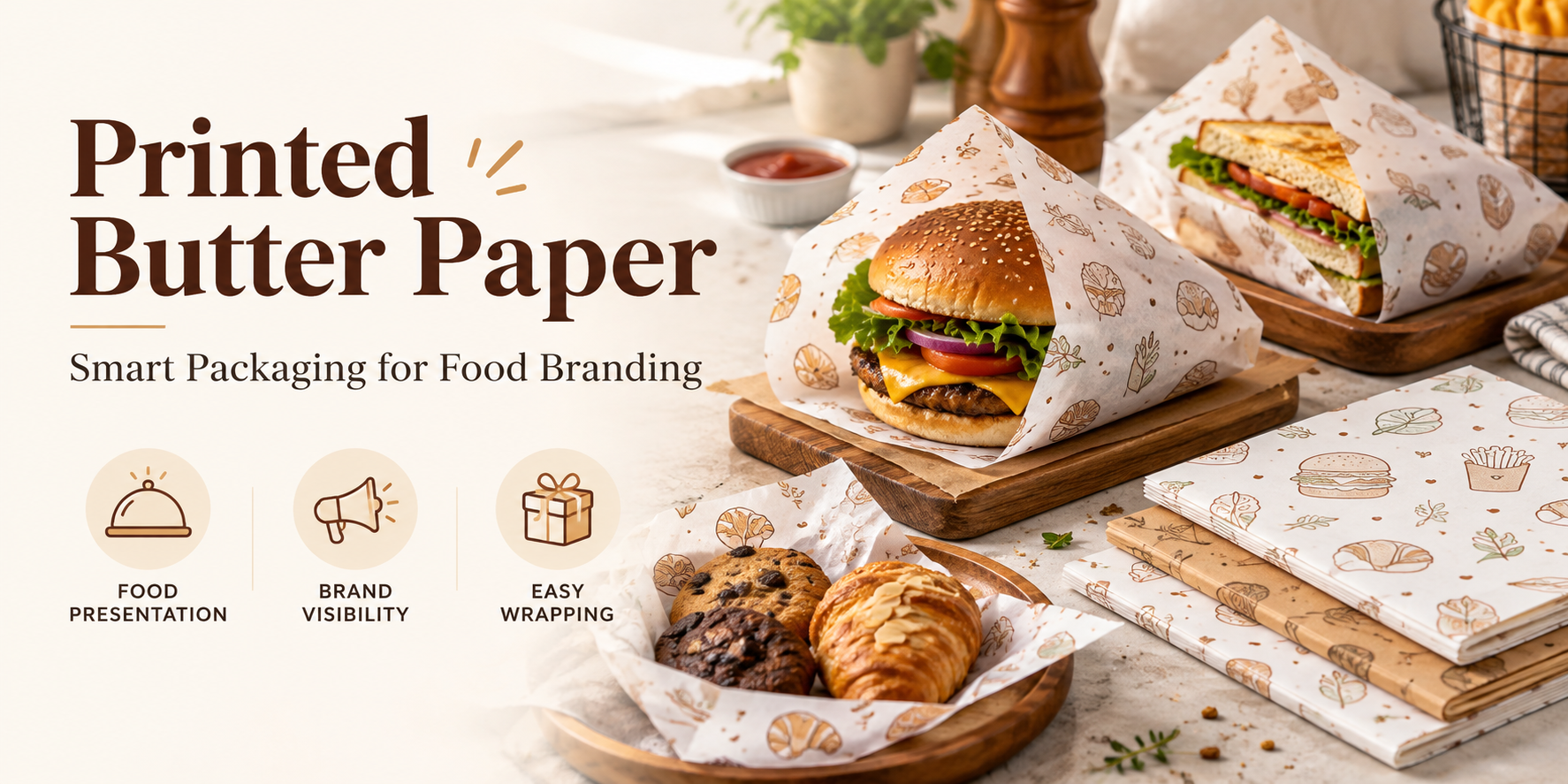
Food packaging plays an important role in how customers experience a product. For restaurants, bakeries, cafes, and takeaway businesses, even small packaging details can influence how food is presented and how customers remember a brand. While the quality of the food remains the main priority, the paper used to wrap or serve it can also contribute to a professional customer experience.
Printed butter paper offers a practical way to combine food wrapping with brand presentation. Businesses can use it to wrap burgers, sandwiches, pastries, sweets, and other suitable food products while displaying their logos, colours, or custom patterns.
Instead of using plain wrapping paper for every order, food businesses can choose printed designs that reflect their identity. With the right material and artwork, packaging becomes a useful part of daily operations as well as a consistent way to present the brand.
What Is Printed Butter Paper?
Printed butter paper is paper used for wrapping or lining suitable food products, with customised graphics or branding printed on its surface. Depending on the paper specification and intended application, it can be used in restaurants, bakeries, cafes, sweet shops, and takeaway outlets.
Businesses can customise the design with a company logo, brand colours, repeating patterns, or other visual elements. The paper can then be incorporated into existing packaging routines without requiring a completely different presentation for every product.
Common applications include:
-
Wrapping burgers, sandwiches, and rolls.
-
Lining food trays, baskets, and suitable takeaway packaging.
-
Wrapping pastries, biscuits, and selected bakery products.
-
Separating suitable sweets and confectionery items.
-
Presenting selected takeaway snacks and street food.
The appropriate paper depends on the food, temperature, moisture, grease exposure, and intended contact conditions. Businesses should confirm that the selected paper and printing system are suitable for their particular application before placing an order.
1. Build Brand Recognition Through Everyday Packaging
Brand recognition develops when customers repeatedly see consistent visual elements associated with a business. Logos, colours, typography, and packaging designs can all help create this familiarity.
Printed butter paper provides an additional surface for presenting these elements. When customers open a takeaway order or unwrap a sandwich, the printed design becomes part of their experience with the business.
For example, a burger restaurant might use paper featuring its logo in a repeating pattern. A bakery could choose a simple design that matches its shop colours, while a dessert business might use a distinctive colour scheme across its wrapping and other packaging.
Consistency is more important than adding too many decorative elements. A clear logo, balanced spacing, and a recognisable colour palette can create a more professional appearance than an overcrowded design.
Businesses looking for customised packaging can explore printed butter paper to consider how branded paper could fit their products and packaging requirements.
2. Improve Food Presentation Without Complicating Service
Food presentation is important in both dine-in and takeaway settings. Customers notice how products are wrapped, arranged, and handed over, especially when packaging forms part of the overall dining experience.
Printed paper can make food presentation more consistent across orders. A restaurant can use matching wrapping paper for selected menu items, while a bakery can create a uniform appearance for suitable pastries and other products.
It can also help businesses maintain a coordinated look across different service formats. For example, the same branding style might be used on sandwich wraps, tray liners, and selected takeaway packaging.
The design should support the food rather than distract from it. Subtle patterns, readable logos, and suitable colours often work well because they allow the product to remain the main focus.
Businesses should also consider how the paper will look when folded, wrapped around food, or placed inside a tray. Artwork that looks attractive on a flat screen may appear different once part of the design is covered by the product.
3. Choose Paper for the Type of Food You Serve
Not all food products have the same packaging requirements. A paper suitable for wrapping a dry pastry may not perform equally well when used with a hot, oily burger or a moist sandwich.
Before selecting printed butter paper, businesses should consider the characteristics of their products and how the paper will be used.
Burgers and Greasy Foods
Burgers, fried snacks, and other oily foods may require paper with suitable grease resistance. The specification should match the amount of oil, the serving temperature, and the expected time between packing and consumption.
Sandwiches and Wraps
Sandwiches and wraps often need flexible paper that can be folded around the product without making service unnecessarily difficult. The required size should provide sufficient coverage while allowing staff to wrap orders consistently.
Bakery Products
Pastries, biscuits, and selected baked goods may benefit from paper that keeps products neatly arranged during handling. The appropriate choice depends on the product's moisture content, surface texture, and storage conditions.
Sweets and Confectionery
Sweet shops may use suitable paper to separate or wrap selected confectionery products. Businesses should check whether the paper is appropriate for direct contact with the particular sweets, especially where moisture, oils, or sticky surfaces are involved.
Choosing the right specification helps businesses avoid treating all paper packaging as interchangeable. The paper should be selected according to its intended use rather than appearance alone.
4. Create a Consistent Customer Experience
Customers often interact with packaging before they begin eating. A neatly wrapped product can make an order easier to handle and contribute to a more organised presentation.
For businesses with several employees or multiple locations, standardised packaging can also support consistency. Staff can follow the same wrapping process, use the same branded materials, and present products in a similar way across different orders.
This is particularly useful for takeaway restaurants and cafes where packaging is part of a fast-moving service process.
However, printed paper should remain practical. It should be easy for staff to handle, appropriately sized for the food, and compatible with the business's existing workflow.
Before adopting a new design across the entire menu, businesses can test it with a few representative products. This helps identify whether the paper folds properly, provides adequate coverage, and maintains an acceptable appearance during normal service.
5. Use Custom Printing to Reflect Your Brand Identity
Custom printing allows food businesses to adapt packaging to their target customers and overall brand style. The design does not need to be complicated to be effective.
A business can start with its existing logo and brand colours, then build a simple layout around them. Repeating patterns can work well for wrapping paper, while a larger logo may be more suitable when the paper is used as a tray liner.
Several design considerations can help improve the final result:
-
Logo placement: Position the logo so that it remains visible when the paper is folded or wrapped.
-
Colour selection: Use colours that match the existing brand identity and remain distinguishable on the chosen paper.
-
Pattern spacing: Leave enough space between repeated elements to prevent the design from appearing crowded.
-
Text readability: Keep any wording short and legible at the final print size.
-
Artwork quality: Provide suitable print-ready artwork to help achieve a clear result.
Businesses should also review how the artwork appears across different paper sizes. A design intended for a large sheet may need adjustments before it works well on a smaller wrap.
Requesting and reviewing a proof before production is a useful way to check the layout, spelling, logo placement, and colours.
6. Consider Packaging Costs and Ordering Quantities
Packaging is a recurring business expense, so cost matters when selecting printed paper. The final price may depend on paper specifications, sheet dimensions, printing requirements, order quantity, and other production details.
Businesses should compare quotations using equivalent specifications rather than choosing an option based on price alone.
Start by estimating how much paper is used for each product. A small burger wrap and a large bakery liner may require different sheet sizes, even if both use the same general branding style.
Next, estimate how many sheets the business uses during a typical week or month. This helps establish an order quantity that fits expected demand without tying up too much storage space in unused stock.
New businesses may prefer to test a design and review its practical performance before committing to a larger order. Established businesses with predictable demand may find it easier to plan purchases around regular usage.
It is also worth confirming whether the supplier can accommodate the required dimensions, print design, and reorder schedule. Clear specifications make quotations easier to compare and help reduce misunderstandings during production.
7. Pay Attention to Food Contact and Material Requirements
Food packaging should be selected with the intended application in mind. A paper's appearance does not establish whether it is suitable for direct food contact or particular temperature and grease conditions.
Businesses should confirm the relevant material specifications and request appropriate documentation from their supplier where necessary. They should also check that the printing inks and any coatings are suitable for the intended use.
This is especially important for hot, oily, acidic, or moist foods, because these conditions can affect packaging performance.
Environmental claims also require care. Paper packaging is not automatically recyclable, compostable, or suitable for every disposal system. Coatings, printing, contamination from food, and local waste collection rules can all affect disposal options.
Businesses interested in reducing packaging waste should review the actual material information and local recycling guidance before making claims about their packaging.
Taking these factors into account helps businesses select paper that fits their products and make more accurate statements about its properties.
8. Make Printed Paper Part of a Wider Packaging Strategy
Printed butter paper can work alongside other packaging materials to create a consistent presentation. For example, a cafe might use branded paper for sandwiches, matching takeaway bags for orders, and coordinated cups or labels for drinks.
A bakery could use printed paper for selected pastries and combine it with appropriately sized product boxes for items that need additional support or protection.
The purpose is not to print every packaging item unnecessarily. Instead, businesses should identify the products and customer touchpoints where branded paper provides practical value.
A consistent design across selected items can help establish a recognisable visual identity without making the packaging process more complicated than necessary.
When reviewing the full packaging setup, consider product protection, storage, ease of handling, food contact requirements, and total cost. Each item should serve a clear purpose within the overall system.
How to Choose a Printed Butter Paper Supplier
Selecting a supplier involves more than reviewing design samples. Businesses should confirm that the supplier understands their intended application and can provide suitable material and printing options.
Before requesting a quotation, prepare the following information:
-
Food type: Explain whether the paper will be used for burgers, sandwiches, pastries, sweets, or another product.
-
Required dimensions: Specify the sheet size or wrapping dimensions needed for the food.
-
Material requirements: Describe the expected grease, moisture, and temperature conditions.
-
Artwork: Provide your logo, brand colours, and any design files available.
-
Order quantity: Estimate how much paper you expect to use over the required period.
-
Delivery requirements: Explain when the packaging is needed and whether you expect to reorder regularly.
Ask the supplier to confirm material suitability for the intended food application. Review the artwork proof carefully before authorising production, and request a sample where practical if you need to assess the paper's handling or appearance.
These checks can help you choose packaging that supports your day-to-day operations while maintaining a consistent brand presentation.
Conclusion
Printed butter paper gives food businesses a practical way to combine everyday food wrapping with brand presentation. From burgers and sandwiches to pastries and selected sweets, appropriately specified paper can help create a more consistent appearance while supporting routine packaging tasks.
The best results come from balancing design with practical requirements. Businesses should consider the type of food, paper dimensions, grease resistance, printing quality, order quantity, and intended handling conditions before making a decision.
By choosing suitable materials and keeping the artwork clear, restaurants, cafes, bakeries, and takeaway businesses can make packaging a consistent part of their customer experience. A simple, well-planned design can help connect the product with the brand without adding unnecessary complexity to the serving process.

 English
 Arabic
 French
 Spanish
 Portuguese
 Deutsch
 Turkish
 Dutch
 Italiano
 Russian
 Romaian
 Greek
