

Import Customs Clearance in India | Transtake Shipping
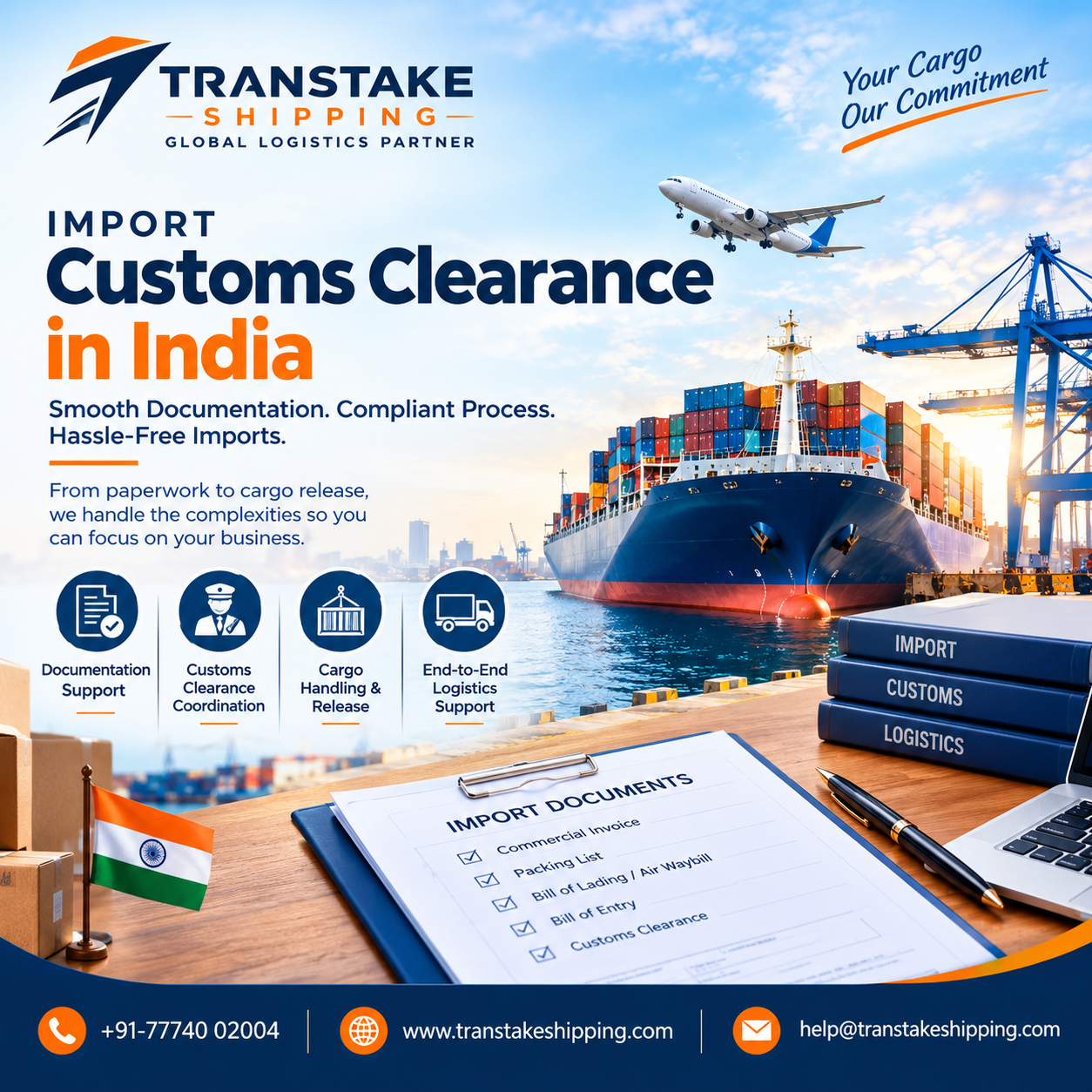
When international cargo arrives in India, importers must complete the applicable customs formalities before their goods can be released. Import customs clearance involves preparing documents, filing customs declarations, paying applicable duties and taxes, and complying with relevant import regulations.
Understanding the process helps businesses prepare shipments, manage documentation, and plan cargo delivery more effectively. Transtake Shipping provides freight forwarding and import logistics coordination to support businesses handling international shipments.
What Is Import Customs Clearance?
Import customs clearance is the process of declaring imported goods to Indian Customs and completing the applicable legal and regulatory requirements.
Depending on the product and shipment, the process may involve document verification, assessment of customs duties, examination of cargo, and authorization for release.
Requirements can vary according to the type of goods, country of origin, customs classification, import policy, and applicable regulatory approvals.
Key Steps in the Import Customs Clearance Process
1. Prepare the Required Documents
Accurate documentation is essential for import clearance. Common documents may include:
-
Commercial invoice
-
Packing list
-
Bill of lading for sea freight or air waybill for air freight
-
Bill of Entry
-
Purchase order or other supporting commercial documents, where applicable
-
Import licences, permits, or certificates, when required
Certain products may require additional documentation or approval from relevant authorities. Importers should confirm the requirements for their specific goods before shipment.
2. File the Bill of Entry
The Bill of Entry is a key document used to declare imported goods to Indian Customs. It includes information about the goods, their value, classification, and other relevant particulars.
The importer or authorized representative should ensure that the declaration is complete and accurate and that the supporting documents are consistent.
3. Customs Assessment and Verification
Customs authorities review the declaration and may verify the product classification, valuation, origin, documentation, and applicable duty treatment.
Depending on the shipment, additional information or physical examination may be required before clearance can proceed.
4. Pay Applicable Customs Duties and Taxes
Import duties and taxes depend on factors such as the product's classification, customs value, origin, and applicable exemptions or trade measures.
Businesses should confirm the applicable rates for their particular goods rather than relying on general estimates.
5. Coordinate Cargo Release
After the required formalities have been completed and release is authorized, the importer can coordinate cargo collection and delivery. Carrier, terminal, storage, or other applicable charges may also need to be settled.
Planning transportation in advance can help coordinate the movement of goods from the port or airport to the final destination.
Common Challenges in Import Customs Clearance
Importers may encounter challenges such as:
-
Incomplete or inconsistent documentation
-
Incorrect product classification or valuation
-
Missing licences or regulatory certificates
-
Requests for additional information
-
Customs examination or verification
-
Port congestion or outstanding cargo-handling formalities
Early document review, clear communication, and proper shipment planning can help reduce avoidable issues. However, clearance timelines depend on the shipment, applicable regulations, and decisions of the relevant authorities.
How to Prepare for Smooth Import Clearance
Businesses can improve their preparation by following these practices:
-
Confirm import requirements before placing an order.
-
Check that the invoice, packing list, and transport documents contain consistent information.
-
Verify the product classification and applicable duties.
-
Arrange required licences and certificates in advance.
-
Coordinate with logistics partners before the shipment arrives.
-
Plan cargo collection and final transportation around the expected release process.
Preparation does not guarantee immediate clearance, but it can help reduce preventable documentation problems.
Import Logistics Support from Transtake Shipping
Transtake Shipping supports businesses with freight forwarding and import logistics coordination. Depending on the agreed service, support may include:
-
Import documentation assistance
-
Customs clearance coordination
-
Air and ocean freight forwarding
-
Shipment coordination
-
Transportation and cargo movement planning
The services required depend on the cargo type, route, documentation, and applicable regulatory requirements.
Contact Transtake Shipping
Planning an import shipment into India? Contact Transtake Shipping to discuss your freight forwarding and import logistics requirements.
Phone: +91-7774002004
Website: https://www.transtakeshipping.com
Email: help@transtakeshipping.com
Conclusion
Import customs clearance in India requires accurate documentation, appropriate customs declarations, payment of applicable duties and taxes, and compliance with relevant regulations. Preparing early and coordinating the shipment carefully can help businesses manage the process more efficiently.
Contact Transtake Shipping to discuss logistics coordination for your next import shipment.

 English
 Arabic
 Spanish
 Portuguese
 Deutsch
 Turkish
 Dutch
 Italiano
 Russian
 Romaian
 Portuguese (Brazil)
 Greek
