

Import Documentation Services in India: How to Avoid Costly Shipping Delays
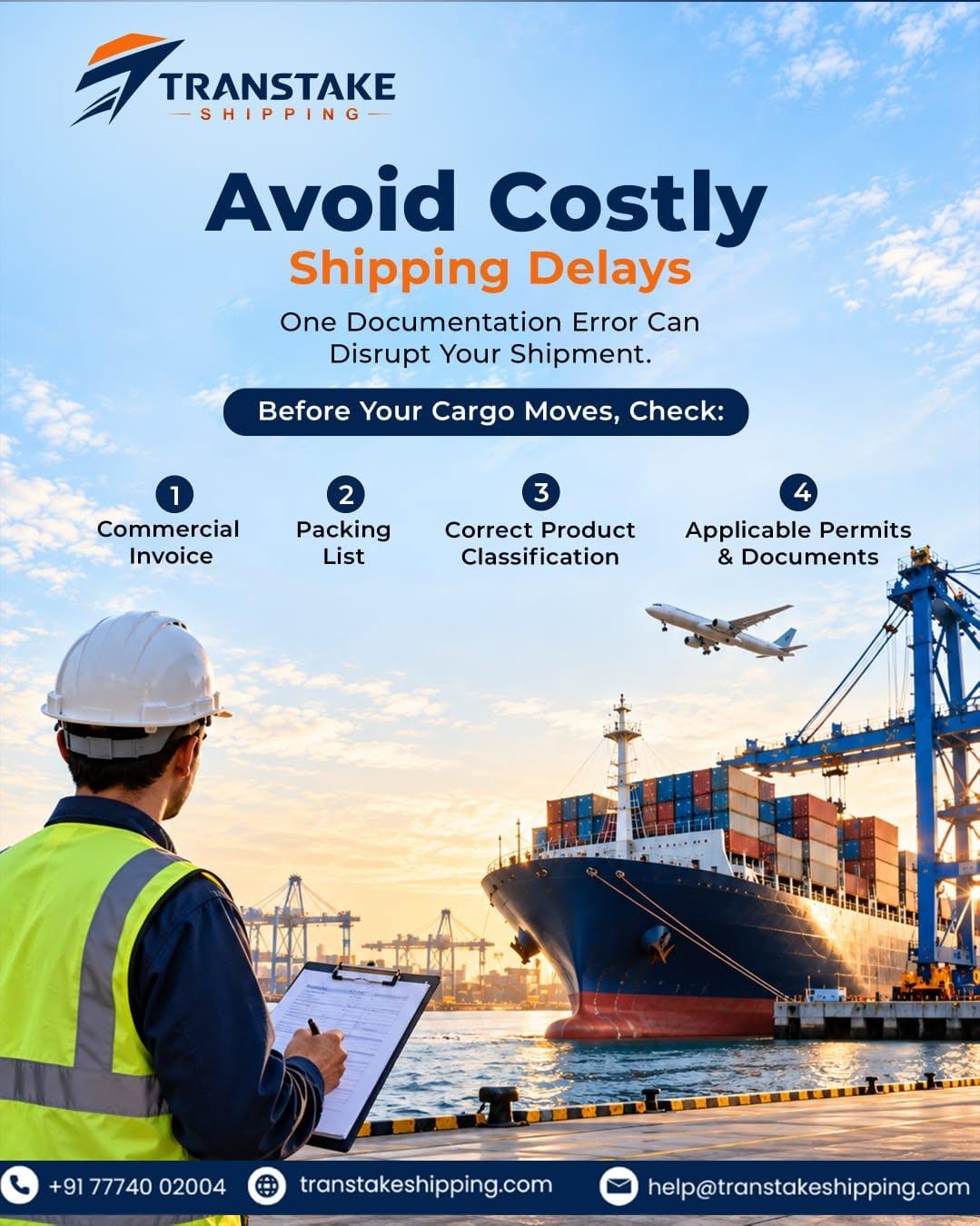
International shipping offers Indian businesses access to global suppliers, new markets, and essential raw materials. However, even a small documentation error can interrupt the import process, create additional costs, and delay cargo clearance. Proper preparation of shipping documents is therefore an important part of successful import logistics.
Transtake Shipping supports businesses with import shipping and logistics coordination. Understanding the essential documents before cargo dispatch can help importers prepare more effectively and reduce avoidable shipment complications.
Why Is Import Documentation Important?
Import documentation provides information about the goods being shipped, their value, packaging, origin, and regulatory requirements. Customs authorities use the relevant documents to assess shipments and determine whether applicable duties, taxes, permits, and other requirements have been met.
Incomplete, inconsistent, or inaccurate information may result in additional checks, requests for clarification, or delays. Preparing the required documents in advance helps importers coordinate with suppliers, freight forwarders, customs brokers, and other service providers.
4 Essential Checks Before Your Cargo Moves
1. Commercial Invoice
The commercial invoice records key details of an international sale. It typically includes the seller's and buyer's details, product descriptions, quantities, unit prices, total value, currency, and relevant sale terms.
What should importers check?
-
Ensure the buyer and seller details are accurate.
-
Verify product descriptions, quantities, and prices.
-
Check that the invoice information matches the purchase order and other shipping documents.
-
Confirm that the declared value and transaction details are properly documented.
Errors or inconsistencies may require clarification during customs processing.
2. Packing List
A packing list describes how the goods are packed and identifies the contents of each package, carton, or container. It commonly includes package counts, item descriptions, net and gross weights, and dimensions where applicable.
What should importers check?
-
Confirm the total number of packages.
-
Verify weights and dimensions against the actual cargo.
-
Check product descriptions and quantities.
-
Ensure the packing list is consistent with the commercial invoice and transport documents.
Accurate packing information supports cargo handling, shipment verification, and customs documentation.
3. Correct Product Classification
Correct classification of imported goods under the applicable customs tariff is essential. In India, the relevant tariff classification, commonly referred to through the ITC (HS) or HSN system, helps determine applicable customs duties, import policy conditions, and other regulatory requirements.
What should importers check?
-
Obtain a clear and technically accurate product description.
-
Identify the material, function, specifications, and intended use of the goods.
-
Verify the applicable tariff classification rather than relying solely on a supplier's suggested code.
-
Check current duty rates, import policy conditions, and product-specific regulations.
Incorrect classification can lead to reassessment, additional duties, penalties where applicable, or delays. When classification is uncertain, seek guidance from a qualified customs professional.
4. Applicable Permits and Supporting Documents
Some imported products require additional certificates, licences, registrations, or approvals. These requirements depend on the product, country of origin, intended use, and applicable Indian regulations.
Depending on the shipment, relevant documents may include:
-
Bill of Lading for sea freight or Air Waybill for air freight
-
Bill of Entry for import clearance in India
-
Certificate of Origin, where required or relevant
-
Insurance documents, where applicable
-
Product-specific licences, permits, or certificates
-
Other documents required by customs or the relevant regulatory authority
Importers should verify the current requirements for their particular goods before dispatch. Not every document applies to every shipment.
Common Import Documentation Mistakes That Cause Delays
Businesses can improve shipment preparation by watching for these common issues:
Incorrect product descriptions: Vague descriptions may make it difficult to identify the goods and determine the applicable requirements.
Mismatched invoice and packing list: Differences in quantities, package counts, or weights can trigger requests for clarification.
Incorrect tariff classification: An unsuitable classification may affect duty assessment and import policy compliance.
Missing supporting documents: Required permits or certificates may be overlooked when documentation is prepared at the last minute.
Late document submission: Delays in receiving final documents from suppliers can affect shipment planning and clearance coordination.
Unverified shipment details: Incorrect consignee information, shipment values, or transport details can create avoidable administrative problems.
How to Reduce Shipping Delays in India
Importers can follow a practical checklist to prepare shipments more efficiently:
-
Collect preliminary documents from the supplier before dispatch.
-
Verify the commercial invoice and packing list against the purchase order.
-
Confirm the correct product classification and applicable import policy.
-
Identify any required licences, permits, registrations, or product-specific approvals.
-
Coordinate transport documents and shipment details with the relevant logistics providers.
-
Arrange the required customs documentation and submit information within applicable timelines.
-
Keep digital copies of final documents and maintain communication with all parties involved.
These steps cannot guarantee delay-free clearance, but they can help reduce avoidable documentation issues and improve shipment coordination.
How Professional Import Logistics Support Can Help
Import documentation involves coordination among suppliers, importers, carriers, freight forwarders, customs brokers, and regulatory authorities. Professional logistics support can help businesses organize shipment information, identify missing documents, coordinate freight arrangements, and understand the steps required for import clearance.
The exact scope of support depends on the service agreement. Importers remain responsible for providing accurate information and ensuring that their shipments meet applicable legal and regulatory requirements.
Why Contact Transtake Shipping?
Transtake Shipping helps businesses explore import shipping and logistics solutions in India. Companies planning air freight or ocean freight shipments can discuss their cargo requirements, documentation needs, shipping routes, and delivery timelines with the team.
Preparing documents early and coordinating the shipping process carefully can help businesses manage international imports with greater confidence.
Conclusion
Accurate documentation is a vital part of efficient international shipping. Checking the commercial invoice, packing list, product classification, and applicable permits before dispatch can help importers identify potential problems early and reduce avoidable delays.
If your business needs support with import shipping and logistics coordination, contact Transtake Shipping to discuss your shipment requirements.
Transtake Shipping – Import Shipping and Logistics Support in India
Phone: +91-7774002004
Website: https://www.transtakeshipping.com
Email: help@transtakeshipping.com

 English
 Arabic
 French
 Spanish
 Portuguese
 Deutsch
 Dutch
 Italiano
 Russian
 Romaian
 Portuguese (Brazil)
 Greek
