

What Is a Politically Exposed Person? Key Considerations for Enhanced Due Diligence
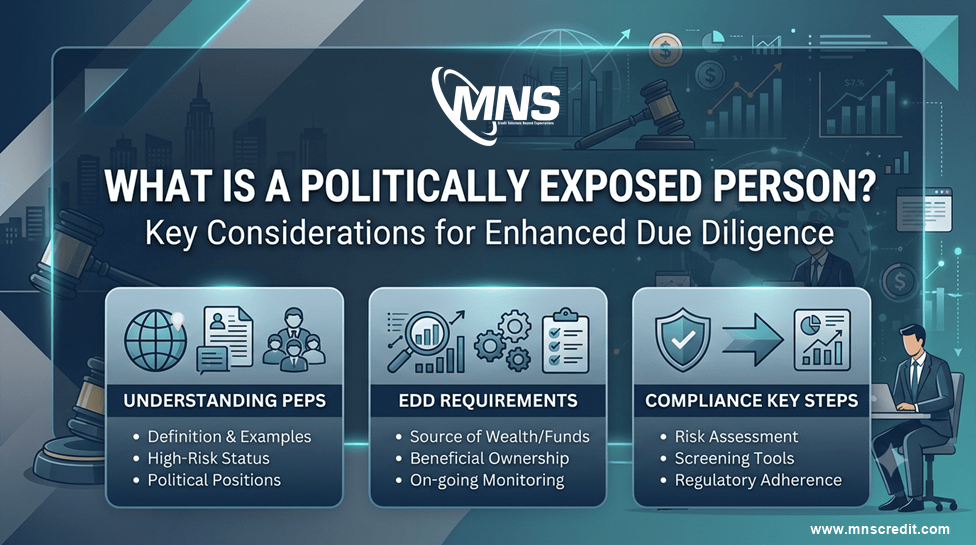
Every financial relationship carries some risk, but few carry as much regulatory and reputational weight as those involving politically exposed persons (PEPs). Whether you are onboarding a corporate client, extending trade credit, or planning debt collection against a well-connected debtor, knowing who sits behind the transaction is essential. This article explains what a PEP is, why PEPs need closer scrutiny, and which enhanced due diligence (EDD) measures organisations should apply.
What Is a Politically Exposed Person?
A politically exposed person is an individual who holds, or has recently held, a prominent public function. The Financial Action Task Force (FATF) distinguishes between foreign PEPs, domestic PEPs, and persons entrusted with a prominent function by an international organisation. Typical examples include heads of state, ministers, senior legislators, judges, senior military officers, executives of state-owned enterprises, and senior political party officials.
The definition does not stop with the individual. Family members and close associates, such as spouses, children, parents, business partners, and co-owners of entities, are also treated as PEPs for risk purposes, because funds or influence can easily be routed through them.
Why PEPs Carry Elevated Risk
Being a PEP is not an indicator of wrongdoing. However, a public position can give access to public budgets, licences, procurement decisions, and regulatory influence. This creates greater exposure to bribery, corruption, and the misuse of funds, which is why regulators treat the category as inherently higher risk.
Regulatory frameworks reflect this. In India, the Prevention of Money Laundering Act (PMLA) and the RBI KYC Master Directions require regulated entities to apply enhanced measures to PEPs. In the UAE, the Central Bank (CBUAE) and free-zone regulators such as DIFC and ADGM set comparable expectations, aligned with FATF Recommendation 12 and MENAFATF guidance.
When Is Enhanced Due Diligence Required?
Standard customer due diligence verifies identity and the purpose of the relationship. EDD goes further and applies when risk is higher. Common triggers include:
- The customer or beneficial owner is a PEP, or a relative or close associate of one
- Transactions involve high-risk jurisdictions
- Complex ownership structures or nominee arrangements obscure control
- Adverse media links the party to corruption, fraud, or sanctions
- Transaction patterns do not match the stated business profile
Key Considerations for Enhanced Due Diligence
1. Identify PEP status accurately. Screen names, aliases, dates of birth, and nationalities against reliable PEP and sanctions databases. Allow for transliteration differences, especially across Arabic, Hindi, and regional-language names, and review potential matches carefully to avoid both missed risks and false positives.
2. Establish source of wealth and source of funds. Understanding how the individual accumulated their wealth, and where the funds in a specific transaction originate, is the core of EDD. Corroborate the explanation with documents such as tax returns, audited financials, property records, or business ownership evidence.
3. Map beneficial ownership. PEPs often hold interests indirectly. Trace ownership through layers of companies, trusts, and nominees until you reach the natural persons who ultimately own or control the entity. Registry data, such as MCA21 filings in India, is a useful starting point.
4. Conduct adverse media and litigation checks. Review news coverage, court records, enforcement actions, and regulatory notices across relevant jurisdictions. Assess the credibility and relevance of each finding rather than treating every mention as disqualifying.
5. Obtain senior management approval. Most regulatory frameworks require senior-level sign-off before establishing or continuing a PEP relationship. This ensures that accountability sits at the right level and the risk is consciously accepted.
6. Monitor on an ongoing basis. PEP status changes. Individuals take office, leave office, or become linked to new entities. Periodic reviews and event-driven triggers help keep the risk profile current. Many institutions continue enhanced treatment for a period after a person leaves office, based on their own risk assessment.
PEPs, Credit Risk, and Debt Collection
EDD is not only a banking concern. Businesses that extend credit, onboard vendors, or enter distribution agreements face similar exposure. A PEP-linked debtor can be harder to pursue: influence over local institutions, layered ownership, and assets held through relatives can all complicate debt collection.
Conducting EDD before credit is extended gives creditors a clear view of the debtor’s real owners, asset base, and reputational profile. This makes later debt collection more efficient and defensible. If recovery action becomes necessary, documented due diligence supports legal strategy, helps trace assets across jurisdictions, and shows that the creditor acted prudently. Experienced debt collection partners with cross-border intelligence capability are especially valuable where PEP-linked entities operate across India and the Middle East.
Best Practices for an Effective PEP Programme
- Adopt a risk-based approach rather than treating all PEPs identically, considering the person’s role, seniority, and country of exposure
- Use reliable, regularly updated screening data and document how matches are resolved
- Train compliance, credit, and onboarding teams to recognise PEP red flags
- Keep a clear audit trail of decisions, approvals, and supporting evidence
- Combine screening with credit assessment and due diligence reports for a complete risk picture
Conclusion
A politically exposed person is not a prohibited customer, but a relationship that demands greater care. Accurate identification, verified source of wealth, transparent ownership, adverse media review, senior approval, and ongoing monitoring form the foundation of effective EDD. Organisations that apply these measures protect themselves from regulatory penalties and reputational damage, while also strengthening credit decisions and improving the outcome of any future debt collection effort.

 English
 Arabic
 French
 Spanish
 Portuguese
 Deutsch
 Turkish
 Dutch
 Italiano
 Russian
 Portuguese (Brazil)
 Greek
