

What Makes Japanese One of the Most Rewarding Languages to Learn?
Introduction
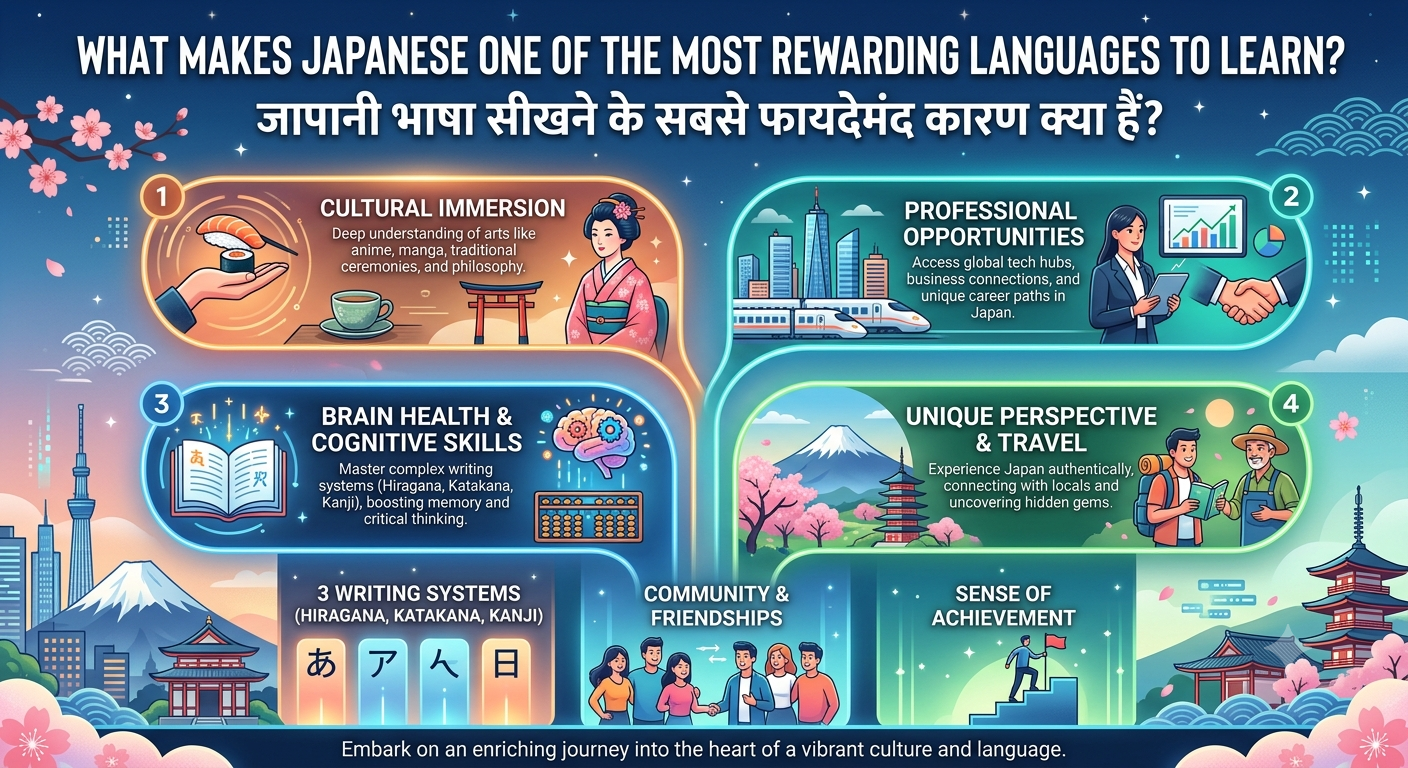
Learning a new language can introduce you to different cultures, new ways of thinking, and exciting personal and professional opportunities. Japanese is an especially interesting choice because it connects learners with Japan’s traditions, modern lifestyle, literature, technology, food, and entertainment.
Whether you are interested in travelling, exploring Japanese culture, improving your career prospects, or learning something new, studying Japanese can be a fulfilling experience. For beginners who prefer structured guidance, a Japanese course in Delhi can provide a starting point for developing language skills through regular lessons and practice.
But what makes Japanese such a rewarding language to learn? Let’s explore the reasons.
1. Discover a Rich and Fascinating Culture
One of the biggest attractions of learning Japanese is the opportunity to understand Japanese culture more deeply. From traditional festivals and tea ceremonies to modern fashion and pop culture, Japan offers a wide range of cultural experiences.
Knowing the language can help you understand cultural references, everyday expressions, and the meanings behind certain customs. You can also explore Japanese literature, films, and interviews with a better understanding of their original context.
Learning Japanese does not require you to become an expert in every aspect of Japanese culture. Even basic vocabulary and expressions can help you appreciate familiar cultural experiences in a new way.
2. Enjoy Anime, Manga, and Japanese Entertainment
Japanese entertainment has attracted audiences around the world. Anime, manga, films, music, and video games provide enjoyable ways to become familiar with the language.
When you understand Japanese, you may recognise expressions that are difficult to capture fully in subtitles. You can also notice differences in speech styles, humour, and character interactions.
Here are some ways to combine entertainment with language learning:
-
Watch short anime scenes and listen for familiar expressions.
-
Read beginner-friendly manga with furigana where available.
-
Listen to Japanese songs and identify repeated vocabulary.
-
Watch interviews or videos with Japanese subtitles.
-
Keep a notebook of new expressions and review them regularly.
Entertainment can make learning enjoyable, but it works best when combined with grammar study, vocabulary revision, and active listening practice.
3. Explore Career and Educational Opportunities
Japanese language skills may complement qualifications in fields such as information technology, business, tourism, customer support, education, and digital marketing.
Some organisations work with Japanese clients, suppliers, or colleagues and may value employees who can communicate in Japanese. The opportunities available depend on the role, required proficiency, education, and professional experience.
Learning Japanese may also help students explore educational programmes or cultural exchanges connected with Japan. However, admission and employment requirements vary, so it is important to check the criteria for each opportunity.
If career development is one of your goals, choose a learning plan that combines language proficiency with practical skills relevant to your chosen industry.
4. Experience the Satisfaction of Learning a Different Writing System
Japanese uses three main writing systems: hiragana, katakana, and kanji. Understanding how they work is one of the most distinctive parts of learning the language.
-
Hiragana: Used for grammatical elements and many native Japanese words.
-
Katakana: Commonly used for foreign loanwords, foreign names, and emphasis.
-
Kanji: Characters used to represent meanings and parts of words.
At first, remembering unfamiliar characters may seem challenging. However, learning them gradually allows you to read simple words, recognise patterns, and understand how written Japanese works.
Start with hiragana and katakana before building your kanji knowledge step by step. Regular writing and reading practice can make the process more manageable.
5. Understand Japanese Communication and Etiquette
Japanese communication involves more than vocabulary and grammar. Politeness, context, and the relationship between speakers can influence how people express themselves.
For example, arigatou is a common way to say “thank you,” while arigatou gozaimasu is a more polite expression. Similarly, formal language is often useful when speaking with teachers, colleagues, customers, or people you have just met.
As you learn Japanese, you can gradually become familiar with:
-
Polite greetings and introductions
-
Formal and casual expressions
-
Respectful communication in professional settings
-
Common social customs
-
Appropriate language for different situations
These skills can help you communicate more thoughtfully when interacting with Japanese speakers.
6. Develop a New Skill Through Consistent Practice
Learning Japanese provides a clear opportunity to set goals and track your progress. You might begin by learning greetings, move on to basic conversations, and later work towards reading short passages or understanding longer audio recordings.
A simple study routine can include:
|
Learning Activity |
Suggested Time |
|---|---|
|
Vocabulary revision |
10 minutes |
|
Writing system practice |
10 minutes |
|
Grammar and sentence building |
10 minutes |
|
Listening or speaking practice |
10 minutes |
You can adapt this schedule to your availability and learning level. The important thing is to practise regularly instead of relying only on occasional long study sessions.
Although language learning involves memory and attention, it should not be treated as a guaranteed way to improve general intelligence or cognitive performance. Its most direct benefits are the language skills and knowledge you develop through practice.
7. Make Travelling in Japan More Meaningful
Knowing Japanese can make travel experiences more comfortable and engaging. Even basic expressions can help you greet people, ask for directions, understand simple signs, and communicate everyday needs.
Useful phrases include:
-
こんにちは (Konnichiwa): Hello or good afternoon.
-
すみません (Sumimasen): Excuse me or sorry.
-
駅はどこですか (Eki wa doko desu ka): Where is the station?
-
これをください (Kore o kudasai): This one, please.
-
ありがとうございます (Arigatou gozaimasu): Thank you very much.
Learning these expressions before travelling can help you feel more prepared. It also gives you opportunities to practise the language in real situations.
8. Find a Learning Method That Suits You
Japanese can be learned through self-study, online resources, classroom lessons, language exchange, or a combination of these methods.
Some learners prefer studying independently, while others benefit from a structured course and guidance from an instructor.
When choosing a Japanese course in Delhi, consider the following:
-
Course structure: Check whether the syllabus covers grammar, vocabulary, reading, listening, and speaking.
-
Teaching approach: Look for lessons that encourage active participation and practical exercises.
-
Teacher support: Find out how instructors answer questions and provide feedback.
-
Learning schedule: Choose timings that fit your work, education, or family responsibilities.
-
Progress assessment: Regular quizzes and assignments can help you identify areas for improvement.
-
Personal goals: Consider whether you want to learn for travel, general interest, professional development, or JLPT preparation.
A suitable course should help you build a strong foundation and progress at a manageable pace.
9. Set Realistic Goals for Your Japanese Learning Journey
Japanese becomes more rewarding when you can see your progress over time. Instead of trying to learn everything at once, divide your journey into smaller milestones.
For example:
-
Learn hiragana and katakana.
-
Memorise common greetings and introductions.
-
Build a foundation in basic grammar.
-
Practise listening to short Japanese conversations.
-
Read simple sentences and beginner-level passages.
-
Work towards a suitable JLPT level if certification is one of your goals.
The Japanese-Language Proficiency Test (JLPT) has five levels, from N5 to N1, and assesses language knowledge, reading, and listening. Speaking and writing require separate practice because they are not directly tested by the JLPT.
Celebrate small achievements, review difficult topics, and adjust your study plan as your skills develop.
Conclusion
Japanese is a rewarding language to learn because it opens the door to a fascinating culture, enjoyable entertainment, meaningful travel experiences, and potential professional opportunities. It also offers a structured learning journey in which you can gradually develop reading, listening, speaking, and writing skills.
The best approach is to begin with clear goals, practise consistently, and choose learning resources that suit your needs. If you want structured guidance, exploring a Japanese course in Delhi can help you start learning with a clear plan and opportunities for regular practice.
With patience and curiosity, you can make Japanese language learning a valuable part of your personal and professional development.
Frequently Asked Questions (FAQs)
1. Why is Japanese a rewarding language to learn?
Japanese can help you explore Japanese culture, enjoy entertainment in its original language, communicate during travel, and pursue opportunities where Japanese proficiency is useful.
2. Is Japanese suitable for beginners?
Yes. Beginners can start with basic greetings, hiragana, katakana, simple vocabulary, and foundational grammar before progressing to more advanced topics.
3. Can learning Japanese help with career opportunities?
Japanese may be useful in areas such as business, IT support, tourism, education, and customer service. Career opportunities depend on language proficiency, qualifications, experience, and employer requirements.
4. How long does it take to learn Japanese?
The time required depends on your goals, study schedule, previous language experience, and amount of practice. Basic expressions may be learned relatively quickly, while advanced reading and communication require sustained effort.
5. What should I consider when choosing a Japanese course in Delhi?
Review the syllabus, teaching method, instructor support, class timings, practice opportunities, and whether the course matches your current level and learning goals.

 English
 Arabic
 French
 Spanish
 Portuguese
 Deutsch
 Turkish
 Dutch
 Italiano
 Russian
 Romaian
 Portuguese (Brazil)
