

Education Equity: How Shikshagraha Builds a People's Movement for Change
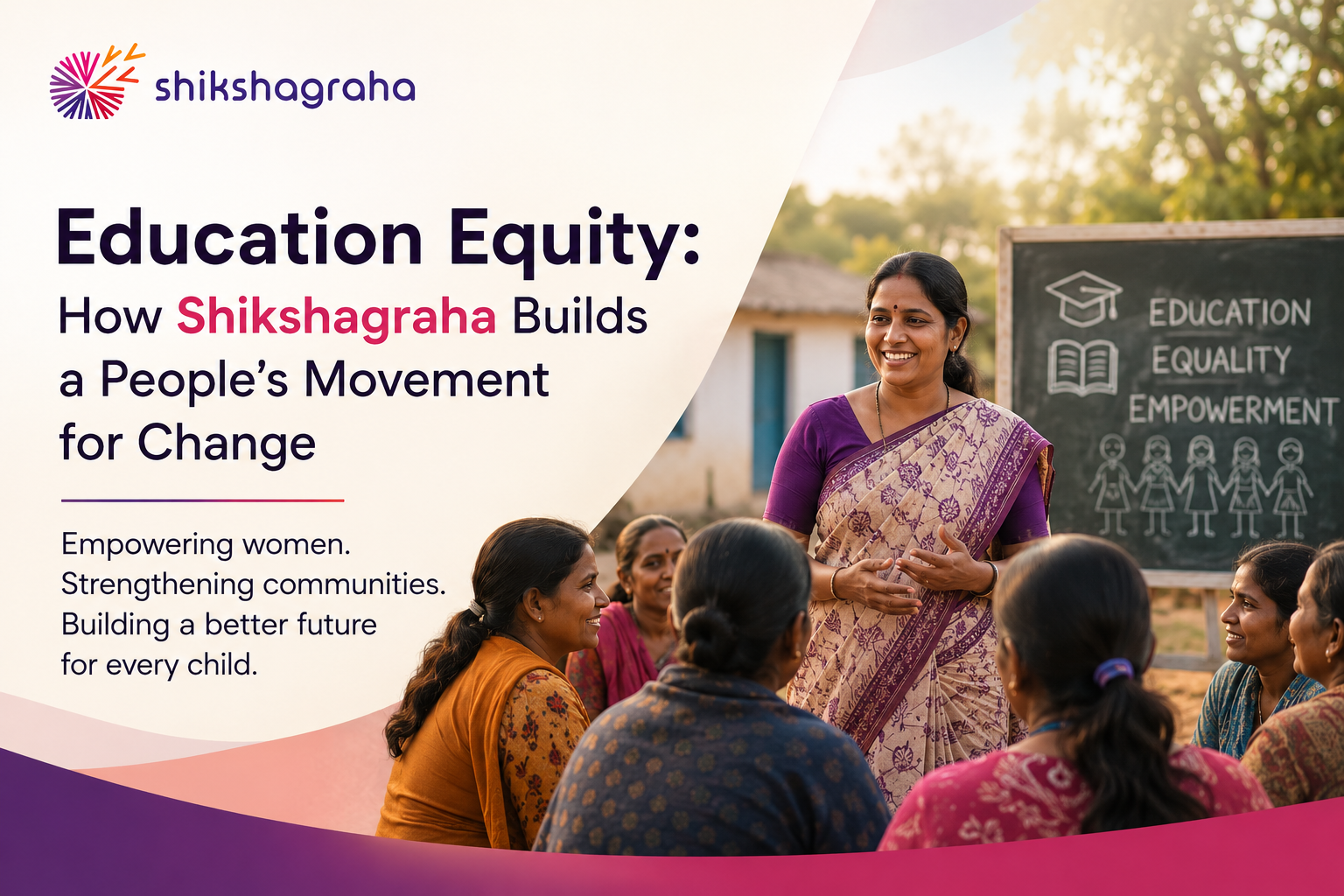
Every child deserves an opportunity to learn, grow, and build a better future, regardless of their gender, family background, or financial circumstances. Yet, many children continue to face barriers that affect their access to quality education. Addressing these challenges requires more than school infrastructure or educational policies. It calls for collective responsibility, stronger communities, and the active participation of people who understand local realities.
Education Equity means ensuring that every child receives the support and opportunities needed to learn and succeed. It recognises that children experience different challenges and that meaningful solutions must respond to their individual and community needs. Building a people's movement for education equity begins when families, teachers, community leaders, and institutions work together to make education a shared priority.
Why Education Equity Matters for Every Child
Access to education is an important starting point, but access alone does not guarantee meaningful learning. Children may struggle to continue their education because of financial difficulties, social expectations, inadequate support, or limited awareness of available opportunities.
These barriers can affect girls particularly, especially in communities where early marriage, household responsibilities, and traditional gender expectations influence educational decisions.
Creating more equitable educational opportunities involves addressing the circumstances that prevent children from participating fully in school.
Key priorities include:
-
Equal learning opportunities: Ensuring that every child can access quality education and receive appropriate learning support.
-
Girls' education: Encouraging families and communities to support girls in completing their schooling and pursuing further education.
-
Community participation: Bringing parents, teachers, and local leaders together to identify educational challenges.
-
Inclusive school environments: Creating spaces where children feel safe, respected, encouraged, and motivated to learn.
-
Continued learning: Helping children remain in school and explore opportunities beyond basic education.
When communities recognise education as a shared responsibility, they become better equipped to identify problems and work towards sustainable solutions.
How Women Strengthen a People's Movement for Education Equity
Women play an important role in shaping educational outcomes within families and communities. As mothers, educators, community representatives, and grassroots leaders, they often recognise challenges that directly affect children's attendance, safety, and learning.
However, their contributions can extend far beyond supporting individual families. When women have opportunities to organise, share experiences, and participate in community decisions, they can influence how educational challenges are understood and addressed.
A strong people's movement for education equity recognises women as leaders who can help bring communities together around a common purpose.
Their contributions may include:
-
Encouraging parents to prioritise children's education.
-
Identifying children who are at risk of dropping out.
-
Raising awareness about girls' education and the consequences of early marriage.
-
Connecting families with teachers, school leaders, and relevant support systems.
-
Mobilising community members to address barriers affecting school participation.
-
Promoting dialogue between households and local institutions.
These actions demonstrate that lasting educational change does not depend on a single individual or organisation. It develops when people work collectively, share responsibility, and support one another.
Shikshagraha: Enabling Women to Lead Educational Change
Shikshagraha works towards strengthening India's public education system by bringing together communities, educators, civil society organisations, government stakeholders, and other partners. Its approach recognises that sustainable improvement becomes possible when people closest to children participate actively in shaping solutions.
Through its Women Leadership Collective, Shikshagraha supports women who are working to improve educational outcomes within their communities. These women help create opportunities for conversations, collective problem-solving, and local action.
One important approach is the use of Shiksha Chaupals, community gatherings where women, parents, teachers, school leaders, and local representatives discuss barriers affecting children's education and identify practical ways forward.
Such gatherings can help communities move from recognising a problem to taking action.
For example, a community may identify girls who are missing school because of family responsibilities or safety concerns. Through collective discussion, members can explore ways to engage parents, coordinate with teachers, and connect families with available support.
By creating opportunities for women to contribute their knowledge and leadership, Shikshagraha helps strengthen community participation in public education improvement.
The focus is not simply on raising awareness. It is on enabling people to take ownership of challenges and work together towards solutions that respond to their local circumstances.
From Community Conversations to Meaningful Action
Educational challenges are often interconnected. A child who stops attending school may be affected by financial pressure, family expectations, transportation difficulties, or a lack of encouragement at home.
Addressing these challenges requires communities to listen carefully, understand the underlying causes, and identify actions that are realistic within their circumstances.
Community-led initiatives can support this process through a few practical steps:
1. Identify the challenge
Bring together parents, educators, women leaders, and other community members to understand why children may be missing school or struggling to continue their education.
2. Listen to different perspectives
Create opportunities for families, students, and teachers to share their experiences without fear of judgement. Understanding different viewpoints can reveal challenges that may otherwise remain unnoticed.
3. Develop local solutions
Encourage participants to identify practical actions based on available resources, local knowledge, and the needs of affected children.
4. Coordinate with relevant stakeholders
Connect community efforts with schools, local representatives, and appropriate support systems so that identified challenges can be addressed collaboratively.
5. Review progress and continue learning
Follow up on agreed actions, discuss what has improved, and identify areas that require additional support.
This approach helps transform community participation into a continuing process rather than a one-time discussion.
Breaking Barriers That Prevent Girls from Learning
Girls' education is essential to building stronger families, more inclusive communities, and a society where every individual has opportunities to fulfil their potential.
Nevertheless, some girls continue to encounter barriers that affect their educational journeys. Financial hardship, early marriage, social expectations, safety concerns, and limited access to guidance can interrupt their schooling and restrict future opportunities.
Addressing these barriers requires sustained engagement with families and communities.
Community leaders and women's groups can help by encouraging families to keep girls in school, sharing information about educational opportunities, and connecting students with relevant resources.
They can also challenge assumptions that limit girls' ambitions or suggest that their education is less important than other responsibilities.
When girls receive encouragement and practical support, they are better positioned to continue learning, pursue higher education, and explore future careers.
Supporting girls' education also creates opportunities for the next generation. Educated girls can contribute to their families, participate in community decisions, and inspire other children to pursue their aspirations.
Measuring Progress Through Collective Responsibility
Improving education requires more than good intentions. Communities and education stakeholders need to understand whether their actions are making a meaningful difference.
A practical approach to monitoring progress can help identify effective solutions, highlight remaining challenges, and strengthen accountability.
Some useful indicators include:
-
Changes in school attendance and student retention.
-
Increased participation of girls in education.
-
Greater involvement of parents in school-related discussions.
-
Community initiatives addressing barriers to learning.
-
Improved coordination between schools and local stakeholders.
-
Continued participation of women in educational leadership activities.
These indicators should be considered alongside the experiences of children, families, and teachers. Numbers can demonstrate progress, while personal experiences help explain why particular changes matter.
Collective learning is equally important. Sharing successful practices between communities can help others adapt useful ideas to their own circumstances instead of starting from scratch.
Building a Future Where Every Child Can Learn
Education improvement becomes more sustainable when communities recognise that responsibility does not rest with schools alone. Families, teachers, local leaders, institutions, and wider society all have a role in creating environments where children can learn and thrive.
Women-led community action can be particularly valuable because it brings local experiences into discussions about educational priorities. When women have the opportunity to lead, they can help communities recognise overlooked challenges and turn shared concerns into practical action.
Achieving Education Equity requires continued commitment, collaboration, and attention to the barriers that affect children's learning. It also requires recognising that meaningful progress often begins with small steps: a conversation with a parent, support for a girl returning to school, or a community working together to resolve a local problem.
Through its focus on collective action and women's leadership, Shikshagraha contributes to a broader effort to strengthen public education and encourage community ownership.
A people's movement for education equity grows when individuals understand that their actions matter and that lasting change becomes possible when those actions are connected.
Every child deserves the opportunity to learn well and build a future filled with possibilities. By empowering women, engaging communities, and strengthening public education, society can move closer to making that opportunity a reality for every child.

 English
 Arabic
 Spanish
 Portuguese
 Deutsch
 Turkish
 Dutch
 Italiano
 Russian
 Romaian
 Portuguese (Brazil)
 Greek
