

Why Saudi Industrial Buyers Should Review Equipment Compatibility Before Expanding Plant Capacity
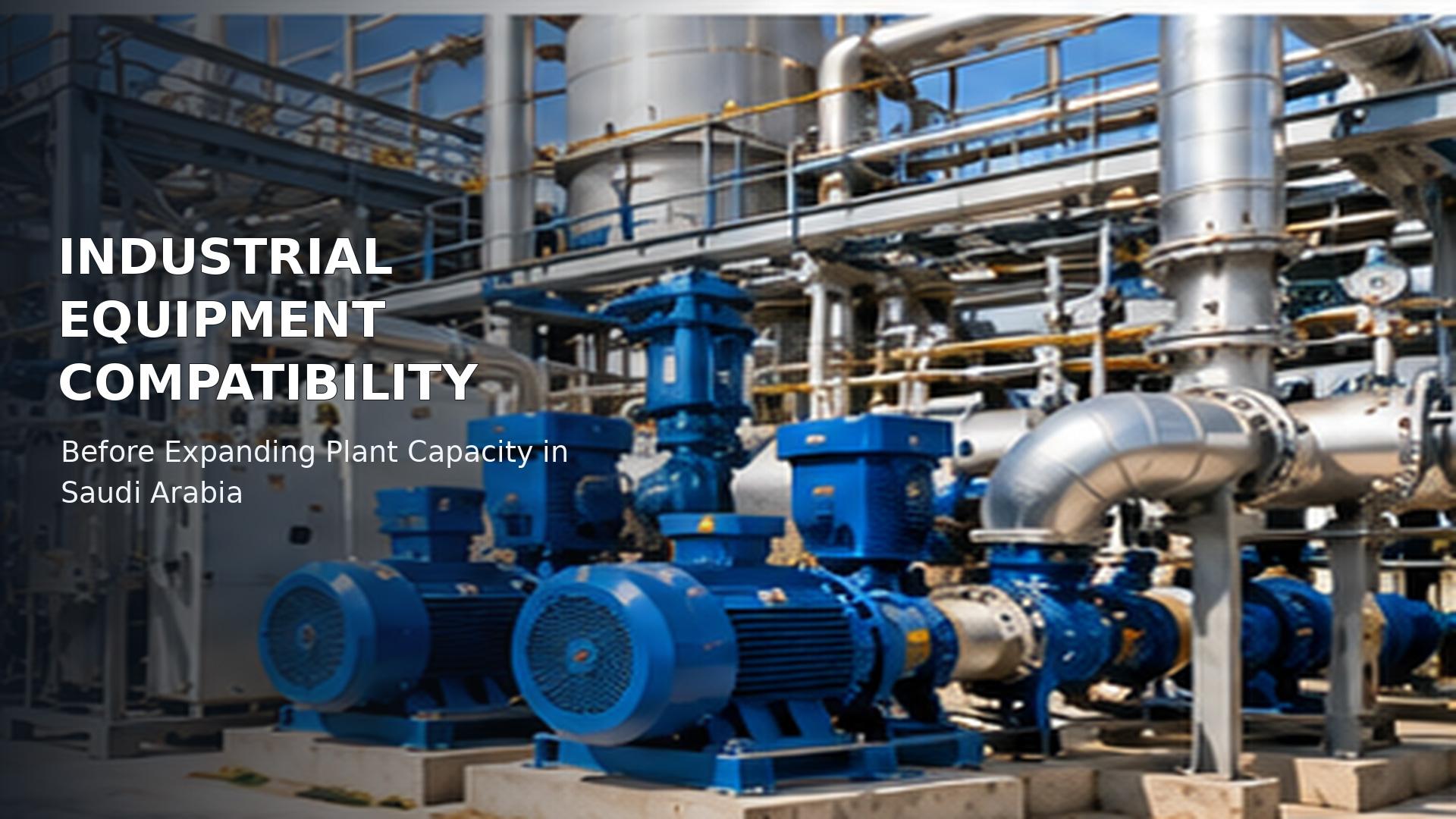
Adding More Equipment Does Not Automatically Mean the Existing Plant Is Ready for More Production
Industrial expansion is often discussed in terms of adding production capacity, new machines or additional process lines. The equipment itself is important, but expansion can affect much more than the production floor.
For buyers sourcing Industrial Plant Equipment Saudi Arabia projects require, one of the most important questions is whether new equipment is technically compatible with the existing plant.
A machine may meet the desired production rate while creating new requirements for electricity, cooling, water, compressed air, controls, piping or maintenance space.
That is why compatibility should be reviewed before a purchase order is issued.
Start With the Existing Plant
Before selecting new equipment, buyers should understand what infrastructure is already available.
This can include:
-
electrical capacity;
-
pumps;
-
water supply;
-
cooling systems;
-
compressed air;
-
drainage;
-
control systems;
-
plant-room space;
-
and maintenance access.
An expansion project should identify where the existing plant has spare capacity and where additional infrastructure may be required.
Electrical Compatibility Can Change the Entire Project Scope
Industrial machinery may have substantial electrical requirements.
Before procurement, teams should verify:
-
voltage;
-
phase;
-
frequency;
-
connected load;
-
starting requirements;
-
motor specifications;
-
protection requirements;
-
and available distribution capacity.
A new machine may be technically suitable for production but still require upgrades to the electrical system.
Finding that out before ordering is far better than discovering it during installation.
Mechanical Connections Need the Same Attention
Industrial equipment often needs to connect to existing piping, tanks, pumps, ducts, conveyors or process systems.
Buyers should check:
-
connection sizes;
-
flange standards;
-
pressure ratings;
-
flow requirements;
-
equipment orientation;
-
foundation needs;
-
and physical dimensions.
Even small interface differences can create fabrication work, delays and added cost.
Production Expansion Can Increase Cooling Demand
New machinery often introduces new heat into the plant.
If the existing cooling system was originally designed close to its required capacity, adding equipment may create a cooling shortfall.
Before expanding production, project teams should consider whether additional machinery will increase:
-
process cooling load;
-
chilled-water demand;
-
pump requirements;
-
heat-rejection needs;
-
or plant-room heat.
Cooling capacity should therefore be part of equipment compatibility review.
Water Demand May Also Increase
Some production equipment requires water for processing, washing, cooling or another operational function.
Expansion may therefore affect:
-
water-treatment capacity;
-
storage;
-
transfer pumps;
-
filtration;
-
drainage;
-
and wastewater handling.
A plant that has enough production space may still need supporting water infrastructure before additional machinery can operate reliably.
Control-System Compatibility Matters
Modern equipment may need to communicate with a central control system or other machinery.
Project teams should define whether new equipment requires:
-
remote start and stop;
-
alarm contacts;
-
status signals;
-
speed control;
-
temperature or pressure monitoring;
-
data communication;
-
or integration with existing plant controls.
If this is ignored during procurement, equipment may arrive with controls that cannot communicate easily with the rest of the plant.
Physical Space Is Not Just About Whether the Machine Fits
Equipment dimensions are only the beginning of layout planning.
The plant also needs space for:
-
maintenance;
-
filter replacement;
-
motor removal;
-
electrical access;
-
valve access;
-
operator movement;
-
ventilation;
-
and future replacement.
A machine that fits into the available floor area may still be impractical to maintain.
Check Utility Capacity Before Increasing Production
Industrial expansion can affect several utilities at the same time.
Project teams should review whether the existing site has enough capacity for:
-
electricity;
-
water;
-
compressed air;
-
cooling;
-
ventilation;
-
fuel where relevant;
-
and drainage.
This creates a more accurate picture of the true expansion cost.
Materials and Operating Conditions Must Match
New equipment should also be suitable for the materials, fluids, temperatures and pressures used in the process.
Construction materials that are perfectly adequate in one duty may be unsuitable in another.
Buyers should therefore review wetted parts, seals, piping, tanks, pumps and other components according to the intended application.
Spare Parts Should Be Considered Before Standardising on New Equipment
Adding a new equipment brand or technology can create another spare-parts requirement for the maintenance team.
Before expanding, buyers should ask:
-
Which parts are consumable?
-
Which parts are critical?
-
What components have long lead times?
-
Can existing plant spares be shared?
-
Does the maintenance team already understand the equipment?
Standardisation can sometimes reduce maintenance complexity, but it should not override technical suitability.
Expansion Should Consider the Next Expansion Too
A project team may be planning one production increase today, but further expansion may already be expected.
That future requirement should influence decisions about:
-
electrical distribution;
-
plant-room space;
-
control panels;
-
pipe sizing;
-
cooling infrastructure;
-
and equipment layout.
Planning connection points now can sometimes reduce the disruption of future expansion.
Downtime Risk Should Influence Equipment Selection
Not all equipment is equally critical.
If one machine fails and the entire production line stops, reliability and support may deserve greater weight in the purchasing decision.
Project teams should consider:
-
availability of critical spare parts;
-
maintenance complexity;
-
standby arrangements;
-
equipment modularity;
-
and the cost of lost production.
Compare the Complete Expansion Scope
When evaluating industrial plant equipment in Saudi Arabia, buyers should look beyond the new machine itself.
A useful technical review should cover:
Production Capacity + Electrical Load + Mechanical Interfaces + Cooling + Water + Controls + Utilities + Layout + Maintenance + Spare Parts + Future Expansion
This makes the commercial decision far more accurate.
Final Thoughts
Expanding plant capacity is rarely just an equipment purchase.
New machinery changes the demands placed on supporting systems and existing infrastructure.
Saudi industrial buyers can reduce installation problems and unplanned project costs by reviewing compatibility before the order is placed.
The goal should be simple: make sure the new equipment fits not only the production target, but the complete plant that must support it.

 English
 Arabic
 Spanish
 Portuguese
 Deutsch
 Turkish
 Dutch
 Italiano
 Russian
 Romaian
 Portuguese (Brazil)
 Greek
