

Youth Football Shoulder Pads: Pre-Season Fit and Safety Checklist
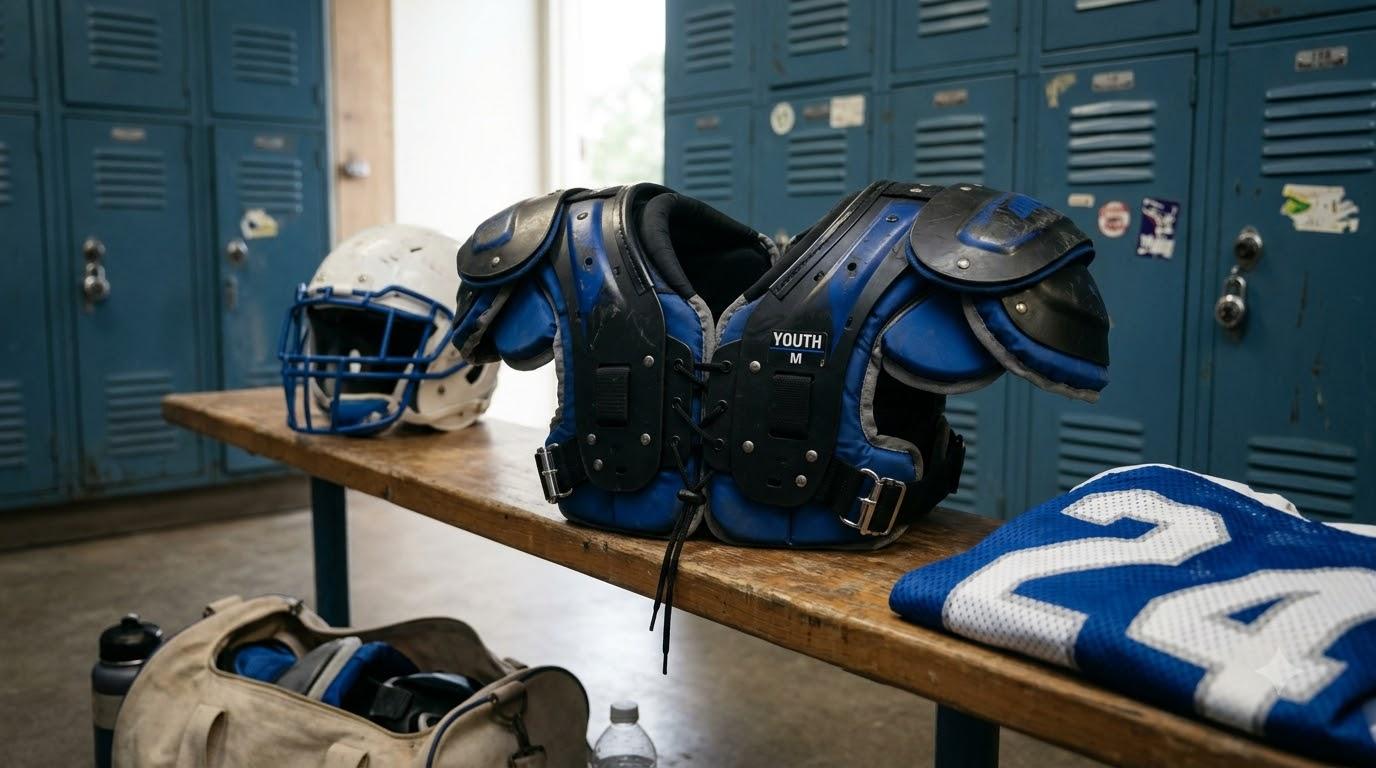
How to Check Youth Football Shoulder Pads Before the First Practice
The first practice of a new football season is a poor time to discover that a player's equipment no longer fits. Children can grow considerably between seasons, straps may become worn, and equipment stored for months may need inspection before use.
A pre-season check of youth football shoulder pads for a correctly fitted and inspected setup helps parents and coaches identify fit concerns, visible damage, and adjustment problems before the athlete takes the field. It also creates an opportunity to confirm that the equipment meets the player's current league and position requirements.
A checklist cannot guarantee that injuries will not occur. Its purpose is to make equipment checks consistent, so obvious issues are not missed because everyone is focused on uniforms, schedules, and the first practice.
Why a Pre-Season Check Is Important
Equipment that worked last year may not be suitable now. A player may have grown, the straps may have changed condition, or the team may have updated its equipment requirements.
Common problems include:
-
Pads that no longer fit the player's current measurements.
-
Adjustment straps that are loose, damaged, or difficult to secure.
-
Equipment that shifts when the player moves.
-
Discomfort around the shoulders, neck, or chest.
-
A jersey that no longer fits comfortably over the equipment.
-
Uncertainty about whether the setup meets the current competition rules.
These issues should be addressed before the player participates in activities that require the equipment.
A pre-season review is also a chance to teach young athletes how to report discomfort. Players should understand that equipment should be checked when something feels wrong, rather than assuming they must simply get used to it.
The Pre-Practice Inspection Checklist
1. Confirm the model and requirements
Check the equipment's model information and review the manufacturer's instructions. Confirm that the pads are appropriate for the player's intended use and comply with the requirements of the relevant league, age group, and position.
Do not assume that equipment accepted by one organisation will automatically meet another organisation's rules.
2. Inspect the shell and visible components
Look for cracks, deformation, damaged sections, or other visible problems. Check the padding and other components for signs of wear that may affect their intended function.
If you are unsure whether a defect is significant, consult the manufacturer, supplier, or a qualified equipment specialist. Do not use damaged equipment when its suitability is uncertain.
3. Check the straps and adjustment points
Inspect every strap, buckle, and adjustment area included in the design. Look for fraying, loose connections, missing parts, or difficulty securing the equipment as instructed.
Follow the manufacturer's directions when adjusting the pads. Do not improvise repairs or alter the equipment in ways the manufacturer does not permit.
4. Recheck the player's current fit
Use the manufacturer's sizing and fitting instructions. The player's age or previous size is not enough to establish that the equipment still fits correctly.
Check that the pads sit in their intended position and do not shift excessively. If the equipment cannot be positioned properly, reassess the size or model before use.
5. Test comfortable movement
Ask the player to raise the arms, reach forward, rotate the torso, and adopt a normal football stance. The equipment should not cause painful pressure or make ordinary movement uncomfortably difficult.
If the player reports discomfort, investigate rather than dismissing the concern. A fitting problem should be addressed before practice continues.
6. Put on the full uniform
Test the pads with the jersey and other required equipment. Check for bunching, interference, or uncomfortable pressure caused by the combined layers.
The goal is a setup that fits as intended without compromising required protective coverage.
A Step-by-Step Pre-Season Routine
Use the same sequence for every player to reduce the chance of overlooking a problem.
Step 1: Gather the equipment. Bring the pads, normal jersey, and any other gear needed to evaluate the complete setup.
Step 2: Review the rules and instructions. Confirm current competition requirements and follow the manufacturer's fitting guidance.
Step 3: Inspect before wearing. Check the shell, straps, padding, and visible components for damage.
Step 4: Fit the equipment. Position and secure it according to the manufacturer's instructions. Do not guess at adjustment settings.
Step 5: Perform a movement check. Ask the player to complete controlled movements and report any discomfort or restriction.
Step 6: Add the uniform. Check the complete equipment setup again, paying attention to the shoulders, chest, and areas where layers overlap.
Step 7: Record unresolved concerns. If fit or condition is uncertain, do not simply mark the equipment as ready. Arrange a follow-up with the appropriate equipment professional.
Step 8: Repeat the check regularly. Growth, wear, and changes in the equipment setup can make another assessment necessary later in the season.
Practical Example 1: The Player Who Has Grown Over Summer
A parent takes a child's equipment out of storage shortly before the first team practice. The pads appear undamaged, so the parent initially assumes they are ready.
During fitting, the player finds it difficult to raise his arms comfortably. The parent checks the current sizing instructions and realises that the child's measurements have changed since the previous season.
The family arranges a suitable fitting instead of forcing the old pads into place. This example shows why a visual inspection alone is not enough: equipment can remain intact but no longer fit the athlete.
Practical Example 2: Loose Adjustment Straps
A coach notices that a player's shoulder pads move when the player raises his arms. On inspection, one adjustment strap does not remain secure as expected.
The coach stops the fitting and asks the family to follow the manufacturer's guidance and determine whether the strap can be correctly secured or whether the equipment needs professional attention. The player does not continue simply because the pads look acceptable.
The lesson is to investigate movement and fastening problems before use. Equipment should not be treated as ready until the relevant concerns have been resolved.
Illustrative Case Study: A Team-Wide Equipment Review
This is a hypothetical example, not a documented customer result.
A youth football team plans its pre-season schedule and realises that individual families have different routines for checking equipment. Some inspect the pads carefully, while others focus mainly on uniforms and helmets.
The coaching staff introduces a standard checklist covering model requirements, visible condition, straps, fit, movement, and the complete uniform. Families are asked to report unresolved concerns before the first full practice.
The checklist helps the team identify which players need a new fitting, equipment maintenance, or confirmation of the competition requirements. Coaches also explain that players should speak up if discomfort appears during the season.
The benefit is a more consistent process. It does not guarantee injury prevention, but it helps the team address obvious equipment concerns before participation.
What to Do if the Pads Fail a Check
Not every issue requires the same response. A sizing problem may call for a different model, while visible damage or a fastening concern may require manufacturer guidance or professional inspection.
Use the following approach:
|
Problem found |
Recommended next step |
|
Equipment feels too small |
Recheck measurements and sizing guidance |
|
Pads shift during movement |
Review fit and positioning before use |
|
Strap or buckle appears damaged |
Follow manufacturer guidance; do not improvise a repair |
|
Visible shell or padding damage |
Seek qualified assessment before use |
|
Jersey bunches or restricts movement |
Reassess the complete equipment setup |
|
Unsure whether the model meets league rules |
Confirm requirements with the league or coaching staff |
If there is uncertainty about whether the equipment is safe or suitable, keep it out of use until the concern has been resolved.
Choosing Replacement Equipment
If the existing pads no longer fit or cannot be used as intended, compare replacement options carefully. Confirm the manufacturer's sizing guidance, intended use, adjustment features, and current product specifications.
When reviewing a product such as the model listed by TAG Sports Gear, verify the details for that specific item rather than assuming all models have the same features. Make the decision based on fit, the player's needs, and the rules that apply to the team.
Avoid buying equipment based solely on a player's age or a general description. Measurements and a proper fitting provide more useful information.
Keeping the Checklist Useful All Season
A checklist should not be completed once and forgotten. Players grow, equipment experiences wear, and comfort can change as training becomes more demanding.
Check equipment before use and pay attention when a player reports shifting, pressure, or discomfort. Reassess fit after noticeable growth or when another part of the uniform changes.
Store the equipment according to the manufacturer's instructions and inspect it after use. Keeping it clean and in suitable storage conditions makes it easier to spot visible changes during the next inspection.
Coaches should also make it clear that players can report a problem without embarrassment. A young athlete may hesitate to mention discomfort if they believe it will delay participation. An open reporting routine helps the team address concerns earlier.
Conclusion
A pre-season equipment check should cover more than whether the pads look intact. Parents and coaches need to review the player's current fit, adjustment points, visible condition, range of motion, and compatibility with the complete uniform.
Use a consistent checklist, follow the manufacturer's fitting instructions, and resolve uncertainty before the player uses the equipment. Repeat checks throughout the season, especially after growth or changes in the uniform.
The objective is a suitable, well-maintained equipment setup—not a promise that protective gear can eliminate football injuries.
Frequently Asked Questions
1. When should youth football shoulder pads be checked?
Check them before the season begins, before use, and whenever the player reports discomfort or the equipment appears damaged. Reassess fit after noticeable growth.
2. What should I inspect first?
Start with the model requirements and visible condition, then check straps, fit, movement, and the complete uniform. Follow the manufacturer's instructions throughout the process.
3. Can shoulder pads still be used if they look undamaged but feel too small?
Not necessarily. Equipment must fit correctly as intended. Recheck the manufacturer's sizing guidance and arrange a suitable fitting before use if the player has outgrown the pads.
4. What if the pads move when the player raises his arms?
Stop and review the fit, positioning, and adjustment points. If the problem cannot be resolved by following the manufacturer's instructions, seek qualified advice before use.
5. Can parents repair damaged straps themselves?
Only follow repair instructions explicitly authorised by the manufacturer. If the repair method is unclear or the damage could affect the equipment's function, consult the manufacturer or a qualified specialist.
6. Does a checklist guarantee that football equipment is safe?
No checklist can guarantee safety or prevent every injury. It can help identify visible damage, fit problems, and other concerns that need attention before the equipment is used.

 English
 Arabic
 French
 Spanish
 Portuguese
 Deutsch
 Turkish
 Dutch
 Italiano
 Russian
 Romaian
 Portuguese (Brazil)
