

How to Check Football Quarterback Shoulder Pads for Fit, Coverage and Comfort
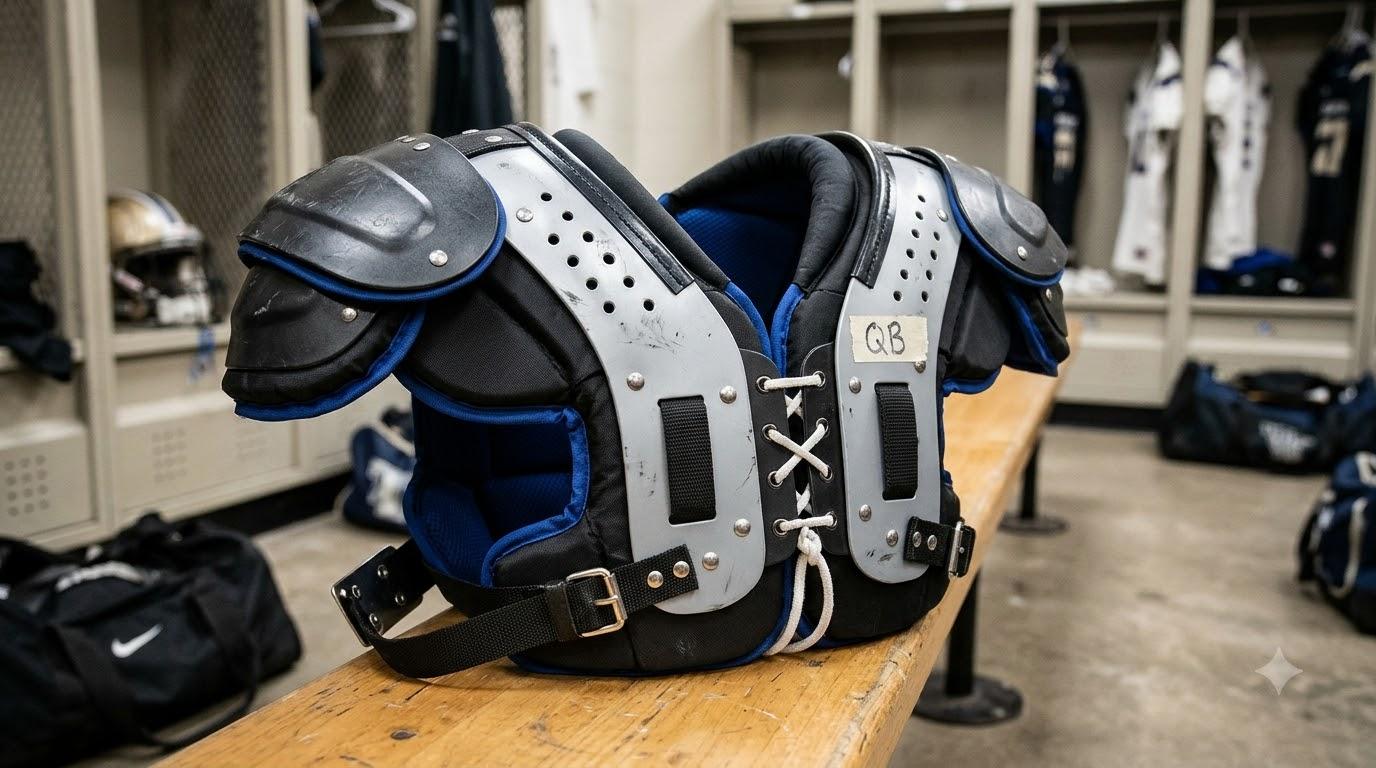
Quarterbacks need equipment that fits properly and allows them to move comfortably while preparing to throw, avoiding pressure, and following through. A pad that shifts or rubs can distract the athlete, while a poor fit may make ordinary football movements uncomfortable.
When assessing football quarterback shoulder pads for comfortable movement and appropriate coverage, evaluate the individual player rather than relying only on the product label. Check current measurements, the manufacturer's fitting instructions, the model's specifications, and the rules that apply to the player's league.
A suitable fitting should confirm that the equipment sits as intended, works with the uniform, and allows comfortable movement. It should not be used to claim that a particular design guarantees better performance or eliminates injury risk.
Why the Complete Fit Matters
Shoulder pads are worn as part of a larger equipment setup. Their fit can be affected by the player's body shape, the way they are adjusted, the jersey, and other required protective gear.
For a quarterback, it is particularly useful to assess the equipment during controlled throwing movements. The player should be able to raise the arms and rotate the torso comfortably, without the pads shifting excessively or creating persistent pressure.
A complete assessment considers:
-
Current body measurements.
-
Correct positioning and adjustment.
-
Comfortable arm elevation.
-
Torso rotation and reaching.
-
Compatibility with the game jersey.
-
The model's listed coverage and intended use.
-
The condition of straps, padding, and other components.
No single feature can determine whether the equipment is suitable. The full setup needs to be evaluated together.
Step 1: Confirm the Player's Current Size
Start with the manufacturer's sizing chart and measurement instructions. Do not rely on age alone, and do not assume that equipment from the previous season still fits.
Young athletes may grow quickly, while older players can also experience changes in body measurements. If the player's size has changed, recheck the fit before returning to practice.
If the athlete falls between sizes, consult the manufacturer's guidance rather than automatically choosing the larger or smaller option. The correct choice depends on the product's intended fit and the player's measurements.
Step 2: Review the Product's Intended Use
Read the current product specifications to understand the model's design, adjustment features, and intended application. Do not assume that all shoulder pads marketed for quarterbacks share the same construction or coverage.
Check the requirements of the player's competition, age group, and position. If the rules specify equipment requirements, those requirements take priority over personal preference.
If the product description does not answer an important question, ask the supplier or relevant league representative before purchasing.
Step 3: Inspect the Equipment Before Wearing It
Examine the visible shell, straps, adjustment points, and padding. Look for cracks, damaged sections, fraying, loose connections, or other signs of wear.
Follow the manufacturer's maintenance and inspection guidance. Do not use equipment when there is a concern about damage or suitability that has not been resolved.
If you are unsure whether a defect affects the equipment's intended function, consult the manufacturer or a qualified equipment specialist. Avoid making unauthorised repairs or modifications.
Step 4: Test Comfortable Movement
Once the pads are positioned according to the instructions, ask the quarterback to complete a few controlled movements.
First, raise both arms and reach forward. Next, rotate the torso gently in both directions. Then simulate a throwing motion without forcing the arm beyond a comfortable range.
Observe whether the pads shift, create pressure, or interfere with the movement. Ask the player what feels uncomfortable rather than relying solely on visual inspection.
If pain or significant restriction occurs, stop the assessment and reassess the fit. Do not encourage the player to continue through pain to make the equipment seem suitable.
Step 5: Check the Full Uniform
Put on the normal jersey and other required equipment. Repeat the movement check and observe whether the layers create bunching, pressure, or interference.
A setup that feels comfortable without the jersey may feel different once all the equipment is worn together. Testing the complete uniform helps identify problems before practice or competition.
Do not remove required protective equipment to make the layers fit. If the setup is uncomfortable, reassess the sizing and compatibility of the items.
Practical Example 1: The Pads Shift During a Throwing Drill
A quarterback notices that his shoulder pads move slightly when he rotates to throw. He starts adjusting them after each repetition.
The coaching staff pauses the drill and checks the fit according to the manufacturer's instructions. The family reviews the current measurements, secures the adjustment points as directed, and repeats a controlled movement check.
If the pads continue to shift or cannot be fitted correctly, the player should not simply ignore the problem. The family should seek appropriate guidance and consider a suitable alternative.
The lesson is that repeated adjustment is a reason to investigate fit, not just a habit the player should accept.
Practical Example 2: A New Jersey Changes the Equipment Fit
A quarterback receives a new game jersey and finds that it feels tight around the upper body when worn over his pads. The equipment itself has not changed, but the complete setup feels different.
The family checks whether the pads are positioned correctly and whether the jersey is suitable for the equipment configuration. They test movement with the full uniform and review the relevant sizing guidance.
If the combination remains uncomfortable, they reassess the fit of the affected items. The objective is to ensure that the uniform and required protective equipment work together as intended.
Illustrative Case Study: A Consistent Equipment Review for Quarterbacks
This is a hypothetical example, not a documented customer result.
A team has several quarterbacks preparing for a new season. Their equipment was purchased at different times, and the coaching staff discovers that players follow different routines for checking fit.
The staff creates a consistent review process. Each player checks current measurements, inspects the equipment, follows the fitting instructions, tests comfortable throwing movements, and repeats the check with the game jersey.
Any unresolved concerns are referred to the family, supplier, or appropriate equipment specialist before the pads are used. Coaches also remind players to report new discomfort during the season.
This process does not prove that a particular model improves throwing accuracy or prevents injuries. It helps the team apply the same practical checks to every player.
What to Compare Before Purchasing
|
Factor |
What to check |
Why it matters |
|
Sizing |
Current measurements and manufacturer chart |
Supports correct positioning |
|
Intended use |
Product specifications and competition requirements |
Helps establish suitability |
|
Movement |
Arm elevation, reaching, and torso rotation |
Identifies restriction or discomfort |
|
Adjustment |
Straps and fitting instructions |
Helps the pads sit as designed |
|
Uniform compatibility |
Jersey and other required equipment |
Reveals problems with layering |
|
Condition |
Shell, straps, padding, and visible wear |
Helps identify equipment needing attention |
Use the same checklist when comparing different models. If a product feature is unclear, seek confirmation rather than making assumptions based on a photograph or marketing description.
Common Mistakes to Avoid
Assuming every quarterback needs the same design
Players have different measurements, comfort preferences, and competition requirements. A model that suits one athlete may not suit another.
Choosing by appearance
A product photograph cannot confirm fit. Check the specifications and use the manufacturer's fitting process.
Testing only one movement
Arm elevation alone may not reveal every issue. Include reaching, torso rotation, and a controlled throwing motion where appropriate.
Ignoring the complete uniform
The jersey and other equipment can change how the pads feel. Test the full setup before practice.
Leaving maintenance until something breaks
Inspect the equipment regularly and address visible wear or fastening problems before they become more serious concerns.
Maintaining the Equipment Through the Season
Check the pads before use and after sessions. Look for visible damage, worn straps, and changes in the condition of the padding or shell.
Follow the manufacturer's cleaning and storage instructions. Do not use unauthorised repair methods or alter the equipment's structure.
Reassess fit if the player grows, changes uniform components, or reports discomfort. Equipment that fitted correctly at the beginning of the season may need another review later.
Conclusion
Choosing and checking football quarterback equipment requires a practical process. Start with current measurements and product specifications, inspect the equipment, and follow the manufacturer's fitting instructions. Test comfortable arm movement and torso rotation, then repeat the assessment with the full uniform.
The right choice is the model that fits the individual athlete, meets the applicable rules, and works with the required equipment. Regular inspections and clear communication help identify problems before they become recurring distractions.
Frequently Asked Questions
1. How should football quarterback shoulder pads fit?
They should sit in their intended position according to the manufacturer's instructions without painful pressure, excessive shifting, or significant restriction of normal movement.
2. Should I select pads based only on the quarterback position?
No. The position helps identify movement needs, but sizing, body shape, model specifications, league requirements, and individual comfort also matter.
3. How can I test the fit for throwing?
Check arm elevation, reaching, and controlled torso rotation. If appropriate, simulate the throwing motion without forcing the arm or continuing through discomfort.
4. Should I check the pads with the jersey on?
Yes. The complete uniform can reveal pressure or bunching that may not appear when the pads are worn alone.
5. What should I do if the equipment is damaged?
Follow the manufacturer's instructions and seek qualified advice if needed. Do not use equipment when its suitability is uncertain, and avoid unauthorised repairs.
6. Do quarterback shoulder pads guarantee injury prevention?
No. Protective equipment cannot eliminate all injury risk. Proper fit, appropriate coaching, technique, inspection, and compliance with competition rules remain important.

 English
 Arabic
 French
 Spanish
 Deutsch
 Turkish
 Dutch
 Italiano
 Russian
 Romaian
 Portuguese (Brazil)
 Greek
