

Carbonated Beverages Factory Setup Cost 2026: Capital Investment and Profitability Outlook
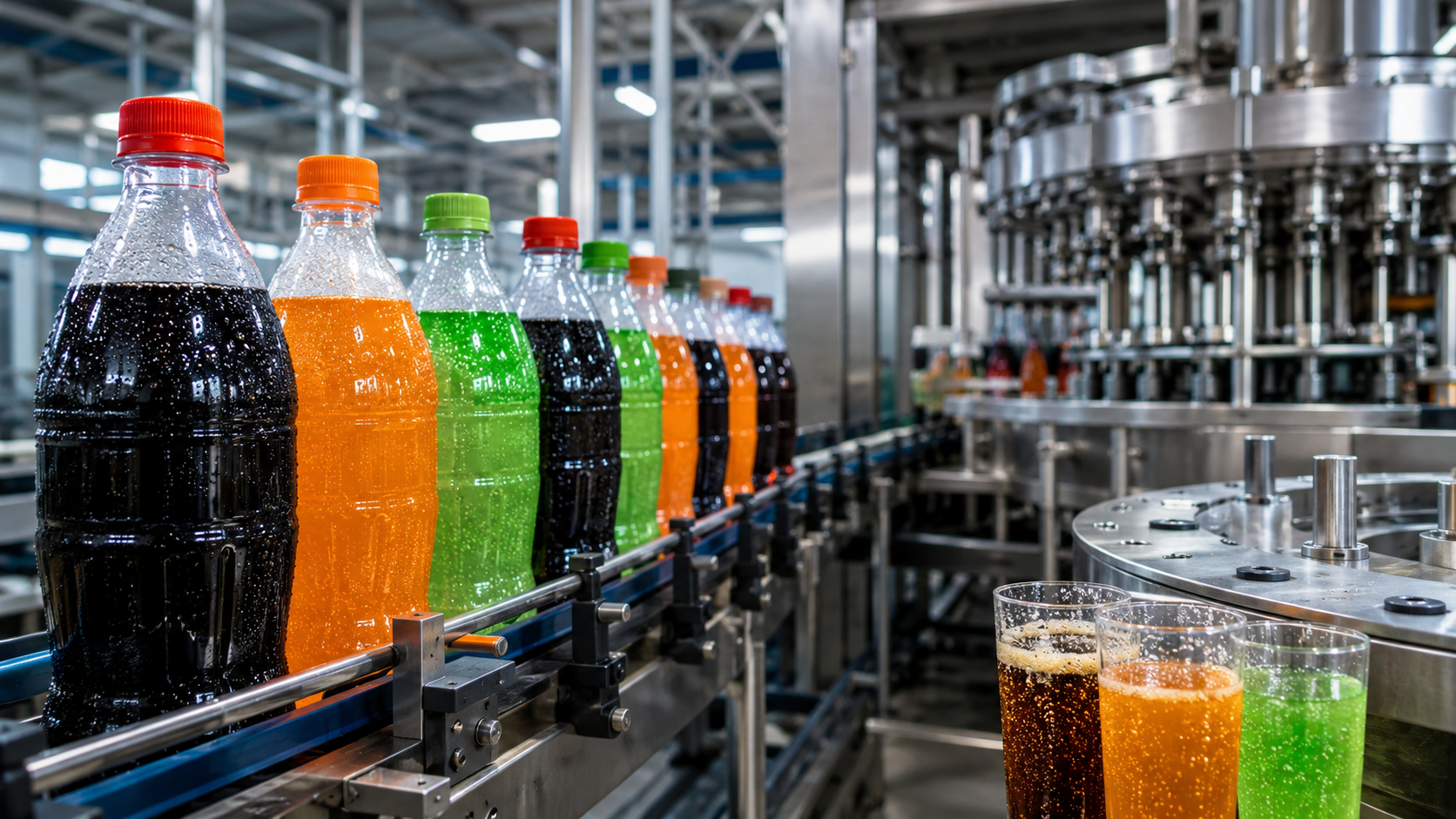
IMARC Group's comprehensive DPR report, "Carbonated Beverages Manufacturing Plant Project Report 2026: Industry Trends, Plant Setup, Machinery, Raw Materials, Investment Opportunities, Cost and Revenue," provides a complete roadmap for setting up a carbonated beverages manufacturing plant cost. The carbonated beverages manufacturing plant setup cost report offers insights into the manufacturing process, financials, capital investment, expenses, ROI, and more for informed business decisions.
Carbonated Beverages Manufacturing Plant Project Report Summary:
- Comprehensive guide for setting up a carbonated beverages manufacturing plant.
- Covers market trends and industry outlook for 2026.
- The global carbonated beverages market was valued at USD 653.41 Million in 2025 and is projected to reach USD 1,155.58 Million by 2034, growing at a CAGR of 6.5% (2026–2034).
- Detailed project setup, including unit operations and processes.
- Raw material and utility requirements.
- Infrastructure and machinery specifications.
- Workforce and staffing requirements.
- Packaging and transportation details.
- Financial aspects: investment opportunities, cost analysis, and revenue projections.
In addition to covering operational aspects, the report offers detailed insights into the carbonated beverages manufacturing plant process and project economics.
- Detailed insights into the carbonated beverages manufacturing plant process.
- In-depth project economics and financial metrics.
- Covers capital investments and project funding.
- Analysis of operating expenses and income projections.
- Breakdown of fixed and variable costs, direct and indirect expenses.
- Evaluation of ROI (Return on Investment) and NPV (Net Present Value).
- Profit and Loss account analysis.
- Comprehensive financial analysis for decision-making.
- Provides a roadmap for successfully establishing a carbonated beverages manufacturing unit.
Request for a Sample Report: https://www.imarcgroup.com/carbonated-beverages-manufacturing-plant-project-report/requestsample
What are Carbonated Beverages?
Carbonated beverages function as drinks which contain carbon dioxide that has been dissolved through pressurized methods to generate bubbles and produce a crisp taste. The production process of these beverages requires water and sweeteners and flavorings together with CO₂, which undergoes a series of steps that include mixing and carbonation and pasteurization and packaging. Carbonated beverages are widely consumed across retail, hospitality, and vending sectors due to their convenience-based taste together with their extended shelf life.
Key Investment Highlights
- Process Used: Mixing, carbonation, pasteurization, bottling, and packaging.
- End-use Industries: Retail chains, restaurants and cafes, and vending services.
- Applications: Used as ready-to-drink soft drinks, sparkling water, and flavored sodas.
Industry Outlook 2026
The carbonated beverages industry is primarily driven by the increasing consumer demand for convenient, ready-to-drink, and flavored sparkling drinks. In addition, rapid urbanization, rising disposable incomes, and evolving lifestyles are encouraging consumers to seek refreshing beverages that can be consumed at home, work, or on the go. The retail, foodservice, and vending sectors continue to be the primary drivers of market expansion, as supermarkets, restaurants, cafes, and automated kiosks consistently require high-quality and diverse beverage options. Changing dietary habits, urban lifestyles, and rising disposable incomes are influencing beverage consumption patterns across regions and age groups. Furthermore, global expansion strategies and brand revival initiatives are increasingly shaping competition within the international beverage industry. For example, in February 2025, Reliance Consumer Products Ltd, the FMCG division of Reliance Industries, unveiled Campa Cola in the UAE at Gulfood, the world's largest food and beverage sourcing exhibition. Entering the Middle East through a partnership with regional F&B major Agthia Group, the iconic Indian soft drink brand marked its first international expansion — illustrating how the carbonated beverage market continues to expand as brands enter new countries and emerging markets create fresh customer segments.
Major Applications
- Retail: Used in bottled soft drinks for supermarkets and convenience stores.
- Foodservice: Utilized in beverages for restaurants, cafes, and hotels.
- Vending Services: Employed as ready-to-drink sodas and sparkling beverages in automated kiosks.
Why Carbonated Beverages Manufacturing?
- High Consumer Demand: The ongoing popularity of soft drinks and sparkling beverages makes them a preferred choice for people from all age groups.
- Moderate Entry Barriers: The production process requires manufacturers to make moderate capital investments while maintaining quality control standards, which create advantages for companies that have operational knowledge.
- Industry Growth Trends: The combination of urban population growth, higher disposable incomes, and convenience-driven lifestyles is increasing global beverage consumption.
- Policy and Infrastructure Support: Government programs that support food and beverage production, sanitary requirements, and retail development create a framework that helps the industry expand.
- Local Sourcing and Dependability: Businesses establish dependable supply chains through their close proximity to ingredient suppliers and their ability to maintain effective logistics operations.
Leading Carbonated Beverages Manufacturers
- The Coca-Cola Company
- PepsiCo
- Keurig Dr Pepper
- Nestlé
- Jones Soda
- Monster Energy Company
- Refresco Group
- Parle Agro
- Sodastream International
- Anadolu Grubu
Key Aspects Required for Setting Up a Carbonated Beverages Manufacturing Plant
Detailed Process Flow:
- Product Overview: Comprehensive description of the carbonated beverages product and its characteristics.
- Unit Operations Involved: Step-by-step breakdown of the various operations in the production process.
- Mass Balance and Raw Material Requirements: Calculations for material inputs and outputs, along with required quantities of raw materials.
- Quality Assurance Criteria: Standards and procedures to ensure the quality of the final product.
- Technical Tests: Essential tests and evaluations to maintain product consistency and compliance.
Project Details, Requirements, and Costs Involved:
- Land, Location, and Site Development: The location must offer easy access to key raw materials such as water, sugar/HFCS, concentrate, CO2, and bottles/cans, with proximity to target markets to minimize distribution costs, along with robust transportation, utility, and waste management infrastructure.
- Plant Layout: Design optimized for workflow efficiency, safety, and minimal material handling, with separate zones for raw material storage, production, QC, and finished goods storage, plus space for future expansion.
- Machinery Requirements and Costs: Carbonators, mixers, pasteurizers, bottling lines, and packaging machines.
- Raw Material Requirements and Costs: Water, sugar/HFCS, concentrate, CO2, and bottles/cans.
- Packaging Requirements and Costs: Specifications for packaging materials and equipment, including associated expenses.
- Transportation Requirements and Costs: Logistics planning for raw materials and finished carbonated beverages.
- Utility Requirements and Costs: Electricity, water, and steam requirements.
- Human Resource Requirements and Costs: Workforce planning, staffing needs, roles, and labor costs.
Ask an Analyst: https://www.imarcgroup.com/request?type=report&id=27302&flag=C
Project Economics
- Capital Investments: Land, machinery, and infrastructure costs for setting up the carbonated beverages manufacturing plant.
- Operating Costs: Raw materials (55–65% of OpEx), utilities (15–20% of OpEx), labor, and maintenance.
- Expenditure Projections: Detailed forecasts of all costs over the short and long term.
- Revenue Projections: Expected income generated from the sale of carbonated beverages.
- Taxation and Depreciation: Analysis of tax obligations, incentives, and asset depreciation over time.
- Profit Projections: Gross margin of 40–50% and net margin of 15–25% under normal operating conditions.
- Financial Analysis: Liquidity analysis, payback period, NPV, IRR, and profit and loss account.
Latest Industry Developments
- February 2026: Coca-Cola expanded its cherry-flavored beverage lineup with the introduction of Coca-Cola Cherry Float and the nationwide relaunch of Diet Coke Cherry in the U.S. and Canada. The Cherry Float features a vanilla cream flavor and offers two sweetener choices, while Diet Coke Cherry returns with new packaging featuring zero sugar, available in both cans and bottles.
- July 2025: PepsiCo introduced Pepsi Prebiotic Cola, combining traditional cola flavor with digestive health benefits. The launch came four months after PepsiCo's acquisition of Poppi, reflecting the company's push to meet rising consumer interest in functional drinks.
Customization Options Available:
- Plant Location: Selection of optimal location for the plant.
- Plant Capacity: Customization based on desired production capacity.
- Machinery: Choice between automatic, semi-automatic, or manual machinery.
- List of Machinery Providers: Identification of suitable machinery suppliers.
Key Questions Addressed in This Report
- How has the carbonated beverages market performed so far and how will it perform in the coming years?
- What is the market segmentation of the global carbonated beverages market?
- What is the regional breakup of the global carbonated beverages market?
- What are the price trends of various feedstocks in the carbonated beverages industry?
- What is the structure of the carbonated beverages industry and who are the key players?
- What are the various unit operations involved in a carbonated beverages manufacturing plant?
- What is the total size of land required for setting up a carbonated beverages manufacturing plant?
- What is the layout of a carbonated beverages manufacturing plant?
- What are the machinery requirements for setting up a carbonated beverages manufacturing plant?
- What are the raw material requirements for setting up a carbonated beverages manufacturing plant?
- And more...
How IMARC Can Help?
IMARC Group is a global management consulting firm that helps the world's most ambitious changemakers create a lasting impact. The company provides a comprehensive suite of market entry and expansion services, including thorough market assessment, feasibility studies, company incorporation assistance, factory setup support, regulatory approvals and licensing navigation, branding, marketing and sales strategies, competitive landscape and benchmarking analyses, pricing and cost research, and procurement research.
Services:
- Plant Setup
- Factory Auditing
- Regulatory Approvals, and Licensing
- Company Incorporation
- Site Selection Analysis
- Recruitment Services
- Marketing and Sales
Contact Us:
IMARC Group
134 N 4th St. Brooklyn, NY 11249, USA
Email: sales@imarcgroup.com
Tel No:(D) +91 120 433 0800
United States: (+1-201971-6302)

 English
 Arabic
 French
 Spanish
 Portuguese
 Deutsch
 Turkish
 Dutch
 Italiano
 Russian
 Romaian
 Portuguese (Brazil)
