

Tallow Balm for Dry Skin: How to Avoid the Wrong Moisturiser
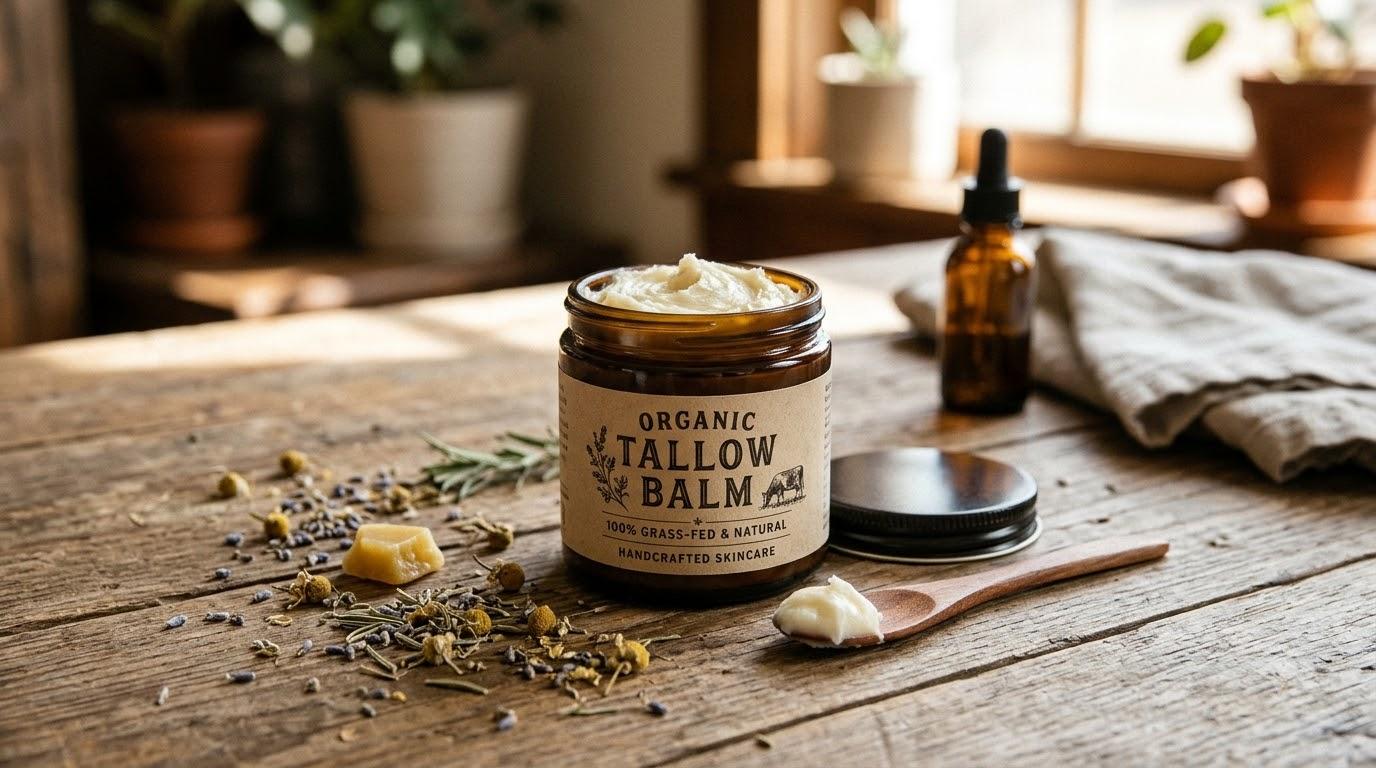
Tallow Balm for Dry Skin: How to Choose Carefully and Avoid Irritation
Dry skin can feel tight, rough, flaky, or uncomfortable after washing, showering, or spending time in dry weather. A rich moisturiser may help reduce that uncomfortable feeling, but a product that suits one person may feel too heavy or irritating on another. Before choosing a tallow balm for a simpler dry-skin care routine, consider your skin type, the product's ingredients, and what the available evidence actually says.
Tallow is rendered animal fat, commonly derived from beef, that is used in some skincare products as a rich emollient. Its fatty acids can help explain why it feels moisturising, but there is not enough high-quality human research to conclude that tallow skincare is better than established moisturisers or that it treats skin conditions.
The practical goal is to find a product that makes your skin feel comfortable without triggering breakouts, irritation, or an unnecessary complicated routine.
Why does dry skin sometimes get worse despite moisturising?
Dryness does not always mean that you simply need a thicker product. Skin can become dry when its outer barrier loses water, when washing removes too much surface oil, or when the environment is cold, windy, or low in humidity. Fragranced products and harsh cleansers can also contribute to irritation in some people.
A common response is to keep adding richer products whenever the skin feels tight. However, if the underlying cleanser is irritating the skin, adding another balm may not solve the problem. Similarly, redness, persistent itching, cracking, or a spreading rash may need medical assessment rather than repeated cosmetic experimentation.
Before changing products, identify the pattern. Does the dryness occur immediately after washing? Is it limited to your hands, elbows, or legs? Does a product cause burning or itching shortly after application? These details can help you distinguish simple dryness from a possible reaction.
What tallow contributes to a skincare formula
Tallow contains a mixture of fatty acids, including oleic, palmitic, and stearic acids. Ingredients containing fats can soften the skin and help reduce the feeling of roughness. A balm's thick consistency can also leave a protective-feeling layer on the surface.
However, the finished formula matters. The quality of the raw material, processing, storage, additional oils, fragrance, and packaging may all influence how the product behaves. It is not enough to judge a formula solely by the presence of one ingredient.
Research into tallow skincare remains limited. A scientific review identified important gaps in controlled research on tallow products used on human skin. Therefore, claims that tallow is uniquely compatible with everyone's skin, repairs every damaged barrier, or reliably treats eczema and acne should not be taken as established facts.
What a moisturising feel can—and cannot—tell you
If your skin feels softer after application, that is useful information about your personal experience. It does not prove that the product treats an underlying skin disease or works better than alternatives.
A thick balm can also feel greasy, transfer onto clothing, or be uncomfortable during hot weather. Someone with very dry elbows may appreciate that texture, while someone with oily facial skin may prefer a lighter lotion. Your application area and personal tolerance should guide the decision.
A simple decision framework before buying
Use this framework to decide whether a balm is worth considering.
|
Your situation |
What to consider |
A cautious approach |
|
Rough elbows or heels |
A richer texture may be comfortable |
Test a small amount on intact skin |
|
Dry hands after frequent washing |
Handwashing habits and cleanser choice matter |
Use a moisturiser consistently and review irritating products |
|
Oily or acne-prone face |
Heavy formulas may feel uncomfortable or contribute to clogged pores for some users |
Consider a lighter, non-comedogenic moisturiser instead |
|
Sensitive or reactive skin |
Fragrance and additional ingredients may trigger reactions |
Choose a simpler formula and seek professional advice if reactions recur |
|
Persistent rash or intense itching |
The cause may not be ordinary dryness |
Consult a healthcare professional instead of relying on a cosmetic balm |
|
Preference for animal-derived ingredients |
Ingredient origin and sourcing may matter to you |
Read the label and confirm that the product aligns with your values |
No table can predict exactly how your skin will respond. It is a starting point for narrowing options, not a substitute for a clinician's advice when symptoms are persistent or severe.
How to test a new balm without changing your whole routine
A careful introduction makes it easier to notice unwanted reactions. It also prevents you from confusing the effect of one product with changes caused by other skincare steps.
-
Read the full ingredient list. Look for fragrance, essential oils, and any ingredient that has previously irritated your skin. “Natural” does not automatically mean allergy-free.
-
Choose a small, intact area. Apply a small amount according to the product instructions. Do not test on broken skin, active rashes, or near your eyes.
-
Observe the response. Watch for persistent stinging, redness, itching, swelling, or bumps. Stop using the product if a reaction develops.
-
Introduce it gradually. If the initial application is comfortable, follow the product's directions and avoid adding several new skincare products at the same time.
-
Assess practical comfort. Notice whether the texture feels acceptable, whether it leaves an unwanted residue, and whether the skin feels comfortable later.
-
Reconsider if the problem persists. If dryness continues or symptoms worsen, review your wider routine and seek advice rather than increasing the amount indefinitely.
A home test cannot guarantee that an allergic reaction will never occur. If you have a history of serious skin allergies or a chronic skin condition, ask a dermatologist or other qualified clinician whether the product is appropriate.
Common mistakes that make dry skin harder to manage
Mistake 1: Assuming a thicker product is always better. A rich formula can be useful for some dry areas, but it may not suit oily or acne-prone skin. Texture should match the application area and your tolerance.
Mistake 2: Ignoring the cleanser. Hot water, frequent harsh washing, and strongly fragranced cleansers can worsen dryness. A gentle routine may be more helpful than adding more products.
Mistake 3: Treating persistent inflammation as ordinary dryness. Repeated redness, cracking, burning, or itching may indicate a condition that needs diagnosis. A cosmetic balm should not be treated as a proven cure.
Mistake 4: Assuming animal-derived means chemical-free. All ingredients are made of chemicals, whether naturally sourced or manufactured. The useful questions are whether the formula is suitable, well made, correctly labelled, and tolerated by your skin.
Mistake 5: Overlooking storage. Oils and fats can deteriorate over time. Follow the product's storage instructions, keep the container clean, and stop using it if its smell, texture, or appearance changes unexpectedly.
A realistic routine for dry areas
For many people, a basic routine is easier to evaluate than a long list of products. Wash with lukewarm rather than very hot water, use a gentle cleanser where needed, and apply a suitable moisturiser after washing. Protect hands from cleaning chemicals by using appropriate gloves, and consider environmental factors that may be contributing to dryness.
If you are considering tallow balm, use it as one possible moisturising option rather than assuming it needs to replace every product in your routine. Some people prefer a simple balm for rough areas, while others find that a fragrance-free cream with established moisturising ingredients is more comfortable.
For severe dryness, cracked skin, recurring eczema-like symptoms, or persistent irritation, ask a healthcare professional about suitable options. There is no need to keep testing products when the problem is getting worse.
Illustrative Case Study: Finding the cause of recurring hand dryness
Daniel, a hypothetical office worker, notices rough hands every winter. He buys increasingly rich moisturisers, but the dryness returns after a few days. He then reviews his routine and realises that frequent handwashing and a strongly fragranced soap may be contributing to the problem.
He switches to a gentler cleanser, applies a moisturiser after washing, and tests a small amount of a new balm on an intact area. The balm feels comfortable, but he treats it as one component of the routine rather than the only solution.
If the dryness had continued, become painful, or developed into a persistent rash, the next step would have been professional assessment. His example demonstrates why understanding the trigger can be as important as choosing a product.
Evaluating a product and its maker
A useful product page should make it possible to understand what you are buying. Check whether the ingredient list is available, whether the product is intended for your chosen application area, and whether directions and storage information are clear. Do not rely only on marketing adjectives or broad promises.
Soul Seed Solutions includes tallow balm in its natural self-care range. You can visit Soul Seed Solutions to explore the brand and review its product information. Check the exact formula and directions for the item you are considering, because products within the same category can differ.
When assessing tallow balm, keep your decision tied to a realistic goal: comfortable skin, a texture you enjoy, and a formula you tolerate. Avoid expecting a cosmetic product to cure a medical condition or deliver results that have not been demonstrated.
Conclusion
A rich balm may suit some dry areas, but it is not automatically the best choice for every skin type. The most useful approach is to identify what is causing the dryness, review the ingredients, introduce new products carefully, and stop if irritation occurs. Evidence for specific therapeutic benefits of tallow skincare remains limited, so avoid exaggerated claims.
If your symptoms are persistent, painful, or inflamed, seek professional advice instead of relying on repeated product changes.
Frequently Asked Questions
Is tallow balm suitable for every skin type?
No. A rich formula may appeal to people with dry skin but feel too heavy for oily or acne-prone skin. Individual ingredients and personal tolerance also matter.
Can tallow balm treat eczema?
There is insufficient high-quality evidence to establish tallow balm as a treatment for eczema. Persistent inflammation or itching should be discussed with a qualified healthcare professional.
Does natural skincare mean it cannot cause irritation?
No. Natural ingredients can still trigger irritation or allergic reactions. Read the full ingredient list and discontinue a product if a reaction develops.
How should I introduce a new balm?
Read its instructions, apply a small amount to intact skin, and monitor the area for a reaction. A small test cannot guarantee that future reactions will not occur.
Can I use a rich balm on my face?
That depends on your skin type, the formula, and the product's directions. If you are acne-prone or sensitive, consider a lighter fragrance-free moisturiser and seek professional advice if unsure.
When should I see a dermatologist about dry skin?
Seek advice for persistent or worsening dryness, painful cracks, repeated rashes, intense itching, or symptoms that interfere with daily life.

 English
 Arabic
 French
 Spanish
 Portuguese
 Deutsch
 Turkish
 Dutch
 Italiano
 Russian
 Portuguese (Brazil)
 Greek
