

Avoid Common Mistakes in Janome-Compatible Logo Embroidery Services
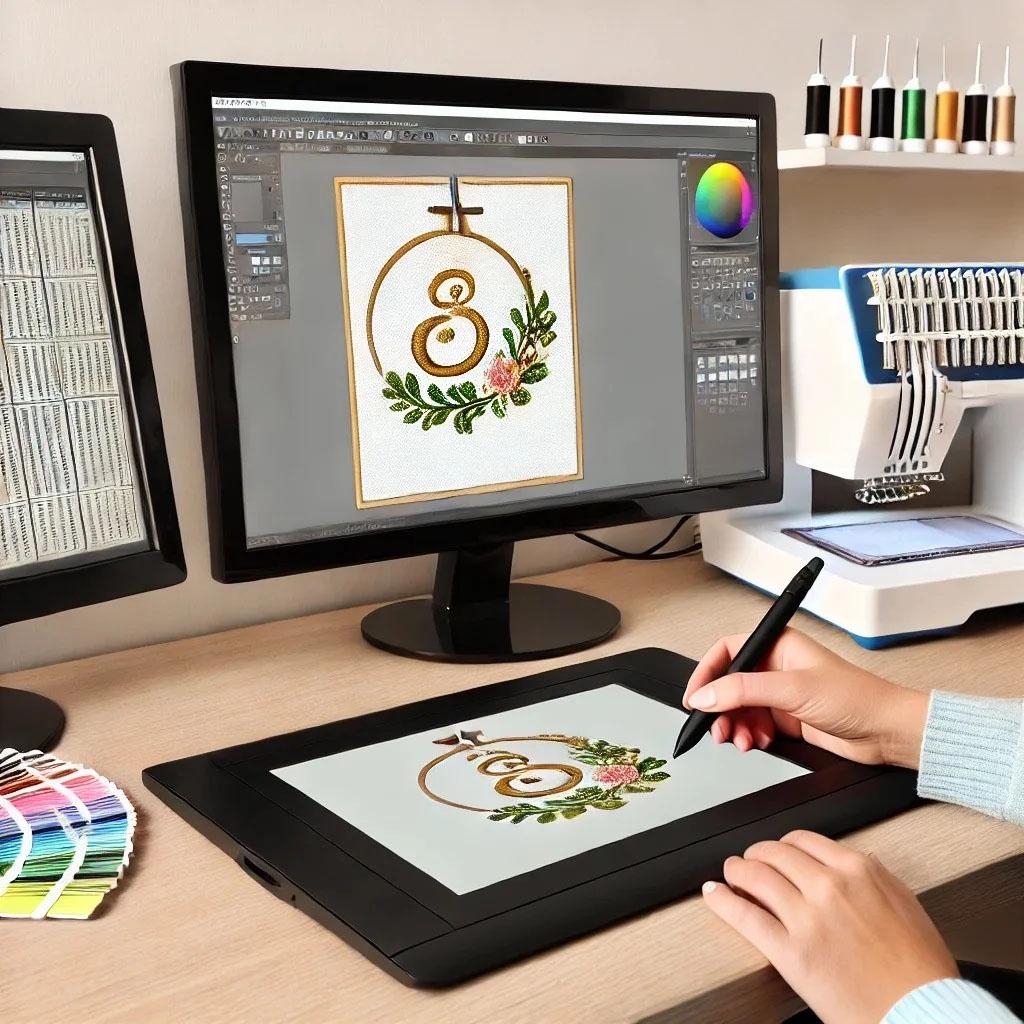
Introduction: The Hidden Pitfalls of Embroidery Services
You have finally decided to invest in professional embroidery for your business or personal project. You found a service that claims to work with Janome machines, you sent over your logo, and you are feeling pretty good about the whole thing. But here is the uncomfortable truth that many people discover too late: not all embroidery services are created equal, and even the ones that say they are compatible with Janome machines can make costly mistakes that ruin your design. Understanding what to watch out for when using Janome-Compatible Logo Embroidery Services can save you from the heartbreak of receiving a finished product that looks nothing like what you imagined.
The embroidery world has its own language, its own rules, and its own set of common errors that catch newcomers off guard. Maybe you have experienced this before. You sent a beautiful, crisp logo file to an embroidery company, waited patiently for your order, and when it finally arrived, the stitching looked distorted, the colors seemed off, or the whole design appeared squished and unrecognizable. This happens more often than you might think, and it usually comes down to a handful of predictable mistakes that are entirely avoidable when you know what to look for.
The good news is that once you understand these common pitfalls, you can spot them from a mile away. You can ask the right questions before placing your order, provide the right files, and set clear expectations that ensure your embroidered logo looks as professional as you deserve. Let us walk through the most frequent errors people make with Janome-compatible embroidery services and, more importantly, how you can steer clear of every single one.
Mistake Number One: Using the Wrong File Format
This is probably the most common mistake people make, and it is completely understandable because the file format rules can feel confusing and arbitrary. Many people assume that because they have a high-resolution JPG or PNG file of their logo, the embroidery service can just plug it into a machine and start stitching. But embroidery machines do not read image files the way your computer does. They need a digitized file format that contains specific stitch instructions.
Janome machines specifically use the JEF file format, which is their native language. If you send a standard image file to your embroidery service, they cannot work with it directly. They must first digitize it, which is a separate process that takes time and skill. Some budget services try to skip proper digitizing by using automated conversion software, and this is where disaster strikes. The automated conversion often produces wonky stitches, uneven density, and designs that look nothing like your original logo.
Your best move is to ask your embroidery service upfront whether they handle the digitizing in-house or if they outsource it. A reputable Janome-compatible service will have experienced digitizers who understand the specific requirements of the JEF format. They will also know how to adjust stitch density, underlay settings, and pull compensation to ensure your logo looks perfect on fabric. If they seem vague about the digitizing process or try to rush through it, consider that a major red flag.
Mistake Number Two: Ignoring the Size and Scaling Rules
Size matters enormously in embroidery, and not in the way you might think. You cannot simply take your logo and make it bigger or smaller without considering how the stitches will behave at different sizes. This is a concept called stitch scaling, and it trips up countless people who assume embroidery works like printing.
When you print a logo on paper, you can scale it up or down without losing quality because the printer lays down ink in tiny dots. Embroidery does not work this way. Stitches have physical thickness, and the needle itself has a certain width. If you take a logo that was digitized for a 4-inch design and try to blow it up to 8 inches, the stitches will look sparse and disconnected because they are now spread too far apart. Conversely, if you shrink that same design down, the stitches will crowd together and create a lumpy, distorted mess.
Experienced Janome-compatible embroidery services will tell you that each design needs to be digitized specifically for the size you actually plan to stitch. They might even suggest recreating the logo at the target size or using different stitch types for different sizes. Small text, in particular, becomes problematic because the letters need to be thick enough for the needle to form recognizable shapes. A good service will guide you on minimum size requirements and help you adjust your logo so it looks fantastic at the exact dimensions you need.
Mistake Number Three: Overlooking Thread Color Matching
Here is something that surprises a lot of people. The colors you see on your computer screen are not the same colors your embroidery machine will produce. Screen colors are created using light, while thread colors are created using dyes and pigments. The difference can be dramatic. That vibrant red that looks so striking on your website might come out looking dull and brownish on fabric, especially if your service uses low-quality thread.
Professional Janome-compatible services use thread color charts from major manufacturers like Madeira, Isacord, or Robison-Anton. They will usually offer to match your logo colors to the closest available thread shades, but this step requires careful attention. Some services just guess or use whatever thread they have on hand, which leads to disappointing results.
The smart approach is to request a color mapping from your service before they start stitching. Ask them to send you a digital preview showing which thread colors they plan to use. Better yet, request physical thread samples or a stitch-out on scrap fabric so you can see the actual colors before they embroider your entire order. This extra step might cost a bit more time, but it saves you from receiving fifty polo shirts with a logo that looks completely wrong.
Mistake Number Four: Choosing the Wrong Fabric Type
Not all fabrics are created equal when it comes to embroidery, and this is a mistake that even experienced business owners make. They choose garments based on price or style without considering how well those fabrics will hold embroidery stitches. The result? Puckered fabric, distorted designs, and an overall unprofessional appearance that reflects poorly on the brand.
Cotton and cotton-polyester blends tend to work beautifully for embroidery because they are stable and hold stitches well. Denim and canvas are also excellent choices due to their density. But stretchy fabrics like performance knits, jersey, or spandex blends create real challenges because the fabric moves and stretches during the stitching process. Without proper stabilization, the design will distort as soon as the garment relaxes back to its natural shape.
A knowledgeable Janome-compatible embroidery service will ask you about the fabric type before they digitize your logo. They might recommend specific stabilizers like cutaway backing for stretchy fabrics or tearaway backing for more stable materials. They should also adjust their digitizing settings to compensate for fabric stretch, adding extra density or altering stitch directions to keep your logo looking crisp. If your service does not ask about fabric type, that is a warning sign that they might be taking a one-size-fits-all approach that rarely works.
Mistake Number Five: Ignoring Underlay Stitches
Underlay stitches are the foundation layers that go down before the visible top stitches. They serve multiple purposes. They stabilize the fabric, prevent the top stitches from sinking into the material, and help maintain the design's shape during the embroidery process. Many amateur digitizers and budget embroidery services skip proper underlay to save time, and the results are immediately obvious.
Without adequate underlay, your logo might look fine when it is fresh off the machine, but after a few washes, the stitches loosen and the design becomes distorted. The fabric around the design might pucker, and the edges of your logo could become jagged or uneven. These problems are especially noticeable on lighter fabrics where the stabilization issues become highly visible.
Professional Janome-compatible services know exactly what type and amount of underlay each design needs based on the fabric type, design complexity, and stitch density. They use different underlay patterns like edge walk, zigzag, or lattice depending on the situation. Asking your service about their underlay approach gives you insight into their technical expertise and commitment to quality.
Mistake Number Six: Forgetting Pull Compensation
Pull compensation is a technical concept that might sound complicated, but it is actually quite simple to understand. When your embroidery machine stitches your design, the thread pulls on the fabric slightly, causing the fabric to compress. This compression makes the finished design appear smaller than you intended. Pull compensation is the practice of intentionally making the design slightly larger in the digitizing software to account for this compression.
Services that do not understand pull compensation produce logos that look smaller than you expected and often have distorted lettering where the fabric compression affected the shape. This is particularly noticeable with text and geometric designs where precise proportions matter.
Your Janome-compatible service should have their pull compensation settings dialed in based on their specific machines and the types of thread they use. This is one of those subtle factors that separates a great embroidery service from an average one. It takes experience and testing to get these settings exactly right.
Mistake Number Seven: Overlooking the Importance of Test Stitch-Outs
Some embroidery services rush straight into production without ever stitching a sample of your design. This is like printing a thousand brochures without checking a single proof. It is risky, and it often leads to expensive mistakes that could have been easily caught.
Professional services always perform test stitch-outs, especially for new designs or when switching to different fabric types. They stitch your logo onto scrap material that matches your final garment, inspect the result carefully, and make adjustments to the digitizing if anything looks off. This step catches color matching issues, scaling problems, density errors, and countless other issues before they ruin your actual order.
When you are evaluating Janome-compatible embroidery services, ask specifically about their test stitch-out process. Do they provide this service automatically or only upon request? Is there an additional charge? A service that takes pride in their work will be happy to discuss this step and show you examples of their test stitch-outs.
Conclusion: Avoiding Mistakes Saves Time, Money, and Reputation
The journey from logo to professional embroidery does not need to be filled with frustration and disappointment. By understanding the common mistakes that plague Janome-compatible logo embroidery services, you can take control of the process and ensure your results are nothing short of excellent. The key is to approach each project with awareness, ask the right questions, and partner with a service that demonstrates genuine expertise in their craft.
Your brand deserves better than guesswork and cutting corners. Whether you are ordering a single sample or a bulk order of team uniforms, taking the time to verify your service provider's capabilities pays dividends in the quality of the final product. Those beautifully stitched logos will represent your business for years to come, building trust and recognition with everyone who sees them.
So the next time you prepare to send your logo for embroidery, pause and consider the points we have discussed. Ask about file formats, scaling, thread matching, fabric compatibility, underlay, pull compensation, and test stitch-outs. A professional service will welcome these questions and answer them with confidence. If they seem evasive or dismissive, consider it a blessing in disguise that you discovered their limitations before committing your order. Protecting your brand starts with making smart choices at every step, and choosing the right Janome-compatible embroidery service is one of the smartest decisions you can make.

 English
 Arabic
 French
 Spanish
 Deutsch
 Turkish
 Dutch
Dutch
 Italiano
 Russian
 Romaian
 Portuguese (Brazil)
 Greek
Greek
