

QB Playbook Wristband: Improve Football Play-Call Efficiency
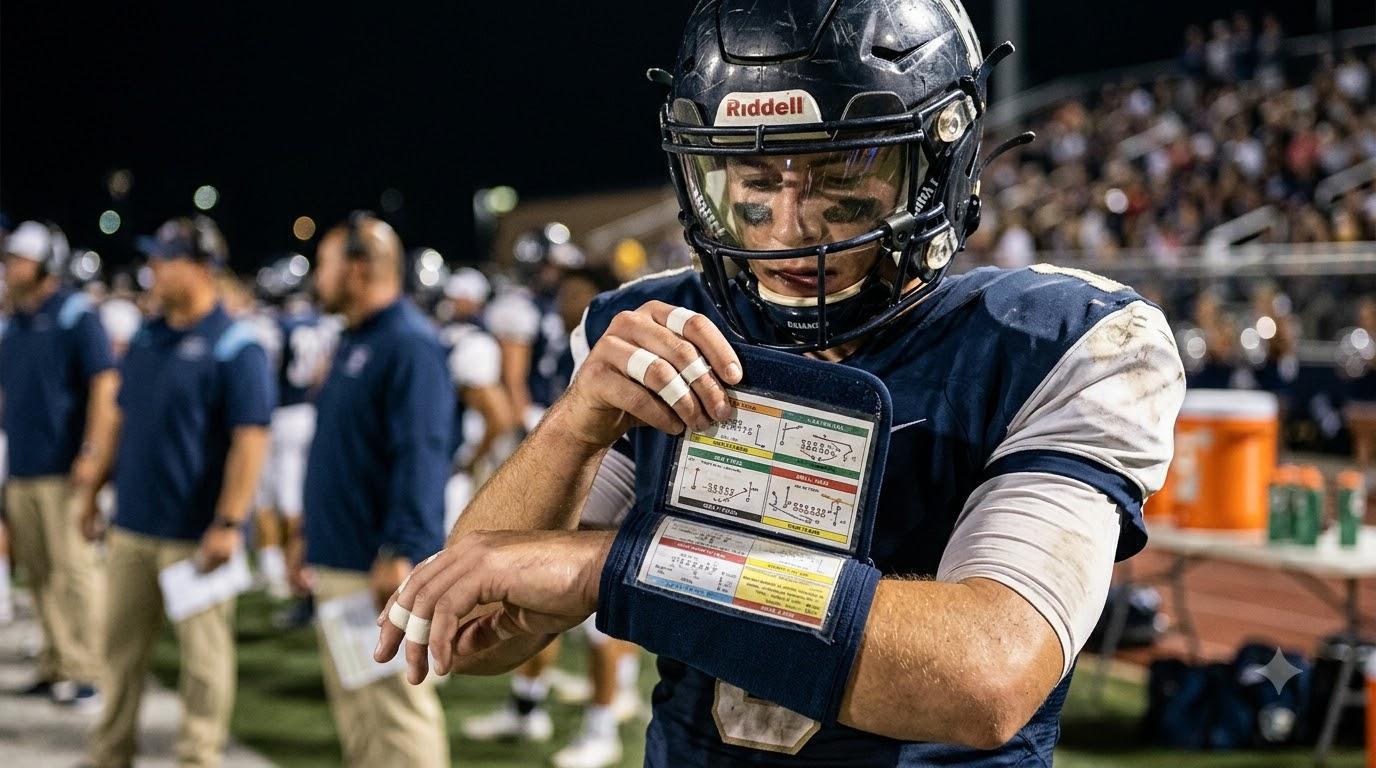
How to Use a QB Playbook Wristband to Improve Football Communication
Football teams need more than a good playbook to execute plays consistently. Quarterbacks must communicate instructions quickly, teammates must understand their assignments, and coaches need a system that works under pressure. When players struggle to remember play calls or repeatedly ask for clarification, valuable practice time and game-clock seconds can disappear.
A well-organised qb playbook wristband for faster, clearer football play calls gives players a compact reference for remembering assigned plays and responding to instructions. When coaches design the system carefully, it can reduce unnecessary verbal communication, improve practice organisation, and help the offense operate with greater confidence.
The key is not simply putting plays on a wristband. It is choosing the right information, presenting it clearly, teaching players how to use it, and keeping the system consistent throughout the season.
Why Football Teams Need a Better Play-Call System
A traditional playbook is useful for learning formations, routes, blocking assignments, and offensive concepts. However, carrying a full playbook onto the field is impractical. Players need a simple way to reference specific instructions without stopping practice or searching through multiple pages.
Communication becomes especially challenging when:
-
The offense needs to operate at a faster tempo.
-
Players are learning several formations and adjustments.
-
Noise makes verbal instructions difficult to hear.
-
Younger players are still developing football terminology.
-
Coaches need to communicate changes without creating confusion.
-
Substitutions require incoming players to understand their responsibilities quickly.
These problems do not necessarily mean that players have poor football knowledge. Sometimes the information is presented inconsistently or there are too many details to remember at once.
A wristband system can help bridge the gap between classroom learning and on-field execution. It provides a standard reference that players can check when permitted by the team's communication rules.
However, it should support coaching rather than replace it. Players still need to understand the purpose of each play, their individual assignment, and how to react when the defense changes.
What Makes a QB Playbook Wristband Effective?
An effective wristband system presents information in a format players can locate and understand quickly. It should not force the quarterback to read a paragraph or interpret an overly complicated diagram while preparing for the next snap.
The best approach is to organise information around the way the team actually calls plays.
1. Use a consistent play-numbering system
Assign every play a unique code or number. The coach can communicate the corresponding identifier, and players can locate the matching entry on their reference.
For example, a team might use:
-
11 for a quick passing concept.
-
24 for an inside running play.
-
36 for a play-action pass.
-
42 for a screen concept.
These numbers are illustrative only. The actual numbering system should match the team's terminology and avoid conflicts with existing signals.
The goal is to make the call predictable. If a player has to guess which section contains a play, the wristband is not doing its job.
2. Keep descriptions short
Long explanations belong in the full playbook, not on a compact field reference. Use concise labels, familiar abbreviations, or simple diagrams that players already understand.
For instance, a detailed coaching explanation might describe the quarterback's progression, the receiver's route, the protection scheme, and the running back's responsibility. A wristband entry may need only the established play name or code.
Do not introduce new abbreviations solely to save space. If players need to decode unfamiliar shorthand during a game, the system may create more confusion than it solves.
3. Separate core instructions from optional details
A useful reference distinguishes the information players need immediately from information they learn during film study or practice.
Prioritise the play identifier and the team's established terminology. Keep detailed coaching points in the full playbook, team notes, or practice materials.
This keeps the wristband readable while allowing coaches to teach the complete concept elsewhere.
How to Build a Wristband System Step by Step
A practical system begins with the team's existing offensive structure. Coaches should avoid designing the wristband in isolation and then expecting players to adapt to it.
Step 1: Review the current offensive playbook
Start by identifying the plays used most often. Include the core offensive concepts before adding special situations or rarely used variations.
Ask the coaching staff:
-
Which plays form the foundation of the offense?
-
Which calls are most difficult for players to remember?
-
Which formations or adjustments require clarification?
-
Which instructions must be communicated separately?
-
Which plays can share a common naming convention?
This review helps prevent the wristband from becoming a crowded list of every play the team has ever practised.
Step 2: Group plays into logical categories
Organise the entries using categories that make sense to the team. Possible categories include running plays, passing concepts, play-action calls, screens, and special situations.
The precise layout depends on the wristband design and the number of entries available.
Avoid changing category names halfway through the season without a clear reason. Consistency helps players develop familiarity with the reference.
Step 3: Match each play to a clear identifier
Create a master list that connects each play code to its full name and coaching notes. Check the list for duplicate numbers, similar-looking identifiers, and inconsistent terminology.
A simple planning table can help.
|
Play category |
Example identifier |
Information to confirm |
|
Running plays |
20-series |
Ball carrier and blocking concept |
|
Passing concepts |
30-series |
Route concept and quarterback responsibilities |
|
Play-action |
40-series |
Run-action relationship and pass concept |
|
Screens |
50-series |
Screen type and supporting assignments |
|
Special situations |
60-series |
Situation-specific call and instructions |
These number ranges are examples, not universal football conventions. Your team should choose a structure that fits its existing language.
Step 4: Check the physical layout
Before printing or finalising the entries, verify that the text and symbols are readable at the actual size.
Use clear lettering, sufficient contrast, and spacing that separates one entry from another. Avoid squeezing additional plays into a space that makes the existing information difficult to read.
Check that the wording fits without being cut off and that players can distinguish similar identifiers quickly.
Step 5: Teach the system during practice
Do not introduce the reference for the first time during a high-pressure game situation. Explain the layout, demonstrate how to find an entry, and give players time to practise.
Begin with a small selection of familiar plays. Gradually add more entries once players can locate the initial group reliably.
Step 6: Test the system under realistic conditions
Run practice sequences in which the quarterback receives a call, locates the corresponding entry, communicates the play, and helps the offense get aligned.
Observe where mistakes occur. Are players looking in the wrong section? Are codes too similar? Is the terminology inconsistent? Does the process slow down when substitutions happen?
Use those observations to make targeted changes rather than redesigning the entire system after every mistake.
How to Keep Play Calls Clear Under Pressure
A reference is most useful when it reduces the mental work required to find information. Coaches can improve this by designing the surrounding communication process carefully.
Establish one source of truth
The coaching staff should maintain a master version of the play list. The wristband, practice scripts, and teaching materials should all use matching identifiers and terminology.
If the wristband says one thing and the practice sheet uses a different label, players may hesitate even when they know the play.
When a play changes, update the master list first. Then review every material that uses the old version before distributing the revision.
Keep communication responsibilities clear
Players should know who communicates the call, who confirms it, and what to do if the information is unclear. Coaches should teach the team's procedure for requesting clarification rather than encouraging players to guess.
This matters particularly for young teams, where confidence and familiarity are still developing.
Practise locating information, not just memorising plays
Players may understand a play perfectly during a classroom session but struggle to find its identifier quickly on the field.
Include short retrieval drills in practice. Give players a familiar call and ask them to locate the matching entry, then explain their assignment in their own words.
This helps coaches identify whether a problem comes from football understanding, the wristband layout, or the communication procedure.
Practical Example 1: A Youth Team Learning Multiple Plays
Imagine a youth offense that has recently expanded its play selection. During practice, the quarterback remembers the running plays but repeatedly pauses when asked to communicate passing concepts.
The coach notices that the reference mixes play-action, screens, and passing concepts without a consistent structure.
Instead of adding more information, the coach groups the existing plays into familiar categories, checks the identifiers, and removes unnecessary wording. The team then practises finding entries before running the corresponding play.
Over several sessions, coaches can track how often players locate the correct entry without assistance and how frequently the offense needs to reset because of communication mistakes.
The important lesson is that the wristband should simplify an already-taught system. It cannot compensate for plays that have never been explained or practised properly.
Practical Example 2: A Team Preparing for a Faster Offensive Tempo
Consider a team that wants to reduce the time spent organising between snaps. Its players know the core offense, but the coaching staff finds that lengthy verbal explanations make it harder to maintain the intended tempo.
The staff reviews the most frequently used calls and creates shorter, established identifiers for them. Those identifiers are added to the team's reference, and the offense practises the communication sequence repeatedly.
Coaches then measure whether players align correctly, whether assignments are understood, and whether the offense can move through its practice script without unnecessary delays.
If the system improves speed but creates more assignment errors, the team should prioritise clarity and revise the layout before increasing the tempo further.
Illustrative Case Study: Improving Consistency Through Organisation
The following is a hypothetical example, not a documented customer result.
A school football team discovers that its quarterbacks use slightly different wording for the same offensive concepts. Receivers sometimes interpret calls differently, particularly when the team introduces variations during practice.
The coaches create a shared master list, assign consistent identifiers, and organise the most frequently used plays into a compact reference. They also introduce a short review at the beginning of each practice to reinforce terminology.
During the first sessions, coaches record common mistakes and identify entries that are difficult to locate. They revise the confusing descriptions and repeat the drills.
The improvement comes from the combination of standard terminology, repeated practice, and a more usable reference—not simply from purchasing a wristband.
The team also keeps the full playbook as its primary teaching resource. The wristband becomes a practical field aid that supports the broader offensive system.
Choosing a Wristband That Fits Your Team
Not every team needs the same wristband configuration. The right option depends on how many plays the offense uses, how its calls are structured, and how much information players need to reference.
When evaluating options from a supplier such as TAG Sports Gear football equipment and quarterback accessories, consider the following factors.
|
Selection factor |
What to check |
Why it matters |
|
Available windows |
Confirm the number of usable sections |
The layout must accommodate your play system |
|
Readability |
Check lettering size and contrast |
Players need to locate entries quickly |
|
Fit |
Test the wristband on the intended player |
A poor fit can distract from its purpose |
|
Ease of use |
Practise opening and consulting it |
The reference should be practical during drills |
|
Durability |
Review construction and intended use |
Regular practices place demands on equipment |
|
Updating information |
Check how inserts or play sheets are replaced |
Changes should be manageable throughout the season |
Avoid selecting a model based on capacity alone. More windows do not automatically mean better communication. A smaller, well-organised set of plays may be more effective than a crowded reference containing every possible variation.
Before ordering, verify the product's current specifications and ensure that the chosen design suits the players who will use it.
Common Mistakes to Avoid
Even a well-designed reference can fail when the team does not maintain it properly.
Adding too much information
Trying to fit every coaching point into a compact space makes entries harder to read. Keep the wristband focused on quick reference and teach the full concept separately.
Changing codes without updating every copy
An outdated insert can create serious confusion. Assign someone on the coaching staff to manage revisions and confirm that players have the correct version.
Using inconsistent abbreviations
If two players interpret the same abbreviation differently, the system needs clearer terminology. Use familiar language and teach every abbreviation before relying on it during a game.
Skipping practice
Players should not be expected to use a new layout fluently without repetition. Include wristband retrieval in regular drills and revisit the system whenever major changes are introduced.
Ignoring football rules and team procedures
Coaches must ensure that equipment use and communication practices comply with the rules of their league, competition, and age group. Do not assume that every form of sideline communication or reference use is permitted in every setting.
How to Measure Whether the System Is Working
Coaches should evaluate the results rather than assume that a new reference automatically improves performance.
Useful measures include:
-
Retrieval accuracy: How often does the player locate the correct entry?
-
Communication errors: How frequently does the team misunderstand a call?
-
Alignment: How often does the offense line up correctly without a reset?
-
Assignment understanding: Can players explain their individual responsibilities?
-
Practice flow: Are avoidable pauses becoming less frequent?
-
Consistency: Do players use the same terminology across practice sessions?
Record a baseline before changing the system, then compare results after players have had sufficient time to learn it. Consider the complexity of the plays, the experience level of the players, and the quality of coaching when interpreting the results.
The objective is reliable execution, not simply making every sequence faster.
Conclusion
A well-planned qb playbook wristband can help a football team organise play calls, reduce avoidable confusion, and make information easier to access during practice and games. Its effectiveness depends on more than the equipment itself: the play identifiers must be consistent, the layout must be readable, and players must practise using the system.
Start with the plays your team uses most often, organise them logically, and test the reference during realistic drills. Review mistakes, update information consistently, and keep detailed teaching materials separate from the compact field reference.
With a clear process and regular practice, coaches can make offensive communication more consistent while helping quarterbacks and teammates focus on their assignments and execution.
Frequently Asked Questions
1. What is a qb playbook wristband used for?
It provides a compact reference that helps a quarterback or other player locate assigned plays, codes, or instructions. It supports the team's communication process but does not replace learning the offense.
2. How many plays should be included on a football wristband?
The ideal number depends on the available space, the team's terminology, and how easily players can read the entries. Start with the core plays and add more only when the layout remains clear.
3. Should youth football players use wristbands?
They can be useful for youth players who need help remembering play identifiers and terminology. Coaches should choose a readable design, teach the system carefully, and ensure that it complies with the applicable competition rules.
4. How often should coaches update the play information?
Update it whenever a play, identifier, or instruction changes. Maintain one master list and check that all players receive the correct version before relying on it in practice or competition.
5. Can a wristband replace a traditional football playbook?
No. A wristband is best treated as a quick-reference tool. Players still need the full playbook, coaching explanations, film study, and on-field repetition to understand formations, assignments, adjustments, and the purpose of each play.
6. What should coaches check before choosing a quarterback wristband?
Check its available windows, readability, fit, durability, and ease of updating the information. Most importantly, make sure the layout can support the team's existing play-calling system without making entries difficult to find.

 English
 Arabic
 French
 Spanish
 Portuguese
 Deutsch
 Turkish
 Dutch
 Italiano
 Russian
 Portuguese (Brazil)
 Greek
